

Mountain biking the Annapurna Circuit means riding all the way around the Annapurna massif in central Nepal and crossing the Himalaya at Thorong La, 5,416 metres (17,769 ft). It's a big objective, and with the right preparation it's well within reach of a fit, experienced rider.
You'll climb the Marsyangdi valley from rice terraces into yak country and push your bike over Thorong La. Then you'll descend 1,616 metres (5,302 ft) to Muktinath and ride down the Kali Gandaki, a gorge between two 8,000-metre mountains, to the hot springs at Tatopani.
The short answer, before we go any further: ridden anticlockwise, the Circuit takes about two weeks, with ten days on the bike. Most of it is rideable, on jeep track, old village trail and high singletrack. The one big exception is the climb to Thorong La, which you'll push and carry. Come in October or November if you can, or from March to May.
We've been guiding riders around the Circuit from our base in Pokhara since 2004. This guide is the briefing we give every one of them: what to expect, how to prepare, and what we'll be watching for on the way. Read it in order, or jump to the part you need. If you're still choosing where in Nepal to ride, start with our guide to mountain biking in Annapurna.
Annapurna Circuit by bike: quick facts
The route | A loop around the Annapurna massif: up the Marsyangdi valley, over Thorong La, down the Kali Gandaki |
Direction | Anticlockwise (east to west) |
Start | Besisahar, 760 m (2,493 ft), for most self-guided riders. On our guided trip we ride out of Pokhara, 822 m (2,697 ft). |
Finish | Tatopani, 1,190 m (3,904 ft), or Beni, then a drive back to Pokhara |
Distance | on our 15-day route |
Highest point | Thorong La, 5,416 m (17,769 ft) |
Biggest descent | 1,616 m (5,302 ft), Thorong La to Muktinath, in about 9 km (5.6 miles) |
Highest night | Thorong Phedi, 4,450 m (14,600 ft), or High Camp, 4,850 m (15,912 ft) |
Surface (our route) | About 35% jeep track, 35% high singletrack, 15% dirt trail, 15% paved road |
How much you can ride | About 90 to 95% in good conditions. The climb to Thorong La is pushed and carried. |
Difficulty | Challenging: red and black trails (blue and black in North America) at very high altitude |
Best months | October and November; March to May |
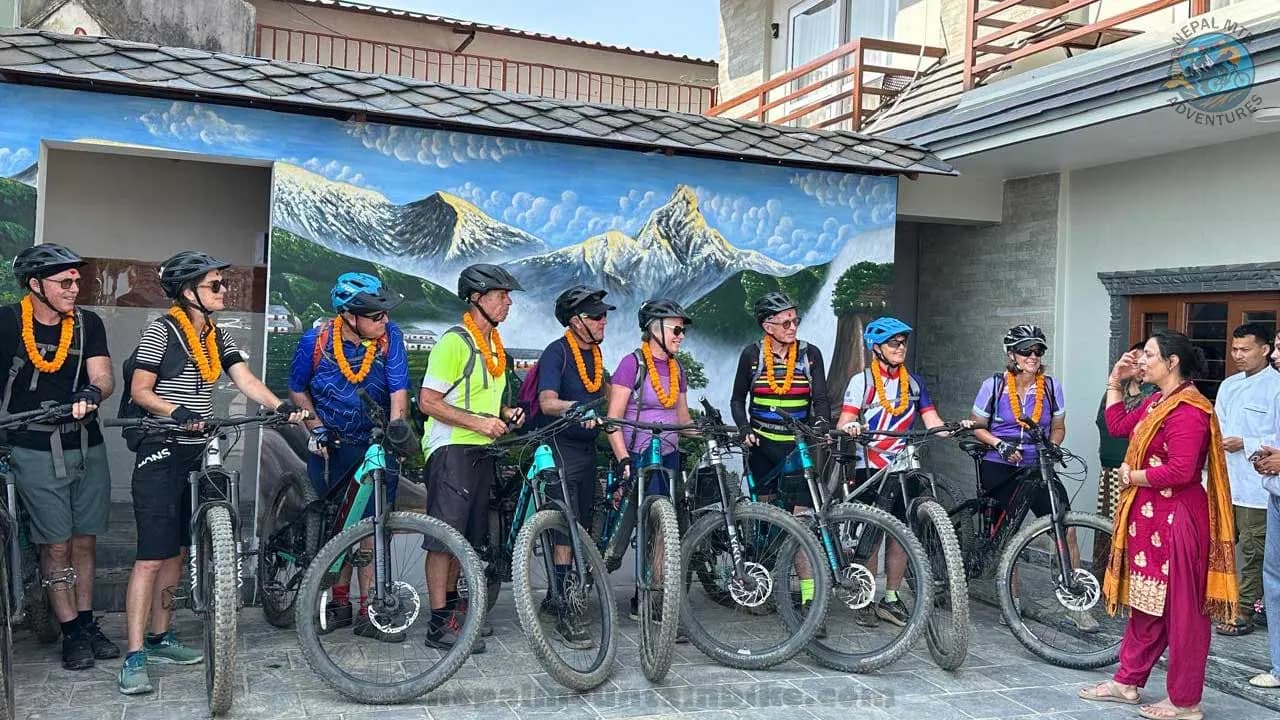
Where you sleep | Family-run lodges (teahouses), every night. No tent, no cooking. |
Permits | Annapurna Conservation Area permit, NPR 3,000 for foreign nationals in 2026. A guide rule applies; see Permits. |
First, let's be honest: is it right for you?
Riders ask us this more than anything else, so here is the straight answer. Three things make the Circuit hard:
The altitude. You'll spend about five days above 3,500 metres (11,483 ft) and cross a pass at 5,416 metres, where every breath holds roughly half the oxygen it does at sea level.
The days stack up. Ten riding days, big climbs, and not much time to recover in between.
The terrain. Loose rock, exposed traverses, tight switchbacks, and hike-a-bike, and you'll ride them tired and short of breath. That's why we care more about your skills than your fitness.
You're ready if you can say yes to these:
I ride red and black graded trails at home (blue and black in North America), and I'm comfortable on loose, exposed singletrack.
I can ride for four to six hours, then do it again tomorrow, and the day after.
I don't mind pushing or carrying my bike when the trail says so.
I can give it about two weeks, plus travel.
My doctor is happy for me to go to 5,400 metres.
Not there yet? That's fine. Build up first. Ride a few days in the hills around Pokhara, or in Lower Mustang, which is lower and less technical. Or walk the Circuit and ride only the descents. Our trail grading guide shows how our trails compare with yours at home, and if you're torn between walking and riding, read our bike it or trek it comparison.
> Guide's tip: we've taken less experienced riders all the way round, at a slower pace and with a lot of pushing. What makes a good trip isn't your speed. It's being happy to get off and walk a section you don't like the look of. Nobody up there is keeping score.

How do you want to ride it?
There are four ways to do the Circuit. Pick the one that matches your experience and how much you want to organise yourself.
Fully guided | Rent a bike and ride it yourself | Hike and bike | Just the western half | |
|---|---|---|---|---|
Best for | Your first time in Nepal or at altitude; groups | Experienced, self-reliant riders who have travelled in remote mountains | Mixed groups where not everyone rides technical trail | Riders who came for the descents, or who have less time |
You organise | Your flights and insurance. We do the rest. | Permits, route, lodges, transport and repairs | Your flights and insurance | Depends on the trip |
Your luggage | In the support vehicle or with porters | On your bike or your back, or with a porter you hire | With porters | Depends on the trip |
Thorong La | Our porters carry the bikes over the steepest sections | You carry your own bike | You walk over; your bike is waiting on the far side | You don't cross it |
The guide rule | Covered | Check before you go (see Permits) | Covered | Covered on guided trips |
> Guide's tip: if you've never been above 4,000 metres (13,123 ft), ride your first Circuit with a guide. Not because the trail is hard to find. Because someone who has watched hundreds of riders at altitude will notice the warning signs in you before you do.

Best Months for the Annapurna Circuit
October and November are the favourite months, with March to May close behind. Here's what each part of the year is like on the trail, and how to get ready for it.
Months | What you'll find on the Circuit | How to plan for it |
|---|---|---|
October and November | Clear skies after the monsoon, dry and firm trails, the best mountain views of the year. Cold nights above 4,000 m. | Our main season, with fixed group departures through October and November. Book early. |
Late September | The monsoon is easing: green valleys, some cloud, a little mud on the east side, quiet trails | Pack a rain shell for the first few days. |
December to February | Crisp, clear days and quiet trails. Very cold up high, and snow can close Thorong La for a few days at a time. | Pack for deep cold, and keep spare days in your plan for snow on the pass. |
March to May | Warmer, longer days, rhododendrons in flower on the lower slopes. Some haze and afternoon showers by late May. | Our spring season. Ride early in the day and carry a light shell. |
June to early September | The monsoon brings rain, mud, and lush green to the east side. Manang and the Mustang side sit in a rain shadow and stay much drier. | Expect slower days in the lower valley. The rain-shadow side has the driest riding. |
This season's fixed group departures are listed on our 15-day guided Annapurna Circuit tour. Month-by-month details are in our guide to the best time to mountain bike in Nepal.
Watch out for the Kali Gandaki wind
Once you're over the pass, the Kali Gandaki gorge has its own weather rule. Almost every day, from late morning, a strong wind blows up the gorge from the south. You'll be riding south, so it's in your face, and by afternoon it can stop you on the flat and fill your eyes with grit.
So on the western side we start soon after breakfast and aim to have the exposed sections done by early afternoon. Ride in wraparound glasses and keep a buff over your mouth.

The route, and why we ride it anticlockwise

Why anticlockwise
Almost everyone rides and walks the Circuit anticlockwise: up the Marsyangdi valley in the east, over Thorong La, and down the Kali Gandaki in the west. We always ride it this way, for three reasons.
Your body gets time to adapt. You reach the pass after a week of gradual climbing and a rest day at Manang, 3,540 m (11,614 ft). On pass day itself you climb about 966 metres (3,169 ft) from Thorong Phedi. Go the other way and you'd face more than 1,600 metres of climbing from Muktinath in one push, with far less time to acclimatise.
You get to ride the big descent. Anticlockwise, the 1,616 metres from the pass to Muktinath is all downhill. Clockwise, it's the hardest climb of the trip.
The trails flow this way. The Ghyaru to Ngawal traverse works as a climbing traverse, and the Lupra valley and Kali Gandaki trails are descents.
The three stages, as you'll ride them
(Place the elevation profile here.)
Stage | From and to | Highest night | What you'll ride |
|---|---|---|---|
1 | Up the Marsyangdi valley (Pokhara or Besisahar to Upper Pisang) | About 3,300 m (10,827 ft) | Jeep track and old trail through terraces, waterfalls and pine forest, past Chame (2,670 m / 8,760 ft). Long climbing days while your body settles in. |
2 | The high Manang valley (Upper Pisang to Thorong Phedi) | 4,450 m (14,600 ft) | The Ghyaru to Ngawal high singletrack, the rest day at Manang (3,540 m / 11,614 ft), then trail beyond the end of the road through Yak Kharka (4,110 m / 13,484 ft). Short, slow stages. |
3 | Over the pass and down the Kali Gandaki (Thorong La to Tatopani) | 3,800 m (12,467 ft) at Muktinath | The 1,616 m (5,302 ft) descent, desert singletrack to Marpha, then the gorge between Dhaulagiri and Annapurna I to the hot springs at Tatopani (1,190 m / 3,904 ft). |
In the first days you'll ride past banana trees and rice terraces. By the end of the first week you'll be looking up at glaciers. A few days later you'll be soaking your legs in the hot springs at Tatopani. On our 15-day guided tour that makes ten riding days, from 7 km a day at very high altitude to 65 km in the lower valley.
For every day's distance, climbing and sleeping altitude, and the other trip lengths, see our Annapurna Circuit bike itinerary, day by day.
Where we get you off the road
You've probably read that the Circuit is "all road now". It isn't, but you do need to know where to look.
A jeep track now runs up the Marsyangdi valley to Manang and up the Kali Gandaki to Muktinath. Ride the road the whole way and you'll get a long, dusty gravel ride with a pass in the middle. Ride the right trails and you'll get some of the best high-mountain singletrack you've ever ridden. The difference is planning.
Where you can't avoid the road: parts of the lower Marsyangdi valley, where the old trail has gone or turned into a stone staircase, and stretches of the Kali Gandaki.
Where we take you off it:
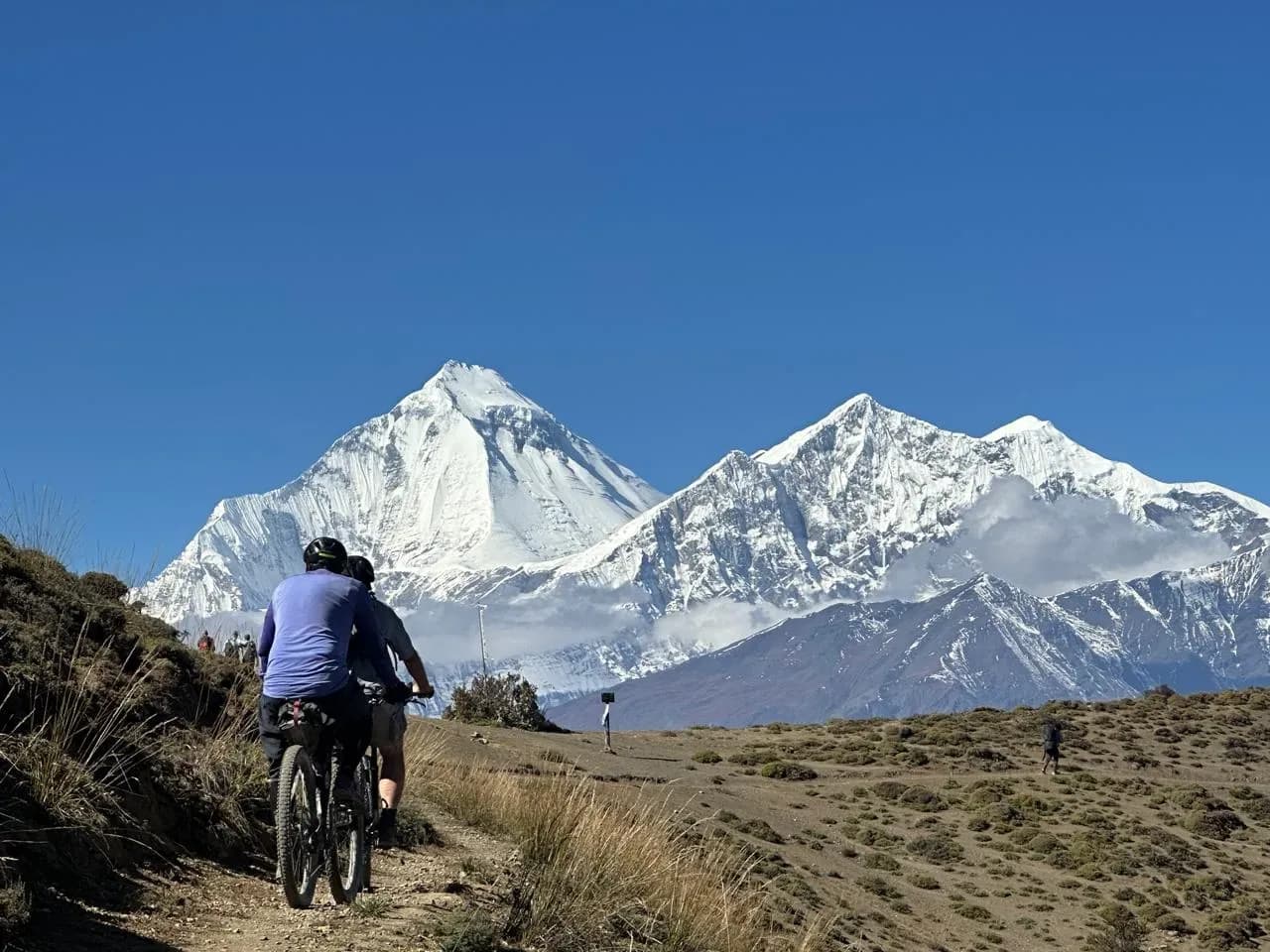
Ghyaru to Ngawal, high above the road between Upper Pisang and Manang. The best singletrack on the east side, with Annapurna II, III and IV across the valley.
Manang to Muktinath. There's no road at all: Yak Kharka, Thorong Phedi, the pass and the descent are all trail.
The Lupra valley or the Jhong side between Muktinath and Jomsom, instead of the road down to Kagbeni.
The Lete singletrack and other trail sections in the Kali Gandaki.
Riding on your own? Here's how to find the trail:
Follow the NATT markers. Since the road arrived, waymarked footpaths that avoid it have been created, known as the NATT trails. Main routes are marked with red and white paint, side routes with blue and white. Some sections ride beautifully; others are stone steps that are quicker on the road.
Carry an offline map with the route loaded. Signal is patchy.
Ask at the lodges. The owners know if the trail ahead is open, washed out or busy with mule trains.
> Guide's tip: on the dusty road sections, keep a long gap from the jeeps and wear a buff. In autumn, once the dust has settled, the road does its job: it gets you to the trail.

Pass day: getting you over Thorong La
Pass day is the one you'll remember, and the one we plan most carefully. This is how it goes.
The day before
You'll sleep at Thorong Phedi, 4,450 m (14,600 ft), or High Camp, 4,850 m (15,912 ft). High Camp makes the morning shorter, but the night is colder and higher. We decide on the day, by how you're acclimatising, not by the plan.
We'll check your bike together: brake pads, tyre pressure, anything loose.
Pack your bag tonight, eat a big dinner, drink plenty and get to bed early.
The climb
We'll wake you around 3:30 am and set off by about 4 am, by headlamp. It will usually be well below freezing.
From Thorong Phedi you'll gain about 966 metres (3,169 ft). Above High Camp the trail isn't really rideable. Push on the easier grades, shoulder the bike on the steep ones, and take short rests often.
Go slowly enough to hold a conversation. At this height a steady pace gets you to the top; a fast one gets you a headache.
Allow four to six hours from Thorong Phedi to the pass. On our trips, our high-altitude porters carry the bikes over the steepest sections, so you reach the top with legs left for the descent.
At the top
Prayer flags, a view across to the Mustang side, and a hot drink if the teahouse is open. Take your photos, then let's go. The wind usually rises by late morning, and the cold at 5,416 metres drains your energy fast.
The descent
Drop your saddle, put on dry gloves and add a layer before you start.
Now enjoy it. You'll descend 1,616 metres (5,302 ft) in about 9 kilometres (5.6 miles). The top is steep, loose rock and moraine with tight switchbacks; lower down it opens into faster desert trail. You start higher than the summit of Mont Blanc (4,808 m / 15,774 ft).
Stop now and then to rest your hands and let your brakes cool. Give walkers plenty of room. They've had a long morning too.
By early afternoon you'll roll into Muktinath, 3,800 m (12,467 ft), among stone houses and apple trees.
What to carry on pass day: an insulated jacket, a windproof shell, warm gloves with liners, a warm hat that fits under your helmet, a headlamp, two litres of water (inside your jacket, so it doesn't freeze), high-energy snacks, sunglasses, sunscreen, lip balm and some cash.
Altitude: the rules we ride by
Altitude, not crashing, is the real risk on the Circuit. On a bike it's easier to get wrong, because you can gain height faster than a walker. These are the rules we follow on every trip, and the ones we'd ask you to follow if you ride on your own.
Never skip the Manang rest day. Spend it at 3,540 m (11,614 ft), walking high and sleeping low. A common acclimatisation walk climbs towards Ice Lake, at about 4,600 m (15,092 ft), and comes back down.
Keep the stages short above 4,000 metres (13,123 ft). Manang to Yak Kharka is 11 km on our route, and Yak Kharka to Thorong Phedi just 7 km. Short is the point.
Climb at conversation pace. If you can't speak in sentences, slow down.
Drink, eat and sleep. Three to four litres of water a day, plenty of carbohydrate, early nights.
Tell us how you feel. Mild acute mountain sickness (AMS) feels like a hangover: headache, nausea, tiredness, poor sleep. It is common and nothing to hide. Don't go higher until it clears.
If it gets worse, we go down. Confusion, stumbling, breathlessness at rest or a wet cough are signs of HACE (brain) or HAPE (lungs). Both are rare with good acclimatisation, and the treatment for both is to descend straight away. Even a few hundred metres helps, and on a bike you can lose height quickly.
In Manang: in the main seasons the Himalayan Rescue Association runs an aid post with a daily talk on altitude sickness. It's worth an hour of your rest day.
Medication: some riders use acetazolamide (Diamox) to help acclimatisation. It's a prescription medicine, so talk to your doctor before you travel.
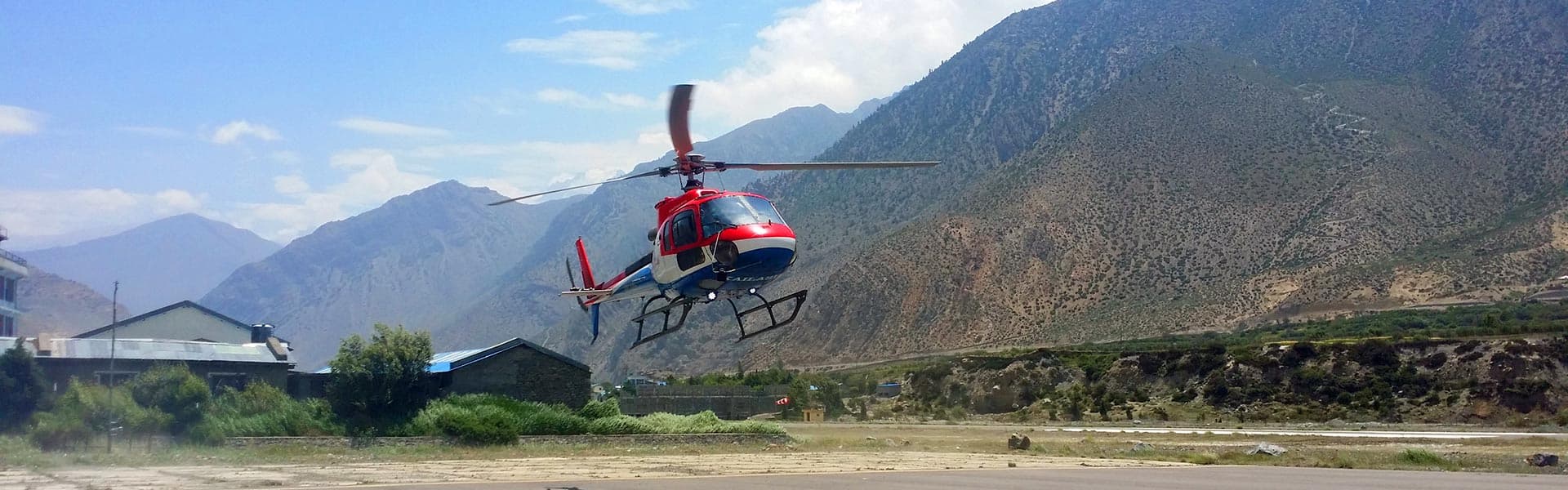
On our trips, from day 5 we check your blood oxygen and heart rate every morning and evening. We carry medical oxygen, any of our guides can send a rider down, and our Pokhara office coordinates helicopter rescue if it's ever needed. You'll also need the right insurance; see Travel insurance.

Nepal Visa for the Annapurna Circuit
You'll need a tourist visa to enter Nepal. It's straightforward, and you can sort it out before you leave home.
Three ways to get your visa
Apply online before you fly (eVisa). On the Department of Immigration's eVisa portal, fill in your details, upload a scan of your passport and a recent photo on a white background, and pay by card. Your approved visa is emailed to you. This is what we suggest to most riders.
Get a visa on arrival at Kathmandu airport. Fill in the online visa-on-arrival form up to 15 days before you land and print the receipt with its barcode. At the airport, pay the visa fee, then take your receipt and passport to the immigration desk. You can also fill in the form on the kiosks in the arrivals hall, but expect a queue.
Apply through a Nepalese embassy or consulate in your own country before you travel.
The official details are on the Department of Immigration's eVisa page.
Which visa length to choose
Tourist visas come in 15, 30 and 90 days, and all are multiple entry. You can extend a tourist visa, up to 150 days in a calendar year.
For a two-week Circuit trip, plus your travel days and a spare day or two, the 30-day visa is usually the right one. A 15-day visa runs out fast if the pass closes for a day or a flight is delayed.
Before you go
Your passport is valid for at least six months after you arrive in Nepal (Canadians: after the date you leave).
You have at least one blank visa page.
You have a recent passport photo on a white background: a digital copy for the online form, plus a printed spare.
You've printed your eVisa, or your visa-on-arrival receipt.
If you're paying on arrival, you have a card and some US dollars in cash.
Flying straight into Pokhara? Get your eVisa before you fly.
Don't overstay. Overstaying a visa in Nepal is a serious offence, and you must have a valid visa to leave the country.
Visa rules for five countries
Most of our riders come from these five countries. Citizens of all five need a tourist visa, and all can use any of the three ways above.
Your passport | Visa needed? | Where you can get it | Check your government's advice |
|---|---|---|---|
United States | Yes | eVisa, visa on arrival, or a Nepalese embassy or consulate in the US | |
United Kingdom | Yes | eVisa, visa on arrival, or the Nepal Embassy in the UK | |
Australia | Yes | eVisa, visa on arrival, or a Nepalese embassy or consulate | |
Canada | Yes (6-month rule) | eVisa, visa on arrival, or a Nepalese embassy or consulate | |
Germany | Yes | eVisa, visa on arrival, or the Nepalese Embassy in Berlin and the honorary consulates in Frankfurt, Hamburg, Cologne, Munich and Stuttgart |
Visa rules and fees change, so check your government's page and the Department of Immigration before you book.
> Guide's tip: apply for your eVisa a week or two before you fly, and keep a printed copy with your passport. When you land you'll walk past the visa queue, and you'll be on your bike in Pokhara a few hours sooner.
Permits and the guide rule (2026)
Here's what you need in your pocket before you ride into the conservation area.
The Annapurna Conservation Area permit
The permit is issued by the National Trust for Nature Conservation (NTNC), which runs the Annapurna Conservation Area Project. The fee goes back into the region: trails, water stations and conservation work.
Who needs it: everyone, on foot or on a bike. Children under 10 don't need one.
Cost in 2026: NPR 3,000 for foreign nationals, NPR 1,000 for SAARC nationals, tax included. Get it before you set off: riders without one are charged double at the checkpoints on the trail.
Get it online: apply on the official NTNC e-permit site and pay by Visa or Mastercard (a 2.9% card charge applies). The permit is emailed to you, so there's no queue. Print it.
Or get it in person: pay cash at an NTNC entry permit counter and bring your passport. The counters are at the Nepal Tourism Board offices in Kathmandu and Pokhara.
On our trips, we sort it for you.
On the trail: carry the printed permit for the whole trip, and register at the checkpoints along the route. It's checked at posts including Besisahar, Chame and Manang on the east side, and again on the Mustang side. Registering also helps rescuers find you if something goes wrong.
Single entry only: the permit can't be transferred or refunded, so enter your dates carefully.
No drones without prior approval from the authorities.
The guide rule
Since 31 March 2023, Nepal Tourism Board rules say foreign trekkers on listed routes, the Annapurna Circuit included, must travel with a licensed guide and carry a TIMS card issued through a registered agency (NPR 2,000 for foreign nationals). The rule is written for trekkers and doesn't mention cyclists separately, and how strictly checkpoints apply it has varied by season and by checkpoint since 2023.
What we'd tell you:
Riding with us on a guided trip: we arrange the permit, the TIMS card and your guide. Nothing for you to do.
Riding on your own: plan as if the rule applies to you, and check the current position for your dates before you book flights. If you rent from us, ask us: we'll tell you what the checkpoints are asking for that season, and we can add a licensed guide to your rental.
Thinking of going north of Kagbeni?
Upper Mustang, north of Kagbeni, is a restricted area with a separate, more expensive permit and its own rules, so you can't ride into it on your conservation area permit alone. The current fees are on the Nepal Tourism Board restricted-area permit page. We ride it as the second half of our 22-day Annapurna Circuit and Upper Mustang tour.

Travel insurance for the Circuit
Please don't ride the Circuit without the right insurance. Between Manang and Muktinath there's no road, so if something goes wrong up there, a helicopter is the way out. That's expensive, and it only flies quickly once an insurer has agreed to pay.
What your policy must cover
Mountain biking, by name. "Cycling" often means road or leisure riding. Look for mountain biking, off-road cycling or adventure cycling in the list of covered activities.
Altitude to at least 5,500 metres (18,045 ft). Thorong La is 5,416 m (17,769 ft). Many policies stop at 3,000, 4,000 or 5,000 metres unless you add a high-altitude option.
Helicopter rescue and medical evacuation, from the mountains to a hospital in Pokhara or Kathmandu.
Emergency medical treatment in Nepal, and repatriation home if needed.
Cancellation and cutting your trip short, including weather delays and a closed pass.
Your bike. Theft and damage to your own bike, or damage to a rented one. Travel policies often cap single items low, so check the limit against your bike's value.
Read the small print for these
Guide conditions. Some policies only cover high-altitude activities when you're with a licensed guide or a registered company. If you plan to ride on your own, check this before you buy.
Pre-existing conditions. Declare them, especially heart and lung conditions. An undeclared condition can void the whole claim.
"Approval first" rules. Most insurers must approve a helicopter evacuation before it flies. Know how that works on your policy.
Before you leave home
Save your policy number and the insurer's 24-hour emergency number in your phone, and carry a printed copy.
Give a copy to the company you ride or rent with, and to someone at home.
Keep your passport details with the policy, because rescue companies ask for both.
> Guide's tip: buy your policy the day you book. Cancellation cover only protects you from the day you buy it.
On our guided trips we ask every rider for their policy details before the trip, and our Pokhara office works with your insurer if a rescue is ever needed.
Bike Choice, Setup and Spares for the Annapurna Circuit
What we'd ride
Full suspension is what most of our riders are happiest on. The long, rocky descents are where the Circuit is won or lost, and the extra weight only really matters on the carry.
A hardtail works, and it's lighter on the long climbs and over the pass. Expect a rougher ride on the way down.
Gravel and touring bikes get round, mostly on the jeep road, with a lot of walking on the trail and the pass descent. On a mountain bike you get to ride the trails the road bypasses, and that's the reason to come.
E-bikes suit the western half. We ride the Kali Gandaki side on e-MTBs on our Lower Mustang e-MTB expedition. Over Thorong La, the weight on the carry and the limited charging at altitude make it a special case.
The full comparison is in our best bike for the Annapurna Circuit guide.
Bring yours, or rent one of ours? Bring your own and you ride the bike you know, but you'll pay airline fees and need somewhere to keep the box. Rent in Pokhara and there's no box, no fees, and the spares fit. Our Pokhara workshop rents hardtails, full-suspension bikes and e-MTBs, all serviced before they leave.
Set it up before you come
There's no bike shop after Besisahar, so start with a bike in good shape.
Gearing: the easiest low gear you can fit. You'll be climbing at very high altitude on tired legs.
Brakes: fresh pads fitted before the trip, and bled if they feel soft.
Tyres: tubeless, with fresh sealant, and tread that grips on loose rock.
Dropper post: not essential, but you'll use it on every descent.
Bags: a frame bag or a hip pack. A big backpack is miserable on the carry.
Spares to pack
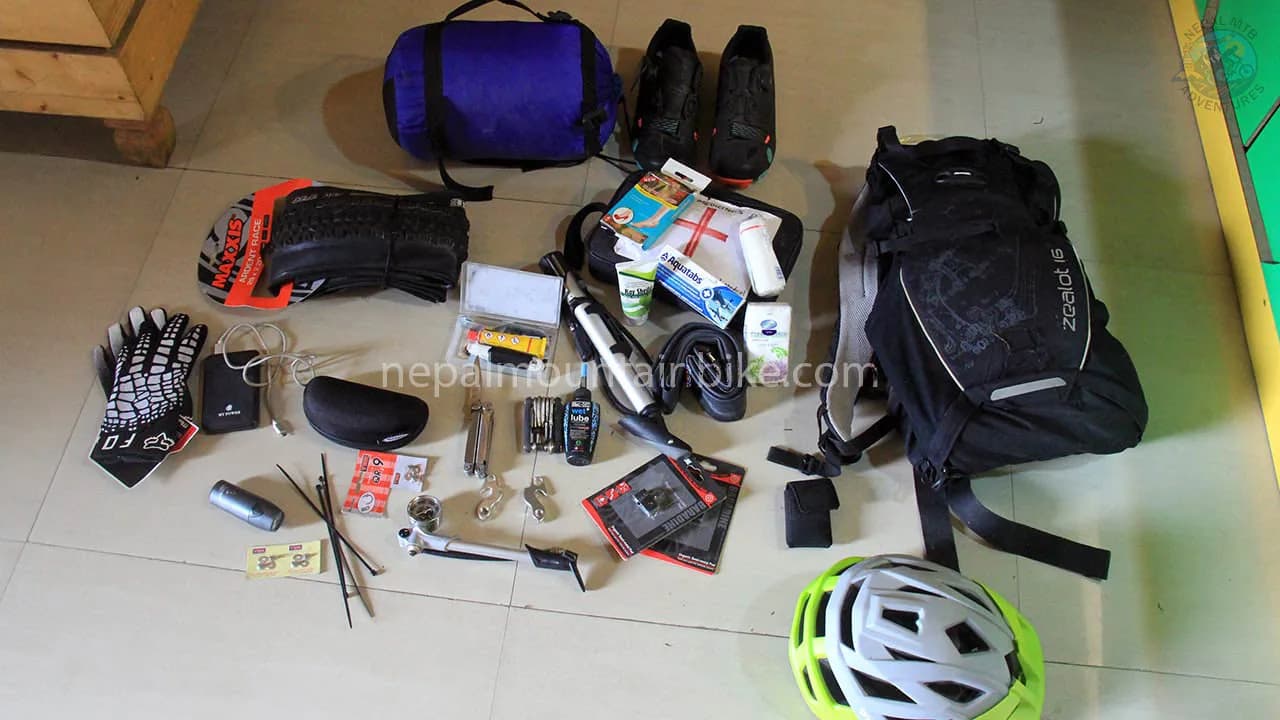
Two sets of brake pads (the pass descent alone can wear out a set)
A derailleur hanger for your frame
Chain quick links and a chain tool
Tubeless plugs, a spare tube and a pump
Sealant top-up
A multi-tool that fits every bolt on your bike
Chain lube for dry, dusty conditions
On our guided trips our mechanic rides with the group, with tools and spares.
Looking after it on the trail
Clean and lube your chain every evening. The dust on the western side eats drivetrains.
Check your brake pads before every big descent, and always the night before the pass.
Check tyre pressure every morning; the cold nights drop it.
Our Nepal MTB packing checklist covers clothing and personal kit.

Getting ready at home: a 16-week plan
Give yourself about four months. Here's the outline we send our riders; adjust it to where you're starting from.
Weeks | Focus | What to do |
|---|---|---|
1 to 4 | Base | Ride three or four times a week. Build your longest ride to about three hours. Strength work twice a week: squats, lunges, deadlifts, planks. |
5 to 8 | Climbing | Add long, steady climbs. Practise technical climbing at low speed. One back-to-back weekend a month (two long days in a row). |
9 to 12 | Trip-specific | Three-day back-to-back weekends. Practise loose descents, tight switchbacks and narrow, exposed trail. Shoulder your bike and walk uphill with it for 20 to 30 minutes. |
13 to 15 | Peak | Your biggest weeks: rides of four to six hours, with at least one three-day block. A weekend above 2,000 m (6,562 ft) if you can get there. |
16 | Taper | Short, easy rides. Service the bike. Sleep. |
> Guide's tip: the riders who struggle most aren't usually the least fit. They're the ones who've never ridden technical trail tired. Do your skills practice at the end of a long ride, not at the start.
Getting to the start, and home again
Pokhara is your base. Fly into Kathmandu, then take the 25-minute flight, or a full day by road, to Pokhara. Since September 2026 there's also a daily direct flight from Dubai to Pokhara. Pokhara is where you'll collect or build your bike, sort your permits and leave your bike box.
To the start. On our guided trip we ride out of Pokhara on back roads to the Marsyangdi valley. If you're riding on your own, take a jeep or bus to Besisahar, about five hours, and start there.
Home from the finish. From Tatopani or Beni it's about four to five hours back to Pokhara by jeep. There is a 20-minute flight from Jomsom to Pokhara, but its checked baggage allowance is very small, so plan for your bike and luggage to go by road.
If you need to get out early. If you're ill, injured or out of time, jeeps run down both valleys: from Manang on the east side, and from Muktinath or Jomsom on the west. Between Manang and Muktinath there's no road. The only ways out are on foot, or by helicopter in an emergency. Keep that in mind when you leave Manang.
A day on the trail
Here's how a riding day usually goes
6 to 7 am: wake up, pack, breakfast in the lodge dining room.
7 to 8 am: on the bike. Mornings are calm, clear and cool: the best riding of the day.
Midday: lunch at a lodge in a village on the way. Order early; everything is cooked to order.
Early to mid afternoon: we arrive at the night's lodge. Clean and check the bike, grab a hot shower if there is one, put your feet up.
6 to 7 pm: dinner around the stove, stories from the day, then an early night. Above Manang, everyone's in bed by 8.
Where you'll sleep. Family-run lodges, known locally as teahouses, line the whole route. Lower down they have private rooms and hot showers. By Thorong Phedi you'll be in a cold, simple room with shared facilities and a stove in the dining room. The lodges give you blankets, but bring a warm sleeping bag for the high nights. You rarely need to book ahead, except at Thorong Phedi and High Camp in peak season.
What you'll eat. Dal bhat (rice, lentils and vegetables, with refills) is what our guides and porters eat, because it works. You'll also find noodle soups, potatoes, eggs and pancakes everywhere, and Marpha is famous for its apples. Food costs more the higher you go, because everything is carried up.
Water. Please don't buy plastic bottles; they're discouraged inside the conservation area. Refill with boiled water at the lodges, at the safe drinking water stations along the route, or use your own filter or tablets.
Money. Bring enough Nepali cash from Pokhara for the whole trip. There are ATMs in a few villages, but they often have low limits or don't work.
Charging and signal. Most villages have electricity, wifi and some mobile signal. Higher up, charging and hot showers usually cost a little extra, and signal is patchy between Manang and Muktinath. A small power bank saves you queuing for the socket.

Riding through the villages
The Circuit isn't a bike park. It's a working route, and you'll share it with mule trains, porters, pilgrims, yaks and children walking to school. This is how we ride it.
Mules and yaks: stop, and let them pass with you on the uphill side of the trail. A loaded animal can knock a rider off an edge.
Suspension bridges: don't start across if animals are on the bridge or coming towards it. Walk your bike when it's busy.
People first: slow right down past walkers and in villages. Call out early, smile, ride single file.
Sacred places: pass prayer walls, chortens and stupas on your left, and don't ride inside the temple grounds at Muktinath.
Dogs: village dogs are mostly calm by day. Give them space at dawn and after dark.
Landslides and exposure: after rain, and on the exposed traverses, walk anything you're not sure of.
Leave nothing: carry out your rubbish, batteries and gel wrappers included.
What to budget for
Prices change, so we don't put them in our guides. Each trip page shows its current price and what's included. Here's what to plan for.
On a guided trip: the trip price usually covers guides, a mechanic, porters for the pass, the support vehicle, permits, lodges and meals on the trail, and transfers. Check each trip's inclusions for hotels in Kathmandu and Pokhara.
Riding on your own:
Bike rental, or airline fees for flying your own bike
The conservation area permit, plus a licensed guide and TIMS card if the rule applies to you
Lodges and meals for about two weeks (prices rise above Manang)
Transport to Besisahar, and back from Tatopani or Beni
Extras: charging, hot showers, drinking water
A porter for pass day, if you want one
Either way:
International flights and your Nepal visa
Travel insurance that covers mountain biking above 5,500 metres, with helicopter evacuation
Tips for your guides and porters
A spare day or two in your flights, in case the pass closes
Your planning checklist
Four months or more before
Decide how you'll ride it: guided, on your own, hike and bike, or the western half.
Pick your dates: October to November, or March to May.
Start the training plan.
See your doctor about going to 5,400 metres.
Two months before
Book your flights, with a spare day or two at the end.
Check your passport is valid for at least six months after you arrive.
Buy insurance (see the checklist above).
Bring your bike or rent one? If renting, book it now.
Riding on your own? Check the current guide rule for your dates.
Two weeks before
Apply for your Nepal eVisa (30 days is usually right) and print it.
Service the bike: fresh pads, fresh sealant, a new chain if yours is worn.
Pack your spares and your pass-day clothing.
Load an offline map of the route on your phone.
In Pokhara
Get your printed permit, or collect it from the company you ride with.
Draw enough cash for the whole trip.
Do a short test ride on your trip bike, fully loaded.
At Manang
Take the rest day. Walk high, sleep low.
Check brake pads, tyres and bolts before the high stages.
The mistakes we see every season
We see these every year. Avoid them and you're most of the way to a good trip.
Skipping the Manang rest day to save time. It's the day that gets you over the pass.
Riding too fast above 4,000 metres because your legs feel fine. Altitude catches up with you overnight.
Starting on half-worn brake pads. The pass descent will finish them.
Leaving late on pass day. Be walking by about 4 am, before the wind and the cold set in.
Riding the Kali Gandaki in the afternoon, straight into the wind.
Insurance that stops at 4,000 or 5,000 metres. Read the small print.
Counting on ATMs on the trail. Bring cash from Pokhara.
A photo of the permit instead of the printed permit.
A big backpack for the carry. Put your kit in the support vehicle, or pack light.
No spare days. One snowy morning on the pass can cost you a day.

Ride it with us
If you'd like us to take care of the planning, these are the ways we ride the Circuit.
Trip | Days | Choose this if |
|---|---|---|
15 | You want the full loop with full support. The right first choice for most riders. | |
17 | Your group is mixed: walk up and over the pass, then ride down from Muktinath. | |
22 | You want the biggest trip: the full loop, then north to Lo Manthang. | |
11 | You have less than two weeks and want the high Manang side and Tilicho. | |
14 | You're booking for a club or a group of friends, on your own dates. (Show only once that page's H1 drops "Team Australia 2026".) |
Riding on your own? Rent a serviced bike from our Pokhara workshop, with spares, route advice and a phone number that answers.
Only here for the descents? Ride the western half on our Lower Mustang mountain bike tour or our Lower Mustang enduro trip.
Got a question about your plan? Ask us. We're happy to answer route questions, whether you ride with us or not.
From the riders
Sarah G, Australia
> "I was part of a group on 12 Australians that did the Annapurna Circuit. I am not an experienced mountain biker, but the guides gave me a great bike and enough guidance that I was able to keep up with the rest of the group and have a great time doing it. It was the most challenging ride of my life and I loved every minute!"
Johnny C, Hong Kong
> "I am a member of a Hong Kong group taking up the 14-day Annapurna Circuit mountain biking trip organized by Nepal MTB Adventures in November 2023. I am no stranger to Nepal mountain trekking and I did the Annapurna Circuit once before the millennium. When my young biking buddy Dora disclosed that she was planning a biking trip round the Annapurna Circuit, I was thrilled and tempted to revisit the intimidating 5,416M Thorung-La Pass by a different mode notwithstanding I am 70+. I am grateful to the repeated assurances and encouragement by Jagan and my teammates and I made up my mind to give it a try. I never regret my decision as I have been rewarded with the breathtaking and stunning views of the snowcapped mountains sceneries giving me the tremendous joys and sense of being so very close to the true great nature."
Stella
> "I didn't have much mountain bike experience before I did the Annapurna circuit- there was no pressure to ride if I didn't feel comfortable (spent a lot of time pushing the bike!). I can't stress enough how supportive the team were and others in the group. It wasn't easy but such a sense of achievement when we reached Thorang La. Nepal was amazing - scenery and people. The mountain bike teams were so welcoming and friendly - a new family. The roads are a challenge and can be dusty - it was the hardest - most amazing holiday I have ever taken."
Read one rider's full account: Mountain biking the Annapurna Circuit, a ride to remember.
Questions riders ask us
Can you mountain bike the Annapurna Circuit?
Yes. Mountain bikes are allowed in the Annapurna Conservation Area, and most of the Circuit is rideable on jeep track, village trail and high singletrack. The main exception is the climb to Thorong La at 5,416 metres (17,769 ft), which you push and carry. Ridden anticlockwise, the full loop takes about two weeks with ten riding days.
How long is the Annapurna Circuit by bike?
Our 15-day guided route covers over ten riding days, from Pokhara over Thorong La to Tatopani. Daily distances range from 7 km at very high altitude to 65 km in the lower valley. Our day-by-day itinerary guide lists every stage.
Which direction should you ride the Annapurna Circuit?
Anticlockwise, from the Marsyangdi valley over Thorong La to the Kali Gandaki. You acclimatise gradually over a week, climb about 966 metres on pass day, and ride the 1,616-metre descent to Muktinath downhill. Clockwise, that descent becomes a climb of more than 1,600 metres in a day.
How long does it take to cross Thorong La with a bike?
Pass day is usually six to seven hours. Allow four to six hours to push and carry from Thorong Phedi (4,450 m) to the pass, then about two hours to ride the 1,616-metre descent to Muktinath. Start around 4 am, because the wind on the pass rises by late morning.
Is the Annapurna Circuit all jeep road now?
No. A jeep track runs up both valleys, to Manang in the east and Muktinath in the west, but there's no road between them. Yak Kharka, Thorong La and the descent to Muktinath are all trail, and high singletrack such as Ghyaru to Ngawal and the Lupra valley stays off the road.
Do I need a visa to mountain bike the Annapurna Circuit?
Yes. Visitors from the US, UK, Australia, Canada, Germany and most other countries need a Nepal tourist visa. You can apply online for an eVisa before you travel, or get a visa on arrival at Kathmandu airport after filling in the online form. Visas come in 15, 30 and 90 days; for a two-week Circuit trip, 30 days is usually right. Your passport must be valid for at least six months.
Do cyclists need a guide on the Annapurna Circuit in 2026?
Nepal Tourism Board rules since 31 March 2023 require foreign trekkers on the Annapurna Circuit to travel with a licensed guide and an agency-issued TIMS card. The rule doesn't mention cyclists separately, and checkpoint practice has varied. Plan as if it applies, and check the current position for your dates before you book.
Do I need a TIMS card to cycle the Annapurna Circuit?
Under Nepal Tourism Board rules, the Annapurna Circuit is a listed route that needs a TIMS card issued through a registered agency, NPR 2,000 for foreign nationals. Individuals can no longer buy one over the counter. You also need the Annapurna Conservation Area permit, NPR 3,000 in 2026.
What travel insurance do I need to mountain bike the Annapurna Circuit?
A policy that names mountain biking as a covered activity, covers altitudes to at least 5,500 metres (Thorong La is 5,416 m), and includes helicopter rescue, medical evacuation and emergency treatment in Nepal. Check any guide conditions and the limit for your bike, and carry the insurer's 24-hour emergency number.
Can a beginner mountain bike the Annapurna Circuit?
It isn't a beginner route. It suits fit intermediate to advanced riders who are comfortable on loose, exposed singletrack. Less experienced riders have finished it on guided trips, at a slower pace and with a lot of pushing. If you're new to technical trails, build up on shorter rides near Pokhara or in Lower Mustang first.
Hardtail or full suspension for the Annapurna Circuit?
Both work. A hardtail is lighter on the climbs and the carry over Thorong La. A full-suspension bike is better on the long, rocky descents, and most riders prefer one. Whatever you ride needs low gearing, fresh brake pads and tubeless tyres.
Can you ride the Annapurna Circuit on a gravel bike?
Some riders do, mostly on the jeep road, and walk much of the trail and the descent from Thorong La. A mountain bike lets you ride the high singletrack and the descents the road bypasses, which is where the best riding is.
Where do you sleep when cycling the Annapurna Circuit?
In family-run lodges called teahouses, every night. Lower down they have private rooms and hot showers. Higher up, at Yak Kharka and Thorong Phedi, rooms are cold and simple, with a stove in the dining room. You don't need a tent or cooking kit.
Can you fly to or from Jomsom with a bike?
The 20-minute Jomsom to Pokhara flight has a very small checked baggage allowance, so plan for your bike to travel by road. On guided trips, the support vehicle brings bikes and luggage back to Pokhara.
What should I do if I get altitude sickness on the bike?
Stop going higher. Mild symptoms, such as headache, nausea and poor sleep, are treated with rest at the same height. If they get worse, or you feel confused or breathless at rest, go down straight away. On a bike you can lose height quickly, and even a few hundred metres helps.
What is the best month to ride the Annapurna Circuit?
October and November, for clear skies, dry trails and the best mountain views, followed by March to May, when the days are warmer and the rhododendrons flower. In winter, snow can close Thorong La for a few days at a time, so build spare days into your plan. In the monsoon, the rain-shadow side around Manang and Mustang stays much drier than the east.