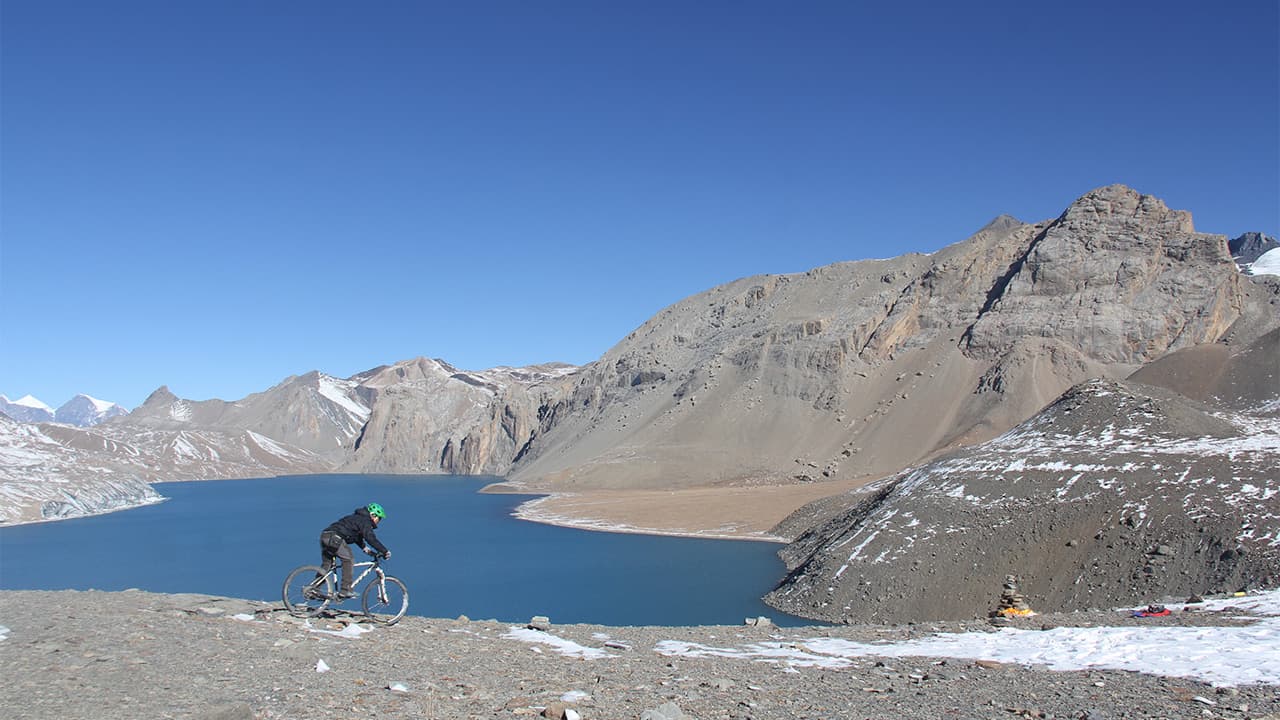
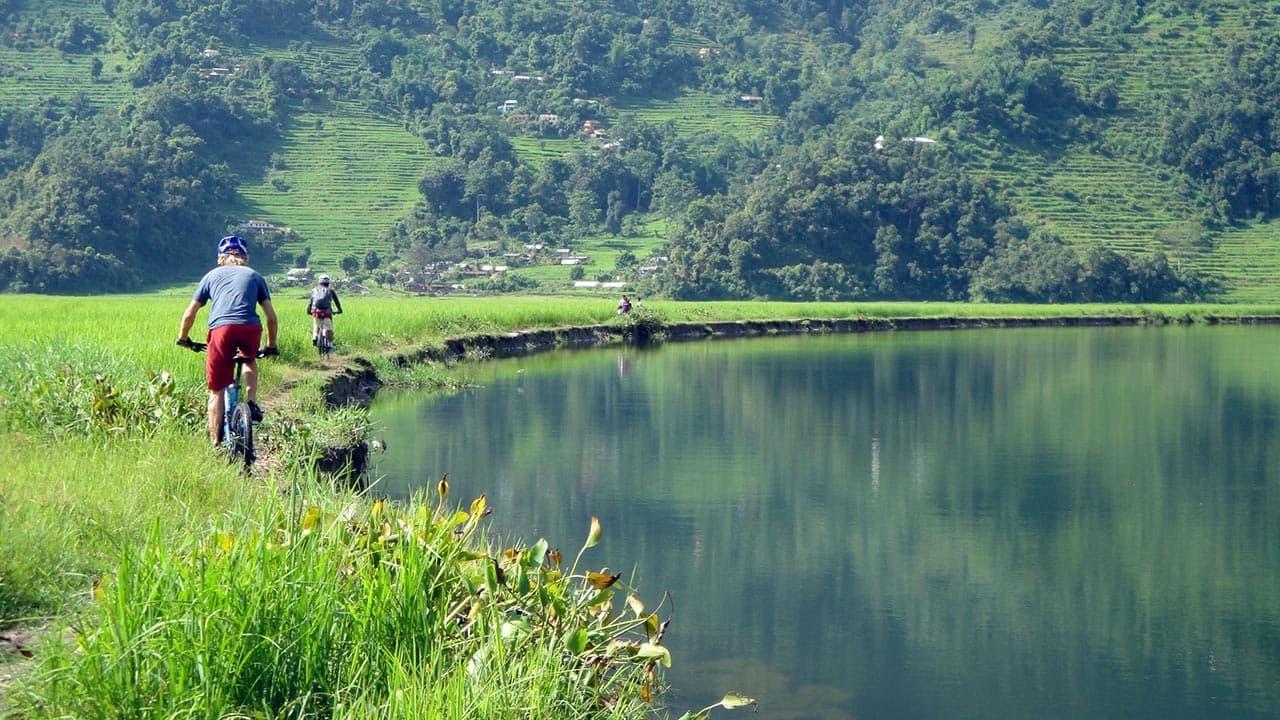
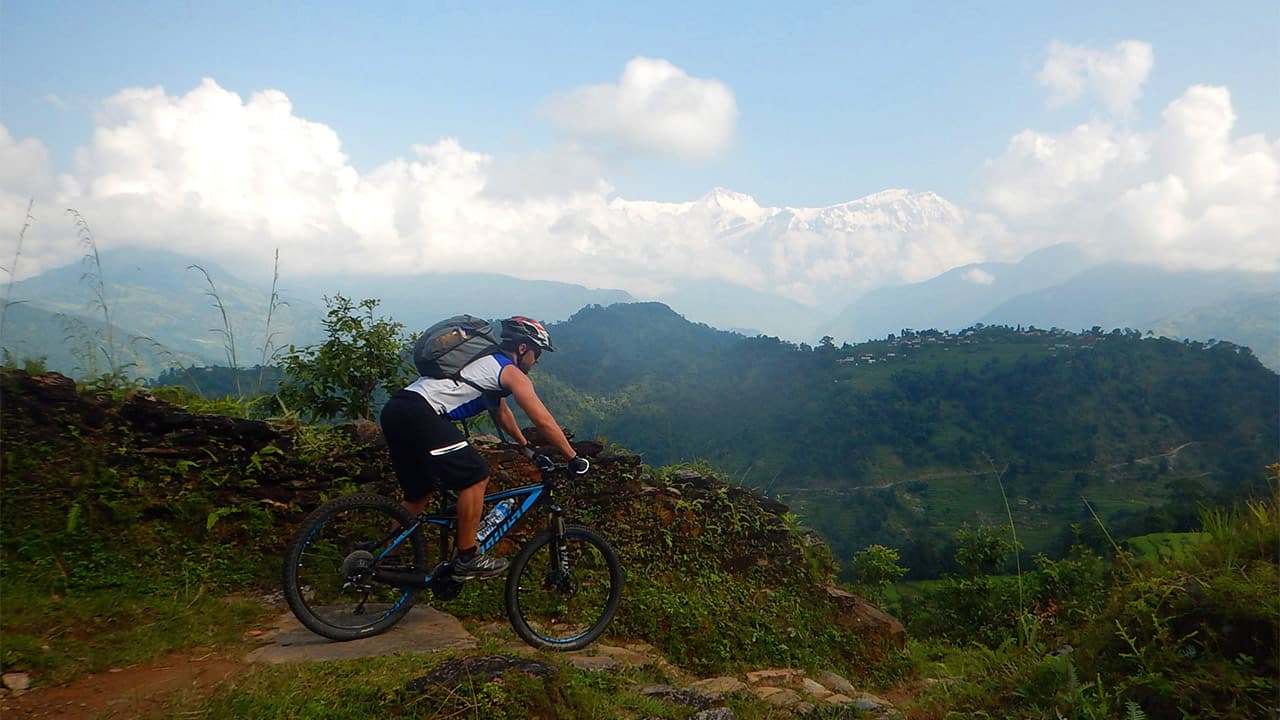
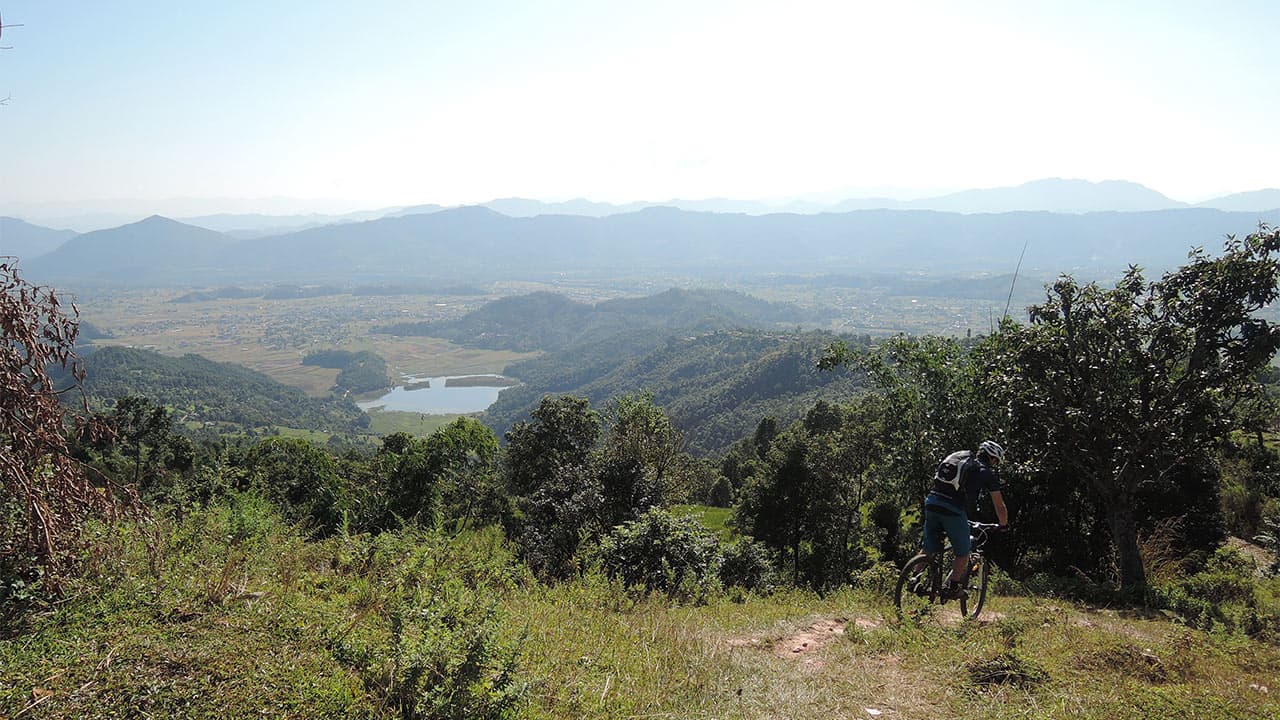
The Hike and Bike Annapurna Circuit is a 17-day trip that lets you experience the Annapurna Circuit twice over. You walk the whole climb, and you ride the whole descent. This is an extraordinary hybrid expedition built specifically for multi-sport adventure seekers, trail runners, and mountain bikers who want the ultimate Himalayan experience without carrying a heavy bike over 5,000-meter passes.
You trek up the Marsyangdi valley to Manang, take a high detour to Tilicho Lake at 4,919 m, then cross the Thorong La pass at 5,416 m on foot and come down to Muktinath. Your mountain bike is not with you for any of that. It travels ahead by private jeep and is waiting for you at Muktinath, tuned and ready, at the top of nearly 2,900 m of descent. From there you ride the Lupra valley singletrack, the Kali Gandaki gorge and the long drop to the hot springs at Tatopani.
You need to be a fit hiker and a confident rider. You do not need to be an expert mountain biker, because you never ride the hard climbs.
Trip at a Glance
The trip in numbers
Here is what the trip asks of you, in numbers.
Distance on Foot: About 114 km over 9 trekking days, plus the acclimatization walk at Manang.
Distance on the Bike: About 76 km over 2 riding days, plus roughly 26 km on the Pokhara warm-up day.
Total Climbing on Foot: Around 4,400 m net, or approximately 5,000 m of actual climbing.
Total Descent on the Bike: About 2,910 m, descending from Lupra Pass (4,100 m) to Tatopani (1,190 m).
Longest Walking Day: Day 14, crossing Thorong La, covering 17 km in approximately 8–9 hours.
Longest Riding Day: Day 16, riding from Marpha to Tatopani, covering about 45 km.
Biggest Single Descent on Foot: 1,616 m, descending from Thorong La to Muktinath.
Biggest Single Descent on the Bike: About 1,480 m, descending from Marpha to Tatopani.
Road Transfer Days: 2 days—the drive to Dharapani and the return drive to Pokhara.
How the trip works: four phases
The trip is built in four blocks. Each one does a different job.
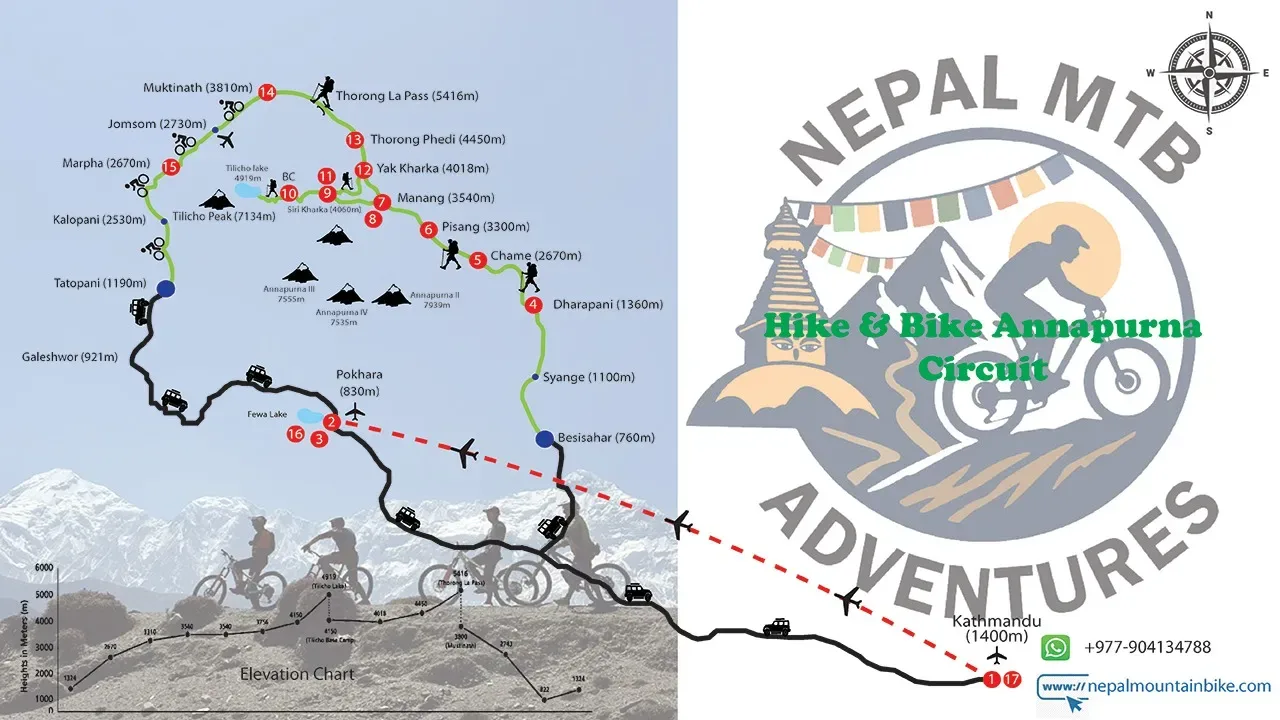
Phase 1, the acclimatization ascent, Days 1 to 8. Kathmandu, a flight to Pokhara, a warm-up hike and ride day above the lake, then the drive to Dharapani and four trekking days up the Marsyangdi valley to Manang. You gain height slowly and finish this phase with a full rest day at 3,540 m.
Phase 2, the Tilicho Lake detour, Days 9 to 11. You leave the main circuit and head west into a quieter, higher, drier valley. Two days up to Tilicho Base Camp, then a pre-dawn climb to the lake at 4,919 m and back down. This block is scenery, but it is also the best altitude preparation you could ask for before the pass.
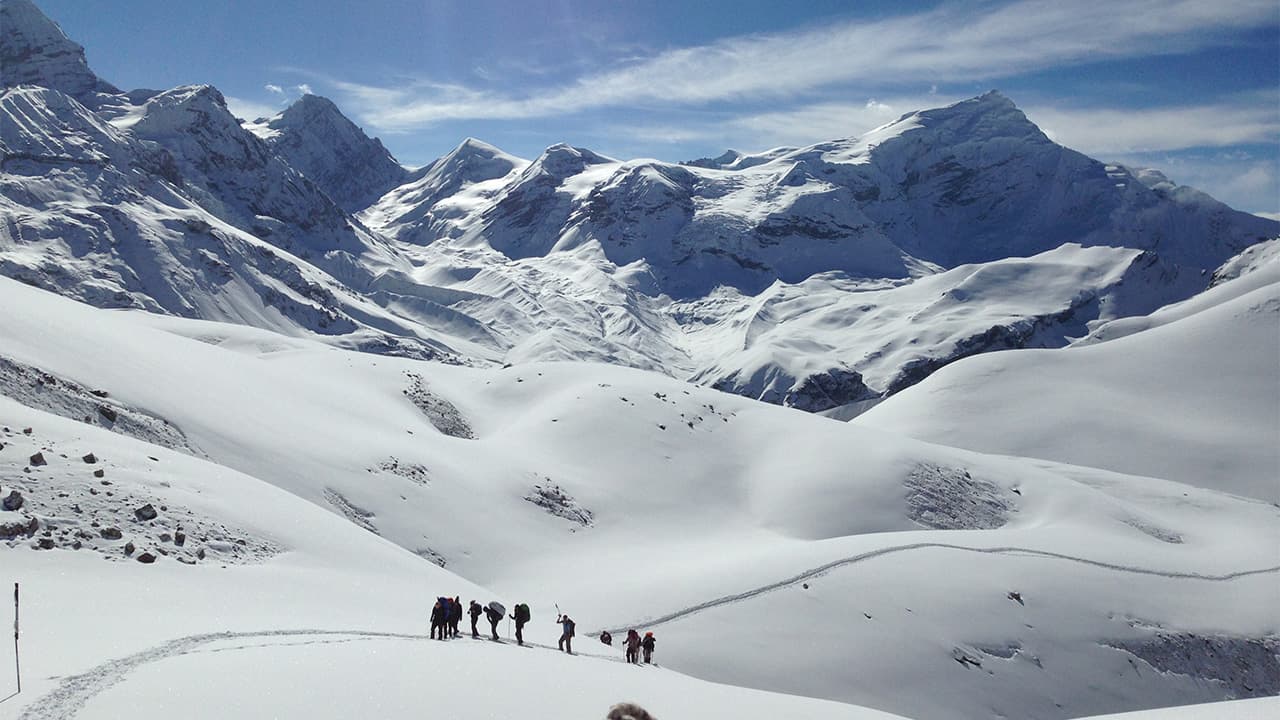
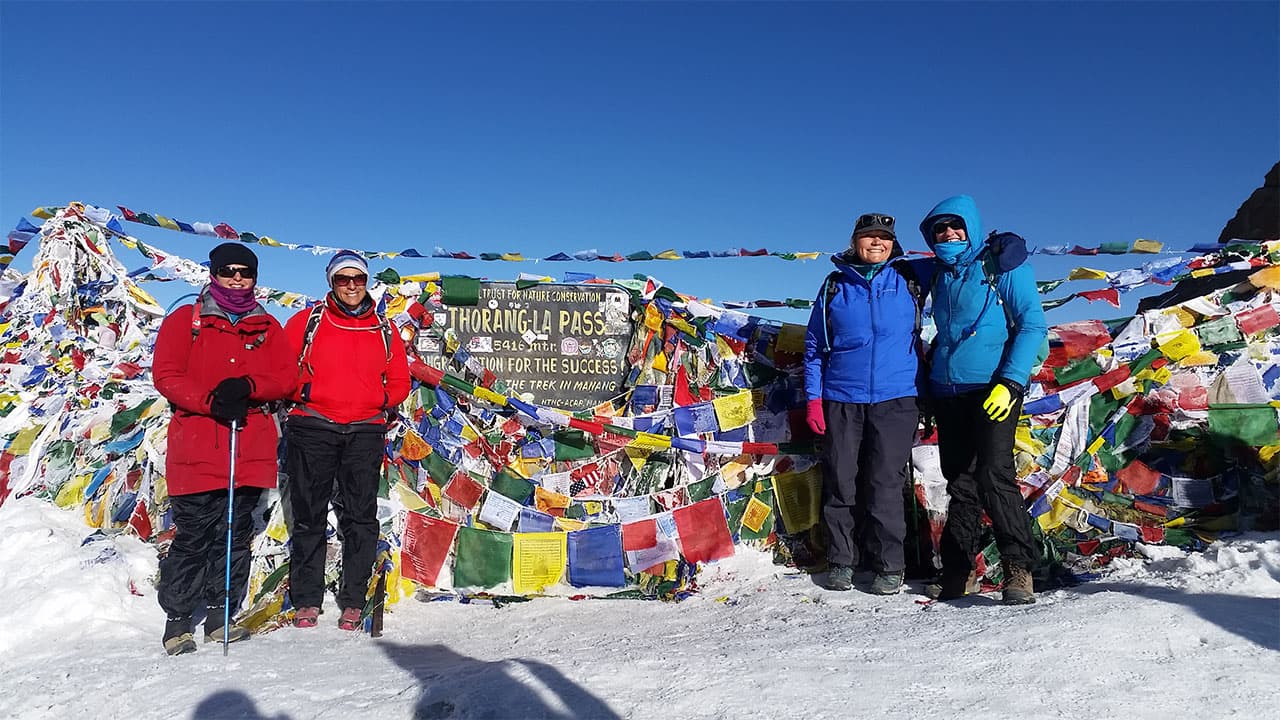
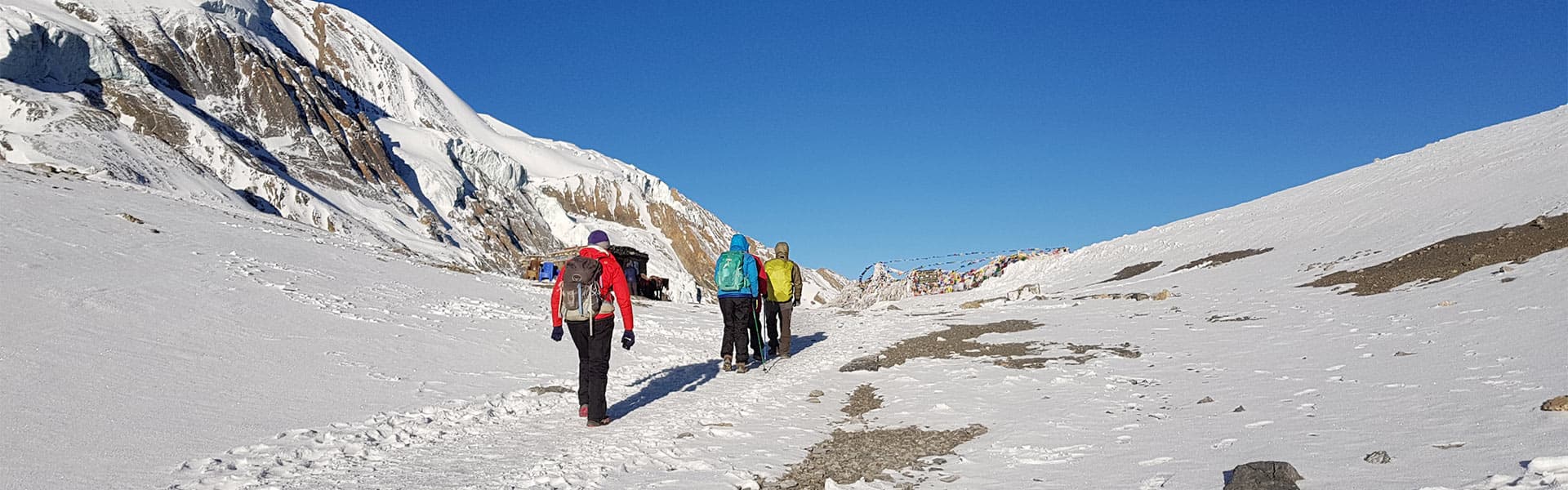
Phase 3, the high pass crossing, Days 12 to 14. You rejoin the main circuit at Yak Kharka, move up to Thorong Phedi, and cross the Thorong La at 5,416 m in the dark and cold of an early start. You drop 1,616 m into Mustang and finish at Muktinath.
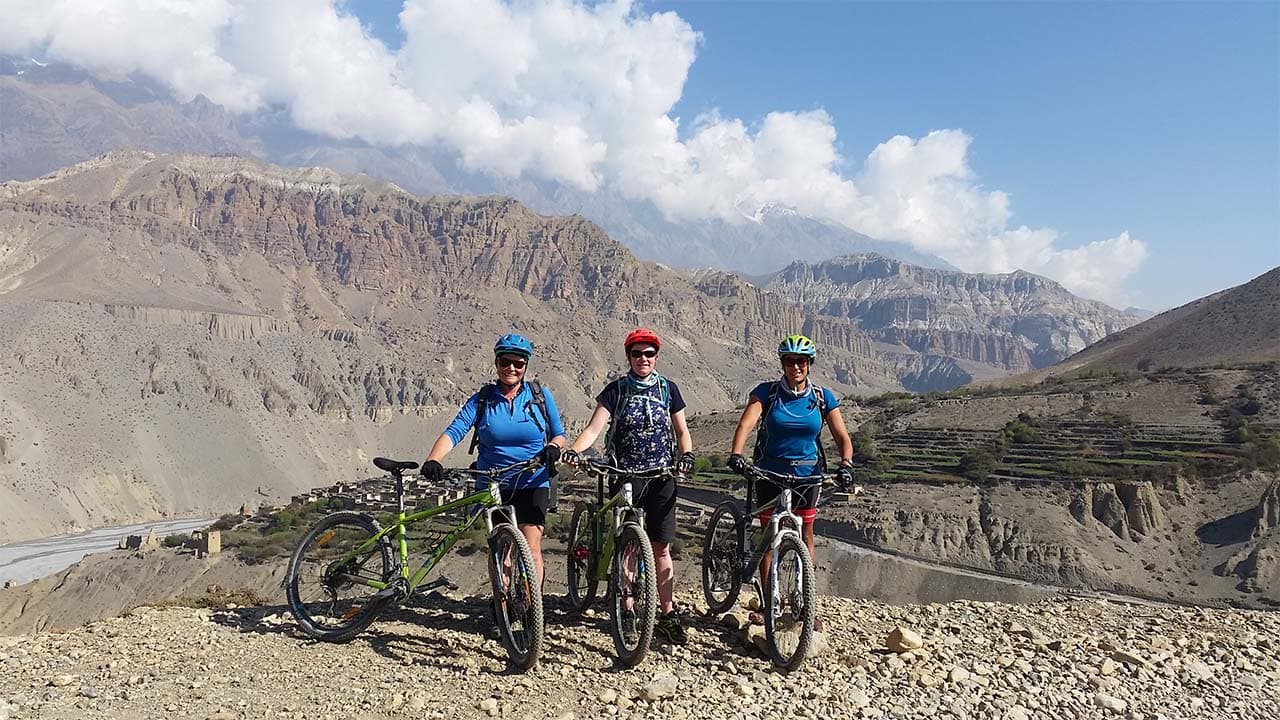
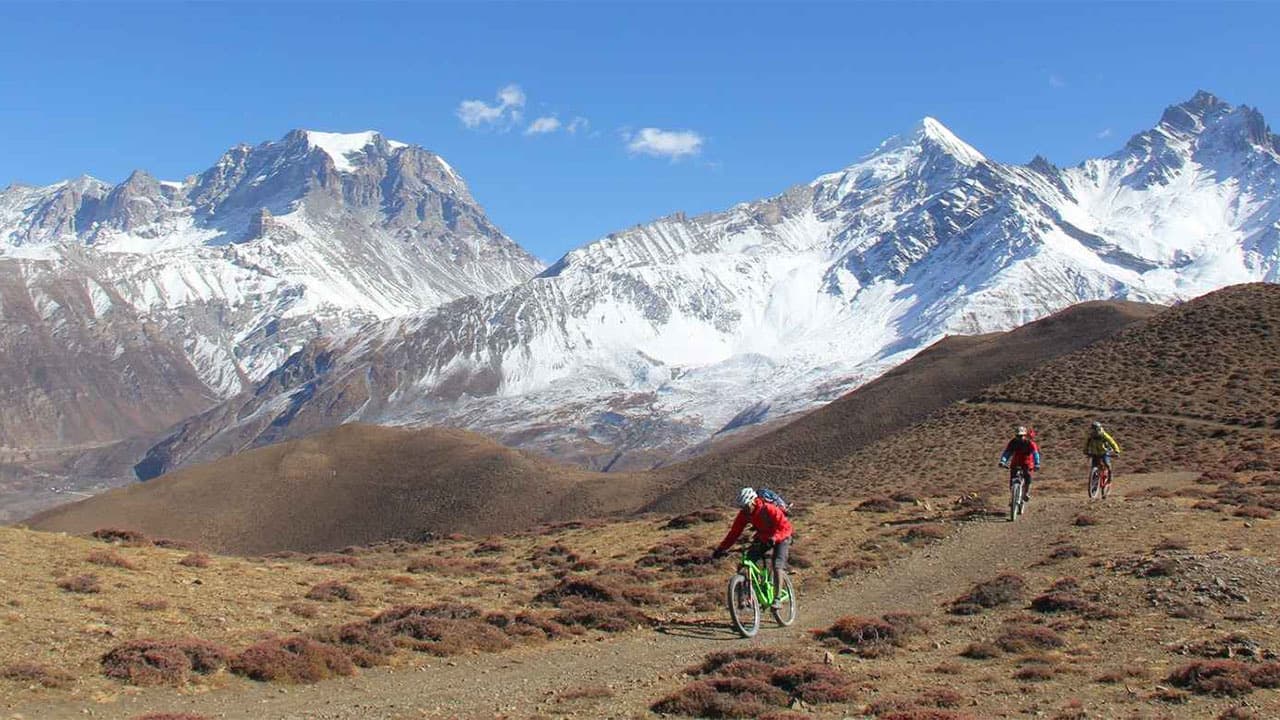
Phase 4, the gravity descent, Days 15 to 17. Your bike is waiting at Muktinath. Two full riding days take you down the Lupra valley to Marpha and then through the Kali Gandaki gorge to Tatopani, followed by the drive to Pokhara and the return to Kathmandu.
Why do we split the hiking and the biking? Why did we build it this way?
Every mountain-biking outfit in Nepal will tell you the same thing about the classic Annapurna Circuit MTB route: the section above Manang is where the dream gets hard. Loose rock, thin air, and a 5,416 m pass mean most riders spend hours pushing and carrying their bike rather than riding it, a punishing, often demoralizing stretch that has nothing to do with why anyone signs up for a mountain bike holiday in the first place.
So we split the two disciplines by strength. You trek the high, thin-air, technically simple-but-physically-serious section on foot, with poles and lungs doing the work they're built for. Your bike, meanwhile, travels ahead by jeep and meets you at Muktinath, tuned and waiting right at the top of nearly 3,000 vertical meters of the best downhill terrain in Nepal. From there, every kilometre down is one you're actually meant to pedal.
It's a simple idea, and it's what makes this itinerary different from a standard MTB circuit tour. It's also worth being upfront about: a fast 17 days; see the honesty section below before you book.
This is not a beginner's trip. It's built for people who are fit, adaptable, and comfortable being tired, cold, and happy all at the same time, often within the same afternoon.
Who this trip is built for
This trip suits you if:
You want the Annapurna Circuit with a bike, but you do not want to grind or carry a bike up a 5,416 m pass.
You enjoy both multi-day trekking and technical or flowing descents, and do not want to choose between them.
You want a serious high-altitude objective, Tilicho Lake and Thorong La in one trip, with the riding as the reward rather than the whole job.
You care about acclimatizing properly. Ten days of walking up, with a rest day at Manang and the Tilicho detour, is a far better altitude profile than most bike-only itineraries manage.
You are travelling in a mixed group where not everyone rides at the same level, since the whole climbing half is on foot.
If that middle point is the one that stopped you, take the full bike crossing instead. Our Annapurna Circuit Guided Tour rides the whole loop over 15 days, climbs and all, with the bike going over the Thorong La with you. Same mountains, same pass, ridden from start to finish.
Trail composition: what you actually walk and ride on
The trip splits into ten days on foot and two days riding, and the ground changes completely between them. Because we route you on the NATT trails, the waymarked paths built to keep walkers off the jeep road, and because you start at Dharapani rather than Besisahar, you walk very little road.
On foot, Dharapani to Muktinath, about 114 km
On the bike, Muktinath to Tatopani, about 76 km
Total descent on the bike is about 2,910 m across the two days. The ground is dry, abrasive and sharp, and shale cuts sidewalls, so if you bring your own bike, see our Annapurna Circuit bike setup guide. Our fleet bikes are already set up for it.
Altitude, acclimatization and AMS
This trip sleeps above 4,000 m for five nights and reaches 5,416 m. Altitude is the biggest risk on the trip, well ahead of the riding.
The itinerary is built around it. You gain height on foot over ten days, with a rest day at Manang and a Tilicho detour that has you sleeping at 4,060 m and 4,150 m before you go near the pass.
Mild AMS is common, and most people feel something up high: headache, feeling sick, no appetite, broken sleep. The answer is to stop climbing, drink, rest, and let it clear.
Your guide is Wilderness First Responder certified, carries a pulse oximeter, supplementary oxygen and a first aid kit, and checks the group daily. They can slow the trip, drop the Tilicho detour, or send someone down with a crew member. That call is theirs, and it is not negotiable on the trail.
Fitness, and how to get ready
Be realistic about what this asks. Ten trekking days, four of them above 4,000 m, one of them a nine-hour pass day, followed by two full days on a bike descending rough ground.
If you are starting from a reasonable base, give yourself three to four months :
Long hikes. Build up to back-to-back days of 5–7 hours with a loaded daypack on hilly terrain.
Train descents. Practice downhill walking, step-downs, and lunges to prepare your legs.
Ride regularly. Do 2–3 rides a week, including one with loose, technical descents.
Build cardio. Focus on steady endurance for hours to improve your fitness margin.
Practice with your gear. Hike in your trip boots with your loaded pack to prevent avoidable problems.
Your bike, and what you get
Your bike does not go over the pass with you. It travels from Pokhara to Muktinath by private jeep on the Beni to Jomsom road while you are trekking, and it is there waiting, cleaned and set up, when you come down off Thorong La on Day 14.
What you get on each package:
Standard: a premium mountain bike from Trek, Scott or a comparable brand, with hydraulic disc brakes and tubeless tyres, set up for the terrain.
Premium: a premium full-suspension mountain bike from Trek, Scott or a comparable brand.
Also included on both: essential spare parts, tools, and a mechanic travelling with the group for the riding days.
Bringing your own bike
Plenty of riders want to do a trip like this on their own bike, and you are welcome to. Tell us at booking so we can plan the transfer and make sure our mechanic carries anything unusual. Here is what to sort out first.
Is it worth it
→ If you have a bike you know and trust, and a saddle and cockpit that fit you properly, yes.
Getting it to Nepal?
→ Nepal lets you bring a bicycle in as personal effects without duty, on the understanding that it leaves with you. Declare it on arrival, keep the receipt or serial number handy, and go through the normal channel.
Airlines.
→ Check your specific airline before you book the flight, not after. Book the bike on as sports equipment in advance, because paying at the airport is always worse.
What to bring with it?
A spare derailleur hanger for your exact frame. This is the single most common trip-ending failure in Nepal, and no shop in Mustang will have yours.
Fresh tubeless sealant, less than three months old, plus a plug kit. The shale and river rock here are sharp, and they find weak sidewalls.
Two spare tubes, a good pump, tyre levers and a boot.
Spare brake pads. Two long descents will eat a set faster than you expect, and the dust is abrasive.
A spare gear cable and a quick link, plus a chain tool.
Your own pedals, saddle and grips if you are particular.
Tools for anything non-standard on your bike.
Insurance
Your travel policy almost certainly does not cover your bike. If it is worth insuring, insure it separately for transit and for the trip. We are not liable for damage to a customer's own bike.
Our mechanic will help
They will check your bike over at the briefing and again at Muktinath, and they carry a full tool roll and general spares. What they cannot do is conjure a proprietary part for your frame at 3,800 m, which is why the hanger is at the top of that list.
Safety and support
Two specialist guides. A trekking guide leads the hike, while a professional MTB guide leads the riding.
Wilderness First Responder support. Certified guide with a first aid kit, pulse oximeter, and supplementary oxygen.
Active altitude management. Acclimatization, daily health checks, and flexible planning.
Mechanical support. Tools and spare parts carried for riding days where there are no bike shops.
Porter support. Around one porter for every two riders, so you hike with only a daypack.
Private vehicle support. Vehicle assistance wherever road access is available.
Emergency communication. Phone carried by your guide; verify if a satellite communicator is also included.
Evacuation coordination. Assistance with emergency evacuation and insurance coordination.
Tell us about any medical condition, medication or previous altitude problem before you book. It changes nothing about whether you can come on most occasions, and it changes a lot about how well we can look after you.
Accommodation and food
Kathmandu & Pokhara: 1 night in Kathmandu and 3 nights in Pokhara. Stay in a premium boutique hotel (Standard) or a 5-star hotel (Premium), both with breakfast included.
Mountain lodges: 12 nights in traditional teahouses with simple twin-share rooms. Shared bathrooms are common at higher elevations, with the most basic lodges at Shree Kharka and Tilicho Base Camp.
Single rooms: Available for $399 (Standard) or $499 (Premium), except in the highest villages where availability cannot be guaranteed.
Meals: All meals included from Day 4–16. Enjoy Nepali favorites like dal bhat, plus noodles, soups, potatoes, eggs, Tibetan bread, and simple Western dishes. Vegetarian meals are easy, and vegan options are available with advance notice.
Drinking water: Filtered and treated water is provided throughout the trek. Bring a reusable bottle and optional backup purification tablets or filter.
The route, the regions and the people
The trip crosses three distinct worlds in seventeen days.
Marsyangdi Valley – Gurung Country. Trek through forested river valleys and terraced hillsides in the homeland of the Gurung (Tamu) people, known for their farming traditions and Gurkha heritage. Pass Chame and the apple orchards of Bhratang.
Manang Valley – Nyeshang. Above Pisang, the landscape becomes dry and distinctly Tibetan. Explore ancient villages, the 900-year-old Braga Monastery, and enjoy views of Annapurna II (7,937 m), Annapurna III (7,555 m), Annapurna IV (7,525 m), and Gangapurna (7,455 m).
Mustang & Kali Gandaki – Thakali Country. Cross Thorong La into the arid rain shadow of Mustang, where Tibetan culture dominates. Visit the sacred pilgrimage site of Muktinath, descend into the Kali Gandaki Valley between two 8,000 m peaks, and experience the hospitality and famous cuisine of the Thakali people, descendants of the old Himalayan salt traders.
Wildlife and the Annapurna Conservation Area
The whole route is inside the Annapurna Conservation Area, Nepal's largest protected area, which is why your ACAP permit matters and why the plastic bottle rule exists.
What you have a real chance of seeing: blue sheep, called bharal, on the slopes above Manang, Yak Kharka and especially in the Tilicho valley. Himalayan griffon vultures and lammergeiers, which are enormous and often close. Yaks in the high pastures. Langur and macaque monkeys in the lower forests. Himalayan tahr on steep ground.
Snow leopards live in this landscape. You are very unlikely to see one. Anyone who tells you otherwise is selling something.
Tour responsibility
The Annapurna Conservation Area is a working landscape, not a park. People live, farm, and herd along every part of this route, and bikes are still a newer presence on these trails than walkers. How we travel through matters.
On the trail:
Yield to horses and yak caravans, and always stand on the mountainside, never the drop side. Animals will not move for you, and people have been pushed off trails.
Walkers have right of way over bikes. Slow down, say hello, pass wide.
Stay on the trail. Cutting switchbacks on foot or skidding on a bike starts erosion that the next monsoon finishes.
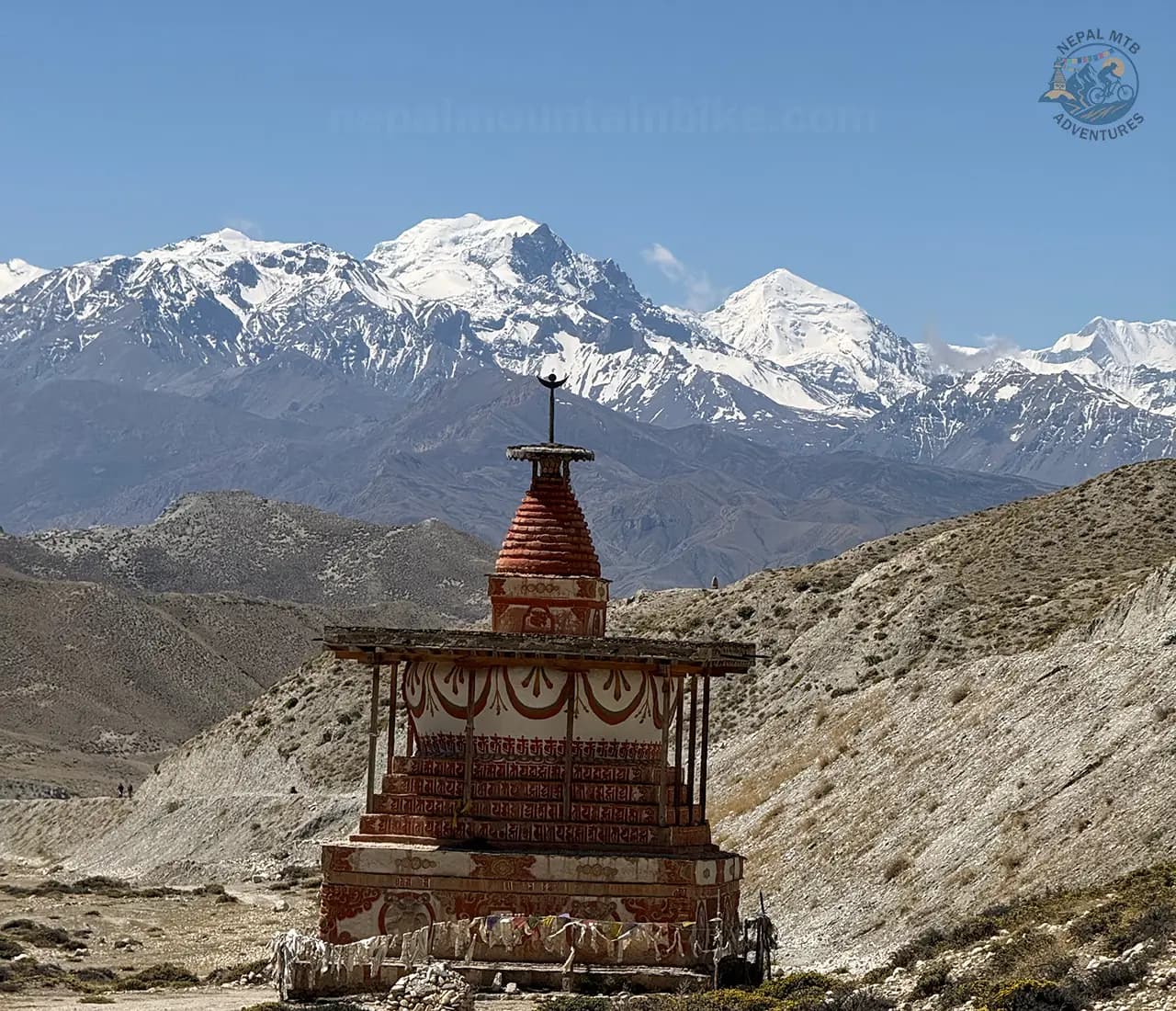
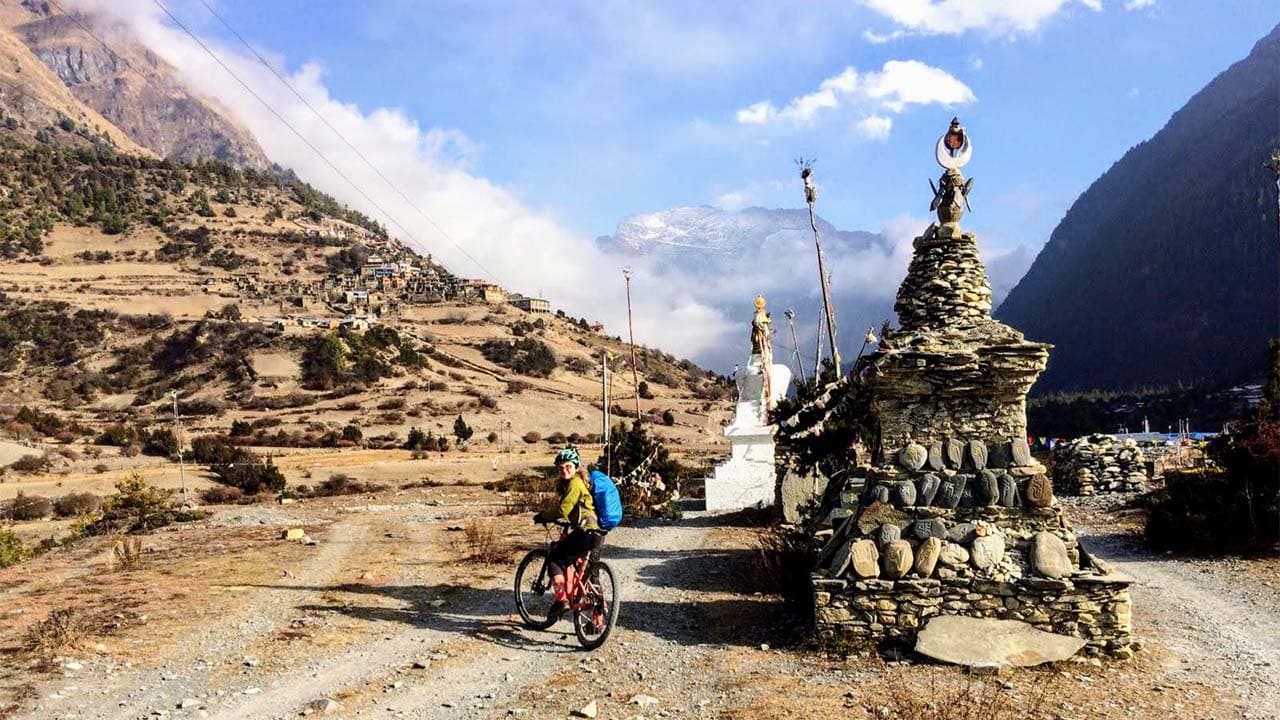
Pass mani walls, chortens and prayer wheels on the left, keeping them to your right, as local people do.
Ask before photographing people, and accept no as an answer.
The people who make it work:
We use local guides and local porters, employed and paid directly, and we stay in locally owned teahouses rather than bringing our own supply chain in behind us.
Buy your tea, meals and snacks at the lodges you stay in. That is how the money reaches the villages you are walking through.
Permits
We arrange every permit for you. You do not need to organise anything yourself, and the cost is in your package price.
You do not need a restricted area permit for this trip. That applies to Upper Mustang, north of Kagbeni, which this route does not enter.
What to pack
We provide the helmets, bike, tools, spares and a porter for your main luggage. Your main bag is limited to 15 kg, 33 lbs, because a person carries it.
Riding gear
Riding glasses or goggles with UV protection.
Padded shorts, riding jersey, durable trail trousers, full-finger gloves.
Windproof and waterproof riding jacket.
Your own pedals and saddle if you are particular.
Trekking clothing
Broken-in waterproof trekking boots. Broken in. This is not negotiable.
Casual shoes or sandals for the lodges.
Down jacket rated to around -15 to -20 C for the pass and for Tilicho Base Camp.
Waterproof and windproof shell jacket and trousers, Gore-Tex or equivalent.
Warm hat, buff or balaclava, sun hat.
Liner gloves and heavy insulated waterproof gloves.
Trekking socks, several pairs, plus one warm pair for sleeping.
Practical things to know
Money. Bring enough Nepali rupees in cash for drinks, charging, showers, Wi-Fi, and tips. ATMs are available in Besisahar, Chame, and Jomsom, but are unreliable. Withdraw cash before leaving Pokhara.
Phone & Wi-Fi. A Nepali SIM works well in the lower valleys, but coverage becomes weak above Manang and unreliable over Thorong La. Most lodges offer paid Wi-Fi, though it is slow and weather-dependent.
Charging & showers. Expect to pay for charging devices and hot showers in higher villages. Bring a power bank and fully charge your devices during the Manang acclimatization day.
Health. Update routine vaccinations and consult a travel clinic about Hepatitis A and typhoid before your trip. A dental check-up is also recommended.
Travel insurance (required). Your policy must cover trekking and mountain biking up to 5,500 m, including helicopter evacuation and repatriation. Proof of insurance is required before the trek begins.
Tipping. Tipping guides and porters is optional but customary. Your guide will explain local practices at the end of the trip.
Responsible travel. Refill water bottles instead of buying plastic bottles, carry out your rubbish, ask before photographing people or monasteries, walk left of mani walls and chortens, and always give pack animals the inside of the trail.
Ready to walk up and ride down? Tell us your dates and your group size, and we will confirm availability, match you to the right package, and start on your bike, permits, and logistics.
Tour Route map
Book Now for a Lifetime Adventure!