

Kathmandu Valley, Nepal's Easiest Place to Start Mountain Biking
The Kathmandu Valley is the easiest and most rewarding place to start riding in Nepal. Ringed by green hills and dotted with ancient temples, the valley packs world-class day trails right on the doorstep of the capital. You can roll out of the city in the morning, climb into pine and rhododendron forest by midday, and be back for dinner with Himalayan views and a UNESCO temple already behind you: no long drives, no big expeditions, just great riding within reach.
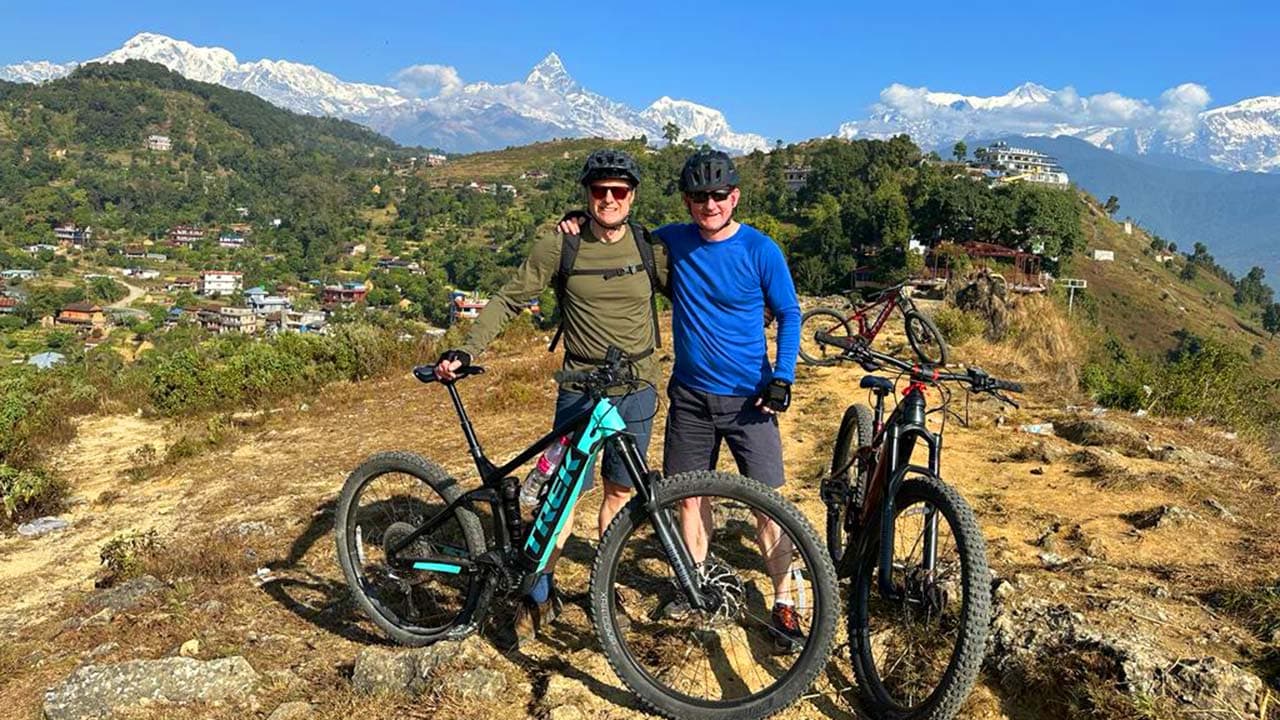
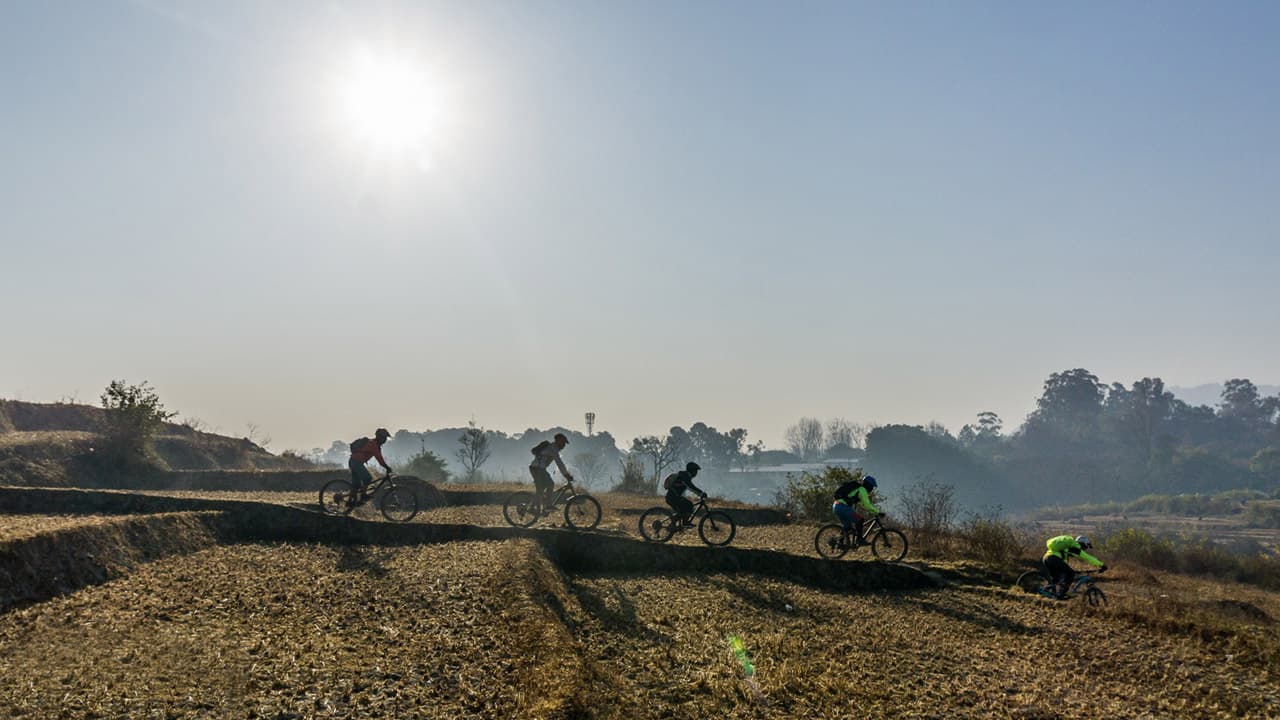
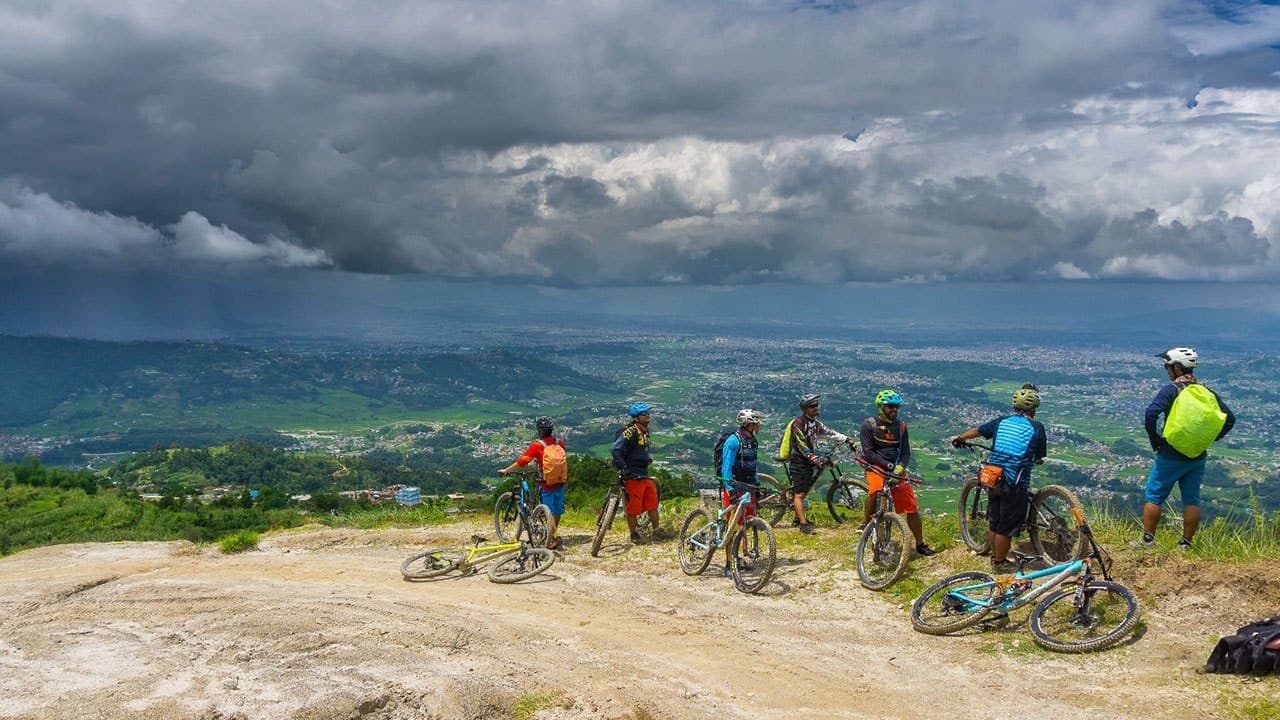
What makes the valley special is the mix of nature and culture in such a small space. The high rim that surrounds Kathmandu is laced with trails that climb to viewpoints like Nagarkot, Kakani, and Shivapuri, where on a clear day you can see peaks stretching from Langtang all the way toward Everest. Drop off those ridges, and you are soon weaving through forest singletrack, terraced farms, and old villages, often finishing at a centuries-old shrine or living heritage town.
This is the perfect destination for your first ride in Nepal, for shaking off jet lag, and for getting used to the altitude before a bigger trip. It is also ideal for riders short on time, families, and anyone who wants a strong day of riding without committing to a multi-week tour. The valley has trails for every level, from gentle heritage loops to fast, technical jungle descents.
Where the Kathmandu Valley Is
The Kathmandu Valley sits in the central hills of Nepal, cradled in a bowl of green ridges at an elevation of around 1,400 meters above sea level. The valley floor holds the capital city of Kathmandu along with the historic cities of Patan and Bhaktapur, while a ring of forested hills rises to 2,000 meters and more around the edges. This high rim is where the best riding lives.
For a mountain biker, the layout is close to ideal. The city is your comfortable base, full of hotels, cafes, and bike shops, while real trails begin just a short pedal or shuttle away.
Why Ride the Kathmandu Valley
The valley is famous for two things that come together beautifully on a bike: living history and mountain scenery. This is one of the great cultural crossroads of Asia, with seven UNESCO World Heritage sites packed into the valley alone, including ancient royal squares, golden temples, and sacred stupas. Riding here, you do not just pass scenery, you ride through more than a thousand years of art and faith.
At the same time, the rim trails serve up genuine Himalayan views. From high points like Nagarkot and Kakani, clear mornings reveal a long line of snow peaks, from Langtang and Ganesh Himal to Manaslu and, on the sharpest days, a glimpse toward Everest in the far distance. Add forest singletrack, friendly villages, and easy access, and you have a destination that works for a quick taste or a full week of day rides.
The Trails: Valley Rim Riding
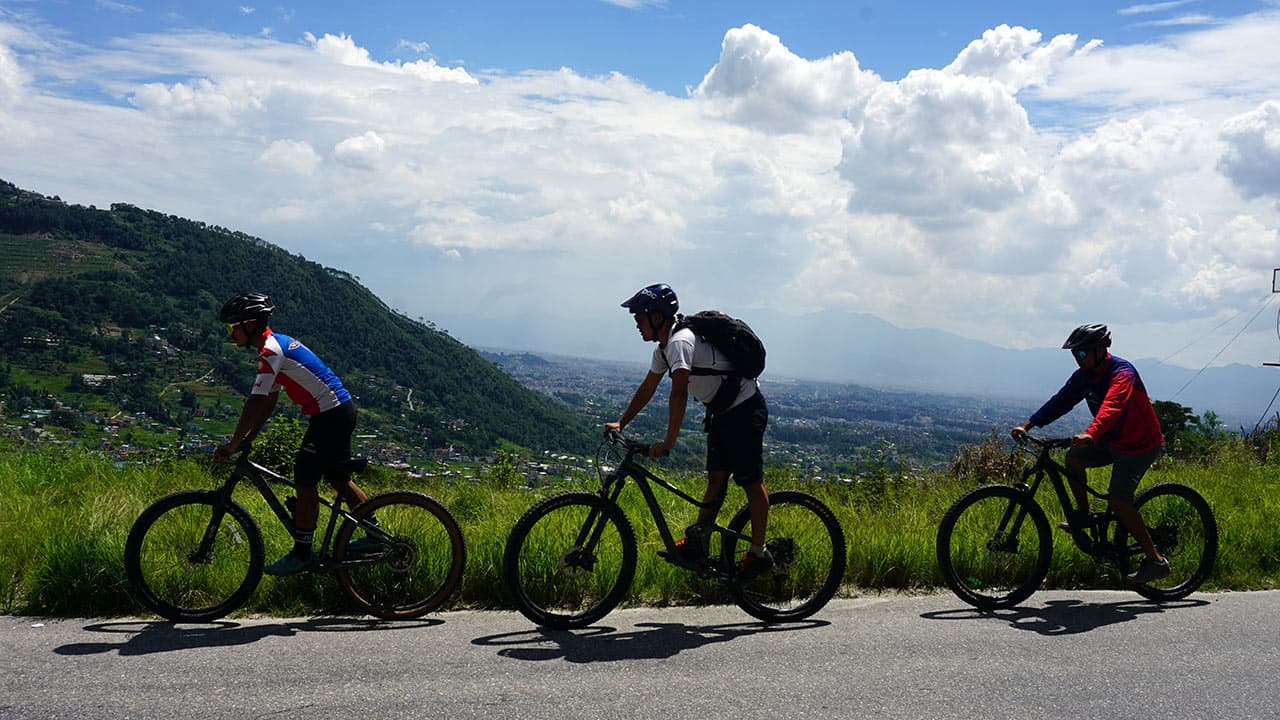
The classic riding here follows the valley rim, the ring of hills that surrounds the city. Trails run in every direction, each with its own character:
North: Nagarjun, Kakani, and Shivapuri National Park, known for forest singletrack and big mountain views
East: Nagarkot and Dhulikhel, famous for sunrise ridgelines and long, flowing descents
South: Phulchowki and Lakuri Bhanjyang, the highest hills on the rim, with longer climbs and quiet trails
West: Chandragiri, Chitlang, and Pharping, a mix of forest, villages, and old pilgrimage routes
These rim routes range from gentle dirt roads to fast, technical jungle descents, so there is something for every level. You can pick an easy heritage loop, a moderate forest day, or a demanding singletrack ride, all within the same valley.
Two Signature Rides
Kakani and Shivapuri. Kakani sits on the northwest rim and is loved for its mountain panorama and its strawberry farms. From the village, you can line up Ganesh Himal, Langtang, and Manaslu across the horizon. The route then enters Shivapuri National Park, where the real singletrack begins. After a climb through the forest, the trail turns into a fast, technical downhill on a skinny jungle path, twisting through the trees for several kilometers. It is one of the best day descents near the city.
Nagarkot to Changu Narayan. Nagarkot is the valley's most famous sunrise viewpoint, with a sweep of peaks stretching from Langtang toward Everest on a clear morning. From there, you descend along a ridge through pine and rhododendron forest, riding mostly wide dirt track with a few rocky sections, which makes it comfortable for intermediate riders. The trail finishes at Changu Narayan, a beautiful hilltop temple dating back to the fourth century and one of the oldest in the country.
Culture Along the Way
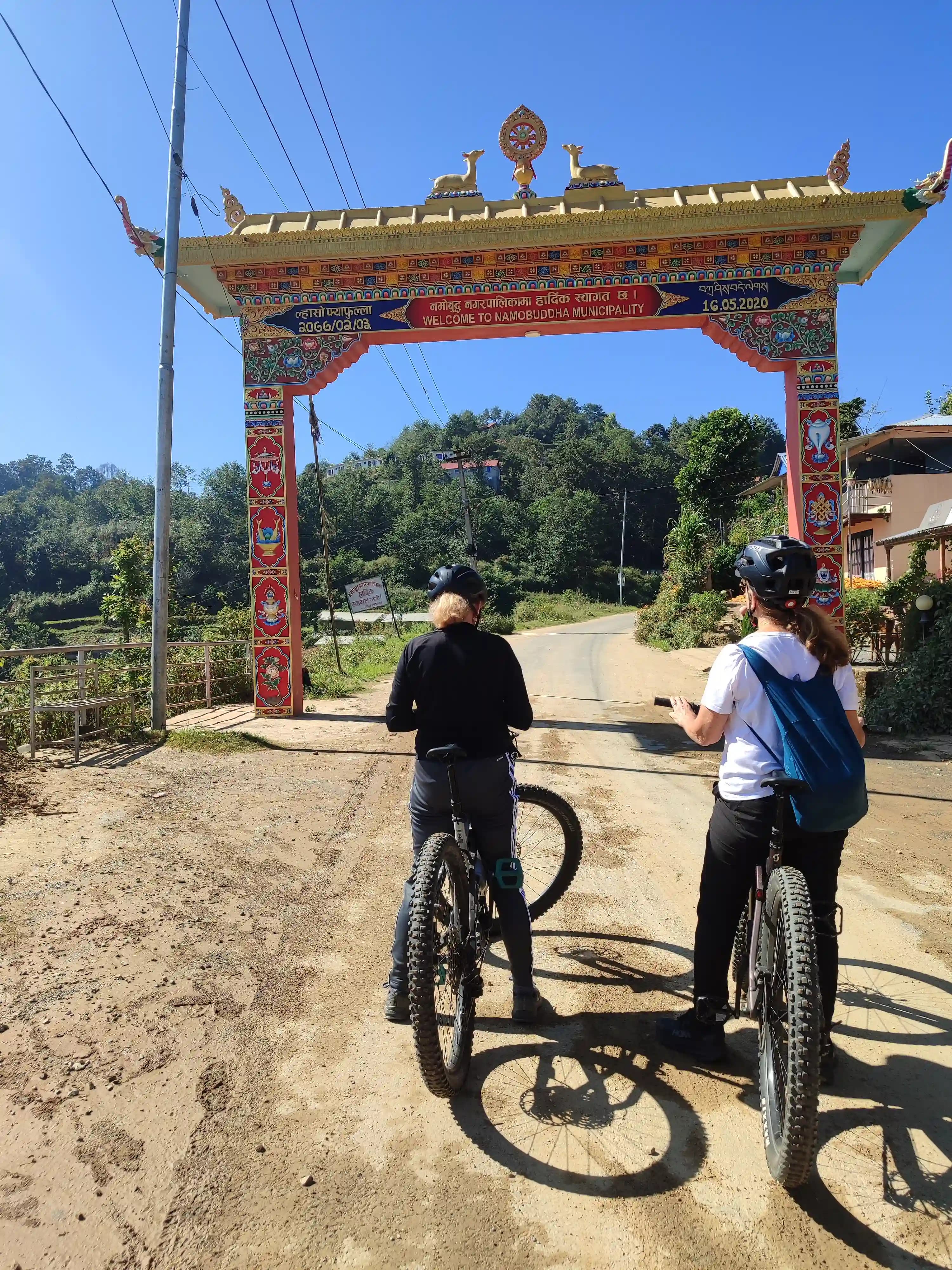
Part of what makes valley riding so special is how often the trails connect to heritage. You might start near the old streets of Thamel, finish at a sacred site like Budhanilkantha or Changu Narayan, or pause at a hilltop stupa with prayer flags snapping in the wind. The valley is also home to the great heritage cities of Patan and Bhaktapur, whose temple-filled squares are easy to explore on rest days. Riding here, history is never far from the trail, and the contrast between quiet forest singletrack and busy ancient streets is part of the magic.
Who the Kathmandu Valley Is For
The valley suits almost everyone. It is the best place in Nepal to take your first ride, beat jet lag, and start adjusting to the altitude before a bigger tour. It is great for beginners, since you can choose easy routes, and just as good for experienced riders who want a fun, technical day on the rim. It is perfect for travelers short on time, because every ride can be done in a single day from the city. Families and casual riders can enjoy the gentler heritage loops, while keen riders chase the fast forest descents.
Best Time to Ride the Kathmandu Valley
The valley has a long riding season thanks to its mild, mid-hill climate.
Autumn (October to November): The best season, with clear skies, crisp air, and the sharpest mountain views.
Spring (March to May): Warm and green, with rhododendron blooming in the higher forest. Views can grow hazy by late spring.
Winter (December to February): Cool but very rideable, with bright, clear days and few crowds. Mornings start chilly, then warm nicely.
Monsoon (June to September): Lush and green, but trails turn muddy and slippery, and clouds often hide the peaks. Rides are still possible between showers.
What to Bring for the Valley
Valley riding is mild and accessible, so packing is simple:
A helmet and your usual riding gloves
Light, breathable riding clothes, plus a light layer for cool mornings
Sunglasses, sunscreen, and a cap for sunny ridges
A hydration pack or water bottle and a few snacks
A light waterproof in spring and monsoon
A camera for the views and heritage sites
We can provide a quality mountain bike or e-MTB in your size, along with a helmet, so you can ride straight off the plane without bringing your own gear.
What Your Valley Trip Includes
Our Kathmandu Valley day tours are built to be simple and stress-free. Most include:
A local English-speaking guide who knows the rim trails
A quality mountain bike or e-MTB in your size, plus a helmet
Shuttle transport to and from the trailhead where needed
Any park entry fees, such as for Shivapuri National Park
Snacks, water, or a meal as listed on the tour
A safety and first-aid plan for the day
Exact inclusions are listed on each tour page, so you know what is covered before you book.
Combine the Valley With Other Regions
The Kathmandu Valley is the natural starting point for almost any biking trip in Nepal. Most riders spend a day or two here first to adjust and warm up, then head off to a bigger destination. It pairs perfectly as the gateway to the Everest and Pikey Peak region in the east, links by bike or e-MTB to Pokhara in the west, and sets you up for high-altitude adventures in Annapurna and Mustang. Tell us your plans, and we will build the valley into your wider route.