

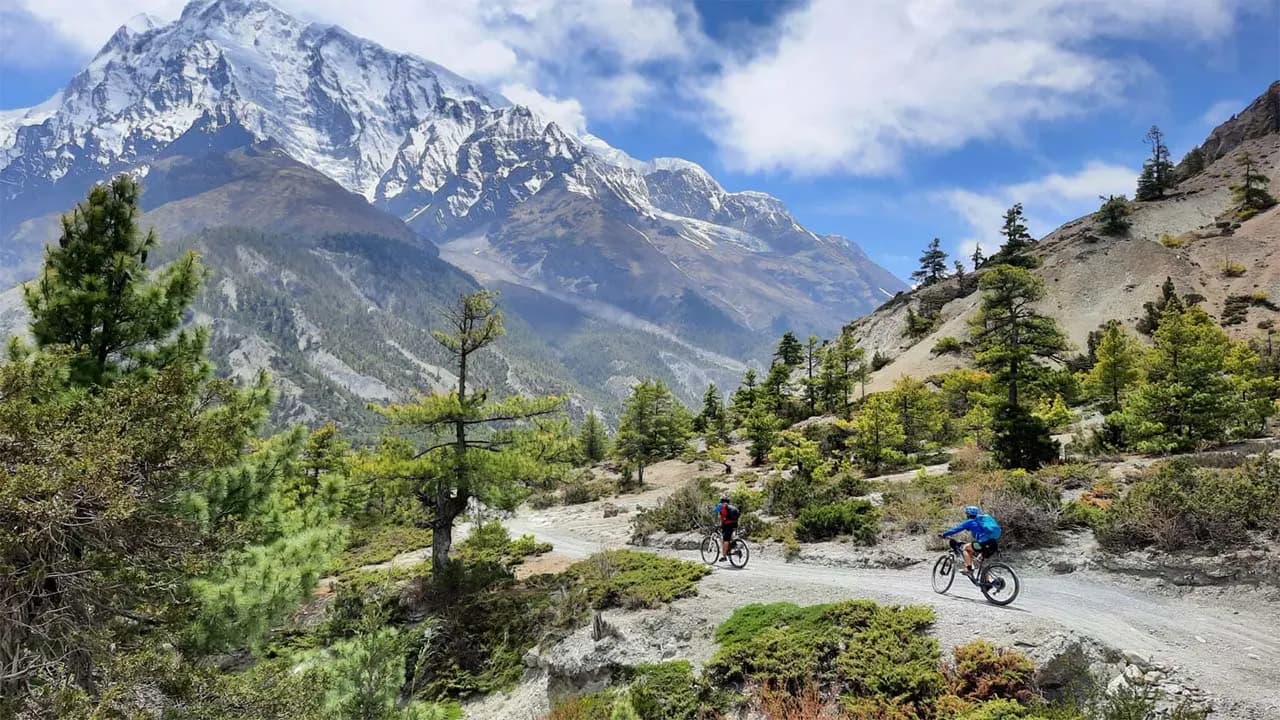
Trek it if you want the slower, more immersive version and you have no off-road riding skill. Bike it if you are a confident mountain biker who wants the descents and has less time. Trekking takes 12 to 17 days and costs less. A guided bike trip takes 12 to 15 days, costs more, and gives you one of the great descents on earth. And if you cannot choose, you can walk the climb and ride the descent, which is what a hike-and-bike trip does.
Bike or trek: the honest comparison
Aspect | Trekking | Mountain Biking |
Duration | 12–17 days (around 23 days before road construction) | 12–15 days on a guided trip |
Skill Required | No technical skills required | Strong off-road mountain biking and descending skills |
Fitness Level | High endurance over many consecutive days | High fitness for shorter, more intense efforts |
Time Spent in Villages | More time exploring villages during the day | Less time in villages due to longer riding days |
Accommodation | Traditional teahouses | The same teahouses |
Long Descents | Long, often dusty walks downhill | One of the most rewarding parts of the trip |
Thorong La Pass | Crossed on foot | Crossed on foot while pushing the bike |
Best Suited For | Most reasonably fit trekkers | Experienced mountain bikers with technical riding skills |
The thing nobody tells you: the road changed the answer
For about twenty years, roads have been pushed further and further into the Annapurna Circuit. A jeep road now runs up the eastern side from Besisahar to Manang, and up the western side from Beni all the way to Muktinath. What that leaves untouched is the middle: Manang, over the Thorong La, and down to Muktinath.
For trekkers, this was a loss, and they say so plainly. Walkers describe sharing the trail with jeeps and dust from morning to evening, and the sense that the quiet has gone from much of the route.
How long does each take?
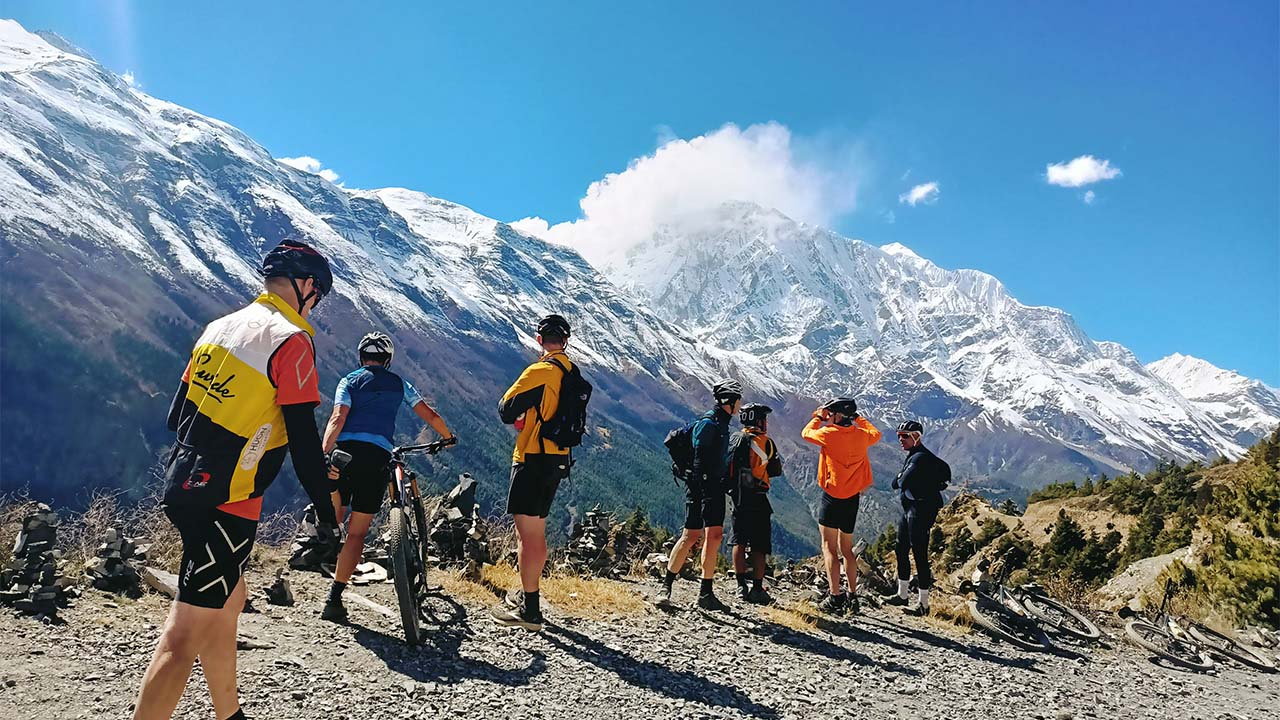
Trekking the full circuit usually takes 12 to 17 days, with 12 to 14 being the sweet spot for a good pace and proper acclimatization. Before the roads, it took around 23 days. Jeep-assisted short versions now run in as little as 6 to 10 days.
A guided mountain bike trip takes 12 to 15 days.
The interesting part is why biking is faster, because it is not that you climb faster. Climbing at altitude on a loaded bike is slow, and good operators deliberately keep riding days to five or six hours because of the thin air and the terrain. The time you save is all on the way down. The western side, from Muktinath down the Kali Gandaki to Pokhara, takes trekkers several days of walking down a dusty road. On a bike it is two or three days, and it is the highlight rather than the chore.
Which is harder?
They are hard in different ways, and it is worth being precise about it.
Trekking is a volume challenge. You walk five to seven hours a day, day after day, at increasing altitude, and the difficulty comes from the accumulation. Nothing on any given day is beyond a fit person, but doing it for two weeks is.
Biking is a spikier challenge. The days are shorter, but the efforts are harder: steep loaded climbs where the air holds half the oxygen you are used to, technical descending when you are tired, and stretches of pushing and carrying the bike. One well-known operator grades the fitness requirement at the maximum but the skill requirement only at intermediate, which tells you the fitness bar is the higher of the two.
The fair conclusion is this: biking is not the easy option because it has wheels. If you could not trek the circuit, you probably could not ride it either.
The real gate is skill, not fitness
This is the part that decides it for most people.
Trekking needs no technical skill. You need fitness, sensible boots and patience.
Biking needs genuine off-road ability. One operator that rides the singletrack lines grades the trip Advanced and asks for experience on blue and black trails. A leading route guide says plainly that only very experienced riders should attempt to actually ride the whole thing. You are descending loose rock and exposed switchbacks at altitude, sometimes tired, sometimes in cold.
You will see different skill grades from different companies, and that is not a contradiction. It depends on which lines they ride. A trip that stays mostly on the jeep road is far less technical than one that seeks out the singletrack. Ask any operator which lines they take before you judge the grade.
If you love the idea of the circuit but you are not a confident descender, that does not rule you out. It just means the hike-and-bike version is your answer, and we come back to that below.
What you actually experience
This is where the argument usually gets unfair in both directions, so here is the honest version.
Walking gives you more of the daytime. You move through villages at the speed of the people who live in them. You fall into conversation because you are moving at conversation speed. You see the small things: the mani wall, the woman winnowing grain, the schoolchildren on the path. In the Manang valley in particular, that slowness suits the place.
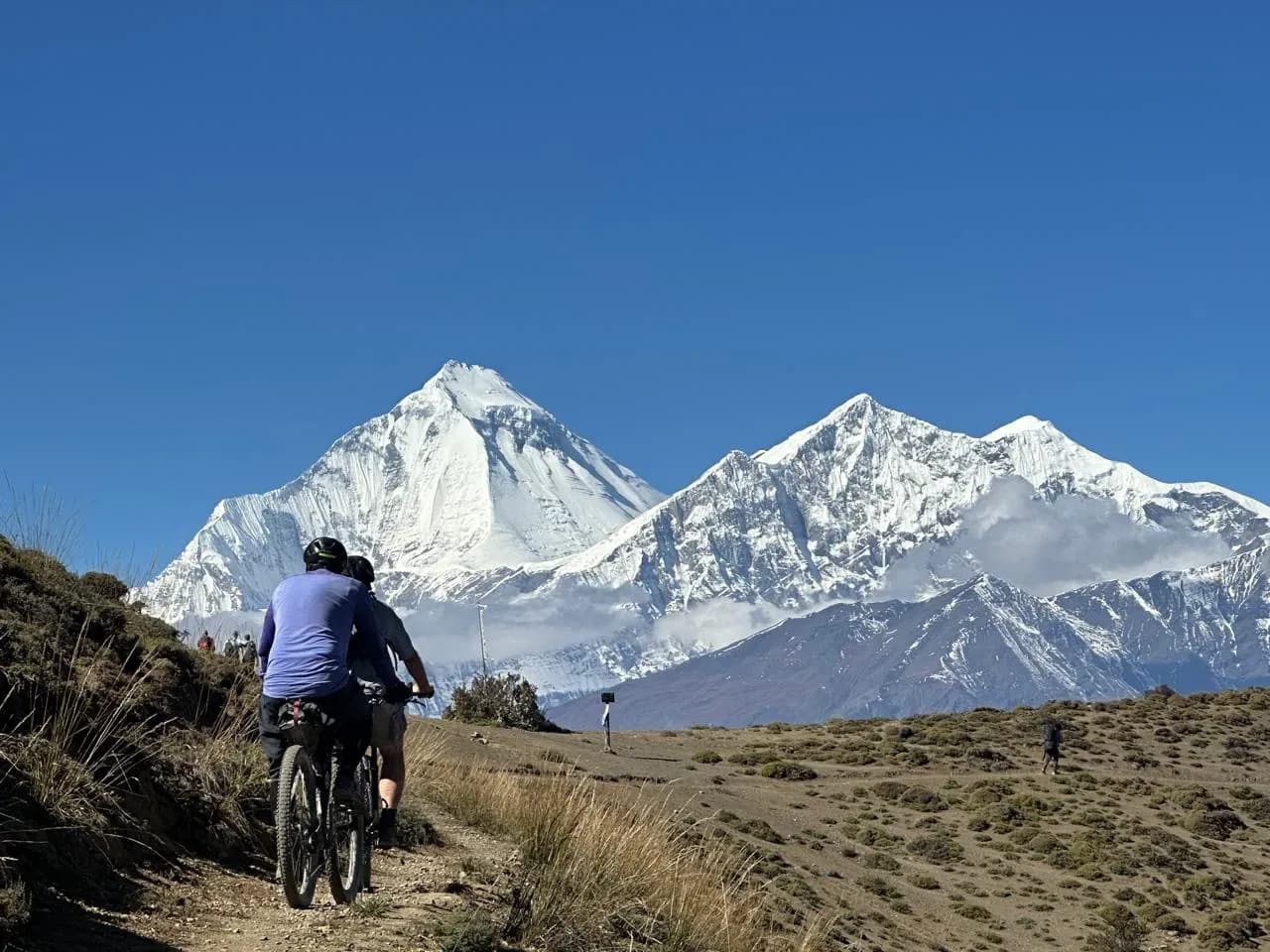
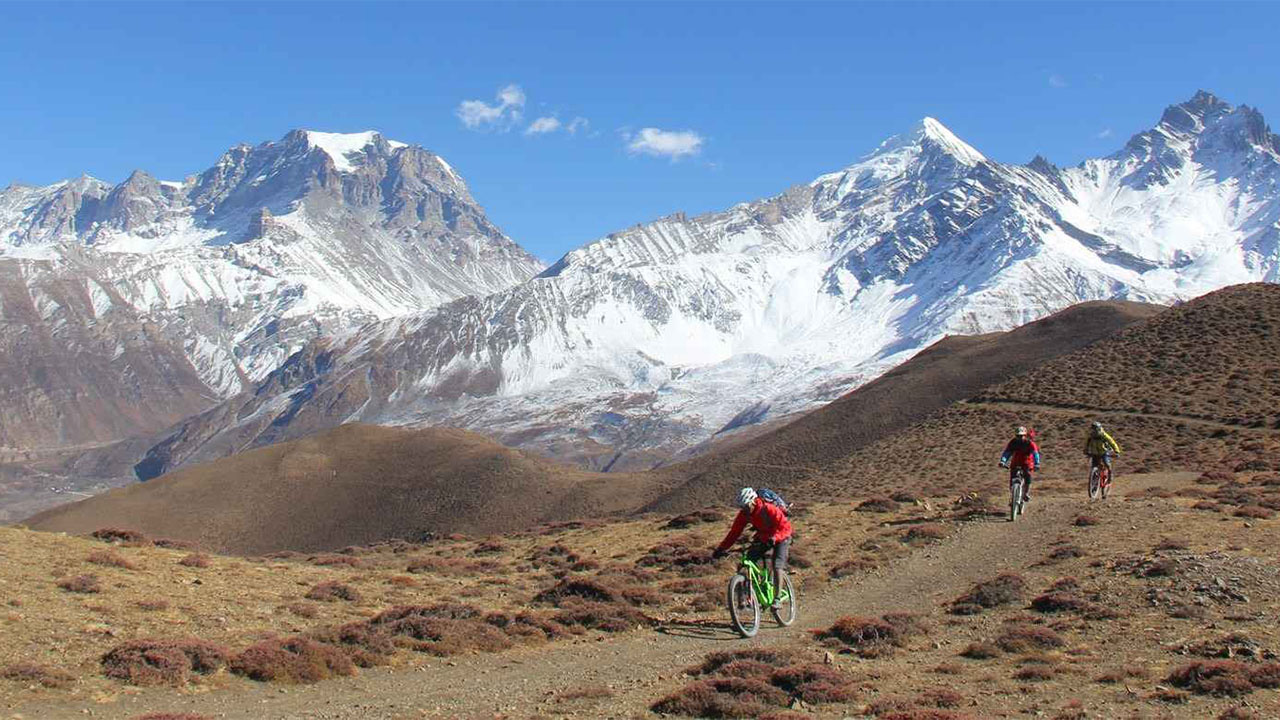
Riding gives you the ground. You cover more of the route under your own power, you get the high traverses and the descents, and the rhythm of the trip is different: effort, arrival, effort, arrival. The Thorong La to Muktinath descent, which a trekker experiences as a long careful walk down, is the day riders remember for the rest of their lives.
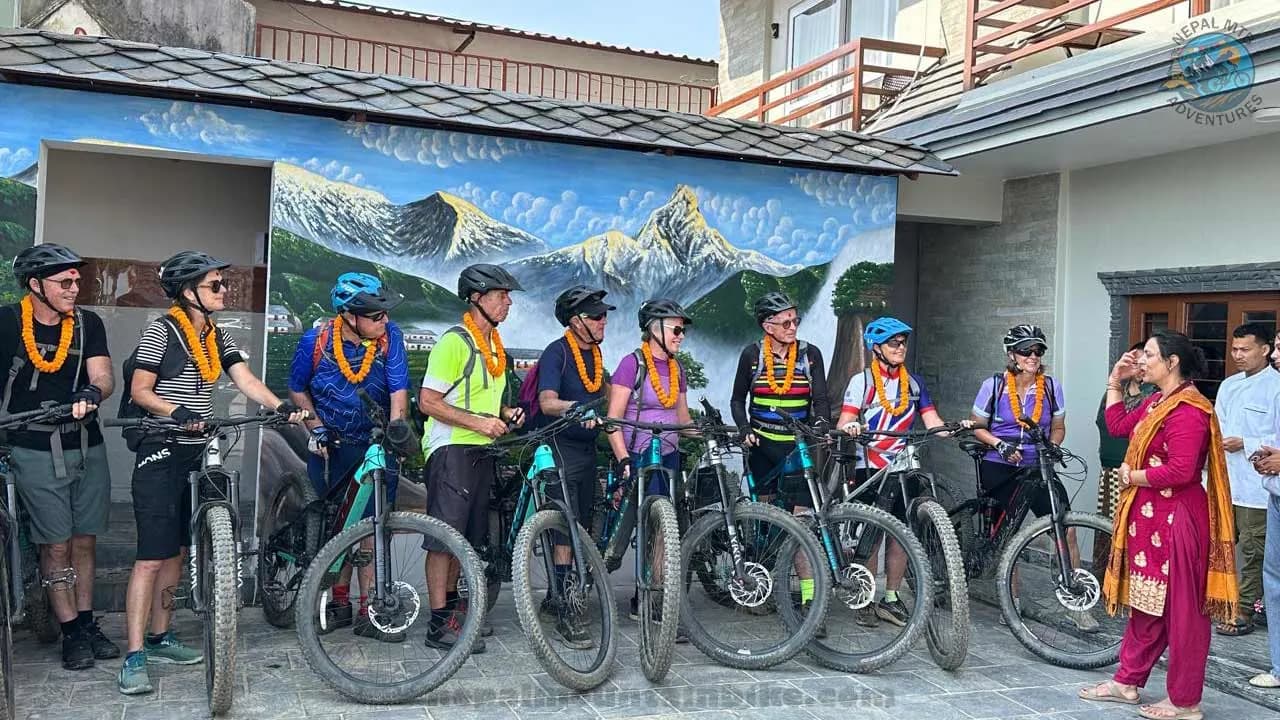
But here is the correction to the usual objection. People say you miss the culture on a bike. You mostly do not. Riders and trekkers stay in the same teahouses, eat the same dal bhat, and spend the same evenings in the same dining rooms talking to the same people. Logistics on this route are, as one route guide puts it, remarkably similar to trekking. What you lose on a bike is daytime village time, not evening village time. That is a real loss, but it is a smaller one than it sounds.
Altitude: Is one safer than the other?
Both cross the Thorong La at 5,416 m, so both carry the same altitude risk, and both need the acclimatization day at Manang.
The mechanism worth understanding is that the main driver of altitude sickness is how fast you gain height, and hard physical effort is a further risk factor. A bike can cover vertical faster than boots, and riding is hard work, so in principle a bike trip can push you higher, sooner, and more tired.
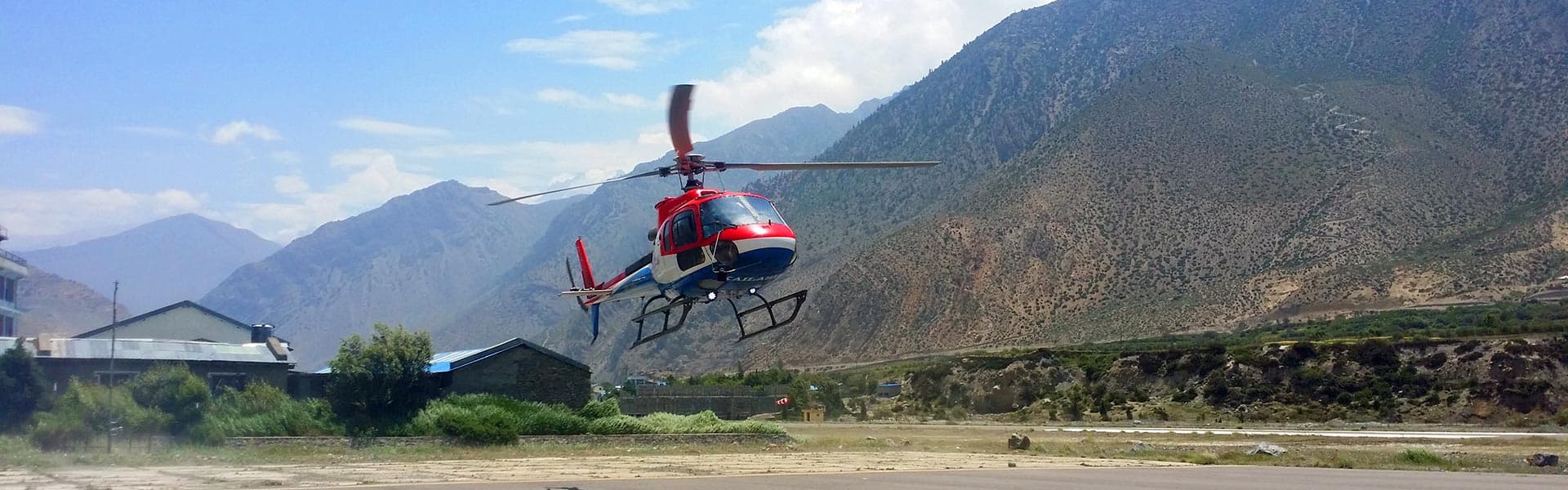
In practice, good bike itineraries deal with it by keeping riding days short and keeping the Manang rest day. And here is the honest twist: the riskiest way to do the Annapurna Circuit is not by bike at all. It is the short jeep-assisted trek that drives you thousands of metres up the valley in a single morning. Whichever way you travel, the thing to protect is the acclimatization, not the mode of transport.
What biking gives you that walking cannot
One thing, and it is a big one: the descents.
Thorong La down to Muktinath. Around 1,600 m of descent in about 9 km, and widely called one of the greatest mountain bike downhills in the world.
The Lupra valley singletrack, off the main jeep road, described by riders as one of the best descents in Nepal.
The Kali Gandaki gorge, the deepest on earth, with a cumulative drop of more than 3,000 m from Muktinath toward the lowlands.
The honest downsides of biking it
If you are considering the switch from boots to a bike, here is what you should know before you commit.
The hike-a-bike is real. Crossing the Thorong La means pushing and carrying your bike for roughly 3 to 5 km, taking three to six hours, before dawn, in cold, on gradients that get brutally steep. On a guided trip, porters help, but you still walk it.
The best descent is not all rideable. See above.
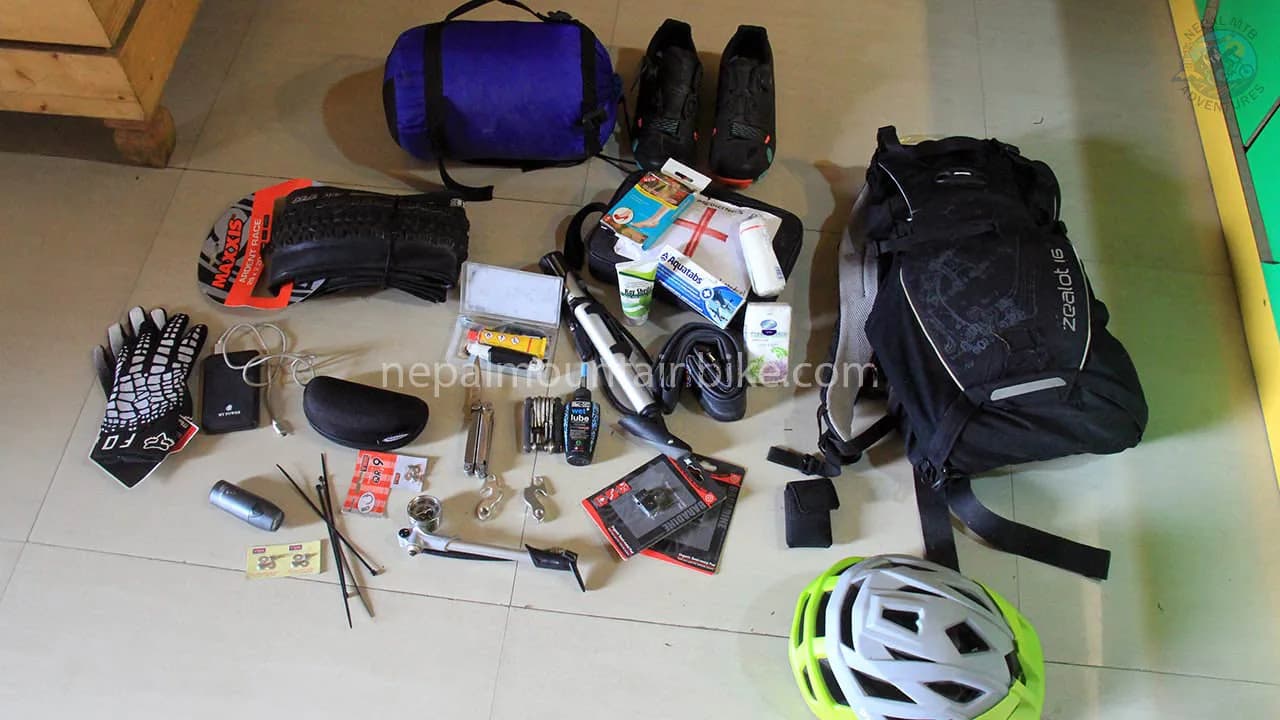
You have a bike to look after. Riders report brakes behaving oddly at altitude and pads glazing from long descents. You carry tools, spares and the responsibility.
The skill gate is real. This is not a route to learn to mountain bike on.
Less time in villages during the day.
Dust. You are on the same jeep track as the trekkers who complain about it, at least as far as Manang. Passing through it faster is better than walking in it, but it is not clean air.
Some parts of this route are simply better walked. The old footpaths, and the pass itself, are walking terrain.
So who should trek, and who should bike?
Trek it if:
You have no off-road riding experience, or you do not enjoy technical descending.
You want the slowest, most immersive version, with the most daytime contact with the villages.
Your budget matters and you want the cheaper option.
You are travelling with people of mixed ability who all walk.
Bike it if:
You are a confident mountain biker who is comfortable on loose, steep, rocky descents.
You want the big descents, which are the single strongest argument for riding.
You have slightly less time, or you simply prefer covering ground.
You like the idea that the jeep road that annoys walkers is the surface you get to use.
And note what this is not about: it is not about age. We have had riders in their seventies cross the pass. It is about skill and experience.
Or do both: the hike-and-bike answer
If the honest answer is "I want the culture and the acclimatization of walking, but I also want those descents," you do not have to choose.
See the trip: Hike and Bike Annapurna Circuit, 15 days.
If you decide to ride it
We run the Annapurna Circuit four ways, and the right one depends on your answer to everything above.
Annapurna Circuit Mountain Biking Guided Tour, 15 days. The standard way to ride the circuit, and the best starting point for most riders.
Annapurna Circuit Mountain Biking Expedition, 14 days. More distance and a bigger support crew, ridden out of Pokhara rather than driven to the trailhead.
Hike and Bike Annapurna Circuit, 15 days. Walk up, ride down.
Annapurna Circuit and Upper Mustang, 22 days. The circuit plus the restricted kingdom of Lo.
For the full route details, read our complete Annapurna Circuit route guide, or compare the day-by-day itinerary options. The next question is which bike, and that one is worth getting right
The Annapurna Circuit is one of the great journeys either way. Walking gives you the slow version, closer to the people and the detail, for less money. Riding gives you the ground and the descents, for more money and a bit less time, if you have the skill to enjoy it.
And if the honest answer is that you want a bit of both, that option exists, and it splits the route exactly where the route splits itself.
Talk to our team if you want help deciding which version suits you.
Frequently asked questions
Should I trek or bike the Annapurna Circuit?
Trek it if you have no off-road riding skill or you want the slowest, most immersive version. Bike it if you are a confident mountain biker who wants the descents. If you want both, walk the ascent and ride the descent on a hike-and-bike trip.
Is biking the Annapurna Circuit harder than trekking it?
It is harder in a different way. Trekking is a long accumulation of walking days. Biking has shorter days but harder efforts, technical descending at altitude, and stretches of pushing the bike. If you could not trek it, you probably could not ride it.
Do I need mountain biking skills to ride the circuit?
Yes, real ones. Operators who ride the singletrack lines ask for experience on blue and black trails. It is not a route to learn on. If you are not a confident descender, the hike-and-bike version is the better fit.
Do you miss the culture if you bike it?
Less than people think. Riders and trekkers use the same teahouses, eat the same food, and share the same evenings. What you lose is daytime village time, not the evenings.
How many days do I need for each?
Trekking usually takes 12 to 17 days, biking 12 to 15 on a guided trip. The time saving on a bike comes from the descents, not from climbing faster.
Do you have to carry your bike over the Thorong La?
Yes. On every bike itinerary, the pass is pushed and carried on foot, roughly 3 to 5 km, taking three to six hours. Porters help on supported trips.
Can I walk parts of it even on a bike trip?
Yes, and most riders do. Nobody rides every metre of this route, and on a guided trip walking a section is normal.
Is one safer than the other at altitude?
Both cross the same 5,416 m pass, and both need the Manang acclimatization day. Riding is harder work, which is an altitude risk factor, but the riskiest version of this trip is actually the short jeep-assisted trek that gains thousands of metres in a morning.
When is the best time for either?
Autumn, late September to November, is the prime season for both, with the clearest views and driest trails. Spring, March to May, is the second window. Avoid the monsoon from mid-June to early September, and deep winter, when snow can close the pass.