



You can watch the sun come up over the Annapurna range, ride a mountain bike down the same hill you watched it from, and be on whitewater by midday. Three adventure activities in one day in Pokhara, and you are still back with your afternoon free.
That is what this page is about. A single day in Pokhara that runs all three back-to-back: sunrise from the Sarangkot viewpoint on the ridge above the city, a 15 to 25 kilometre bike descent through the hill villages below it, and an hour and a half of whitewater rafting on the Upper Seti River at the bottom.
Below is the hour-by-hour plan, what each of the three parts is actually like, and why the order cannot be changed.
The day at a glance
What | Details |
What it is | Three adventure activities in one day: sunrise at Sarangkot, a mountain bike descent to the valley floor, then whitewater rafting on the Upper Seti |
How long | About 10 hours door to door, roughly 4:45 am to 2:30 pm |
Where | Pokhara, Nepal. All three activities take place on the same side of the valley |
The riding | 15–25 km, mostly descending, with a mix of cross-country and downhill trails |
The rafting | About 1.5 hours on glacier-fed water; lively but suitable for first-timers |
Who it suits | Anyone comfortable riding a bike and reasonably fit. No previous rafting experience is needed |
Best months | October and November for the clearest mountain views |
Fitness | Moderate. The main challenge is bike handling on loose surfaces rather than climbing |
Why Sarangkot decides your whole day
Sarangkot is a village and viewpoint sitting at about 1,600 metres on the ridge that runs along the north side of Pokhara, roughly 800 metres above the lake. It is the place everyone in Pokhara goes for sunrise, and it is also where the best bike descent near the city starts.
Those two facts sitting on the same hilltop are what make this day possible.
Getting up there is the slow part. The road is steep, rough in places, and takes about forty minutes in the dark. Once you are at the top before dawn, though, you are already standing at the start line for everything that follows. You do not have to travel to the next thing. The next thing is under your feet.
That is why the descent effectively costs you nothing in time. You were coming down the hill anyway. The only question is whether you come down in a jeep looking at the back of someone's headrest, or on a bike through villages that are just waking up.
The hour-by-hour plan
Times shift with the season, because sunrise at Sarangkot is around 5:00 am in summer and around 7:00 am in winter. Your pickup moves with it. Everything below is written for an autumn or spring day.
Time | What is happening | Notes |
4:45 am | Jeep pickup from your hotel in Lakeside | The road up is steep and rough in places. Allow about 40 minutes |
5:30 am | At the viewpoint, in position before first light | It can be cold before sunrise, even in warmer months. Bring a warm layer |
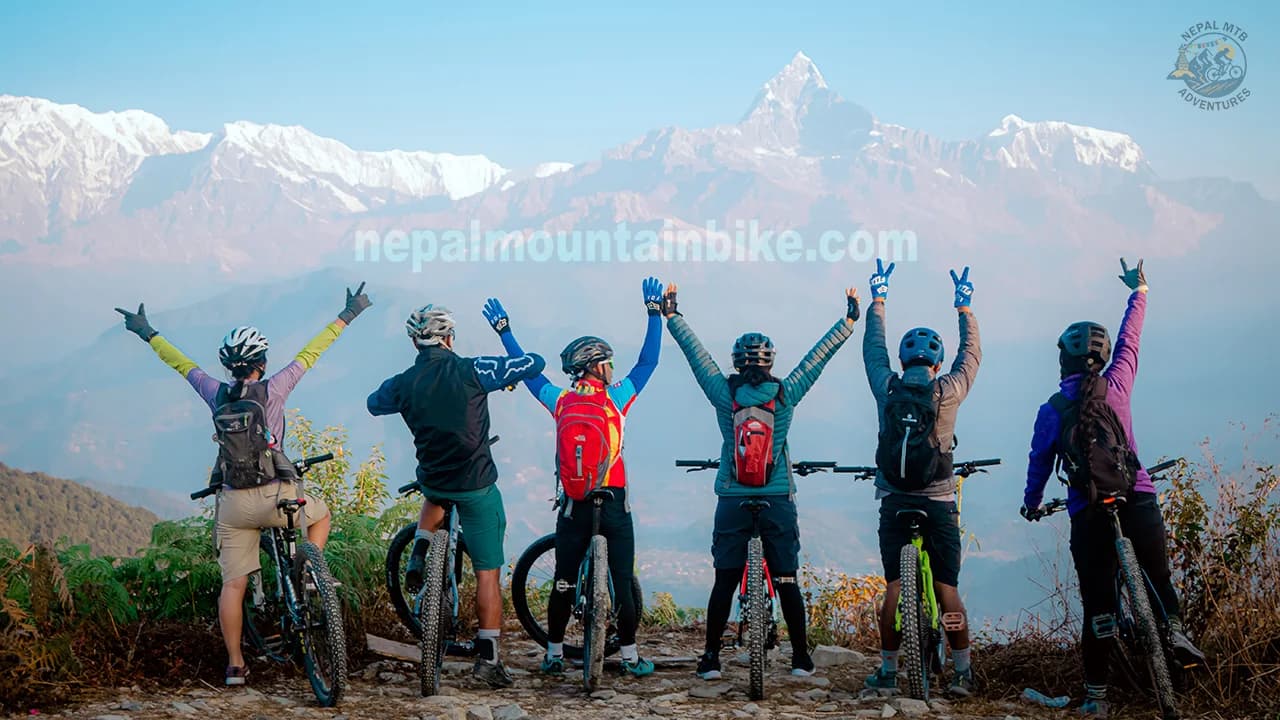
6:00 am | Sunrise over the Annapurnas | Views of Annapurna I (8,091 m), Dhaulagiri (8,167 m), Manaslu (8,163 m) and Machhapuchhre (6,993 m) |
6:30 am | Breakfast at the viewpoint | Most crowds start leaving around this time, making it a quieter part of the morning |
8:00 am | Start the mountain bike descent | Ride 15–25 km, mostly downhill |
8:00–11:00 am | Descent through the villages | Ride through Naudanda, Kaskikot and Dhampus, passing the old Kaskikot king's palace |
11:30 am | Arrive at the river, safety briefing and equipment | Meet the rafting guide and safety kayaker and get fitted with the required safety equipment |
12:00 pm | Start rafting on the Upper Seti | About 1.5 hours of whitewater rafting |
1:30 pm | Finish rafting | Change and prepare for the return to Pokhara |
2:30 pm | Return to Pokhara | Afternoon free to relax and recover |
The whole thing runs roughly ten hours door to door, and you are back with an afternoon to spare.
Why sunrise, then biking, then rafting
The order is fixed, and it is worth knowing why.
Sunrise cannot move. The good part lasts twenty minutes. Everything else in the day flexes by half an hour, so the whole day is built backwards from it.
The descent wants a cool morning. Not for the trail, for you. The villages are also awake and working, which is half of what makes the ride good.
Rafting suits midday. You will get soaked, and you would rather do that at noon than at eight in the morning.
The bike comes before the river because the trail ends at it. Riding down to the water instead of driving between the two is what keeps the day to ten hours instead of twelve.
Run it backwards, and you raft in the cold, bike in the heat, and miss the sunrise.
What the sunrise is actually like
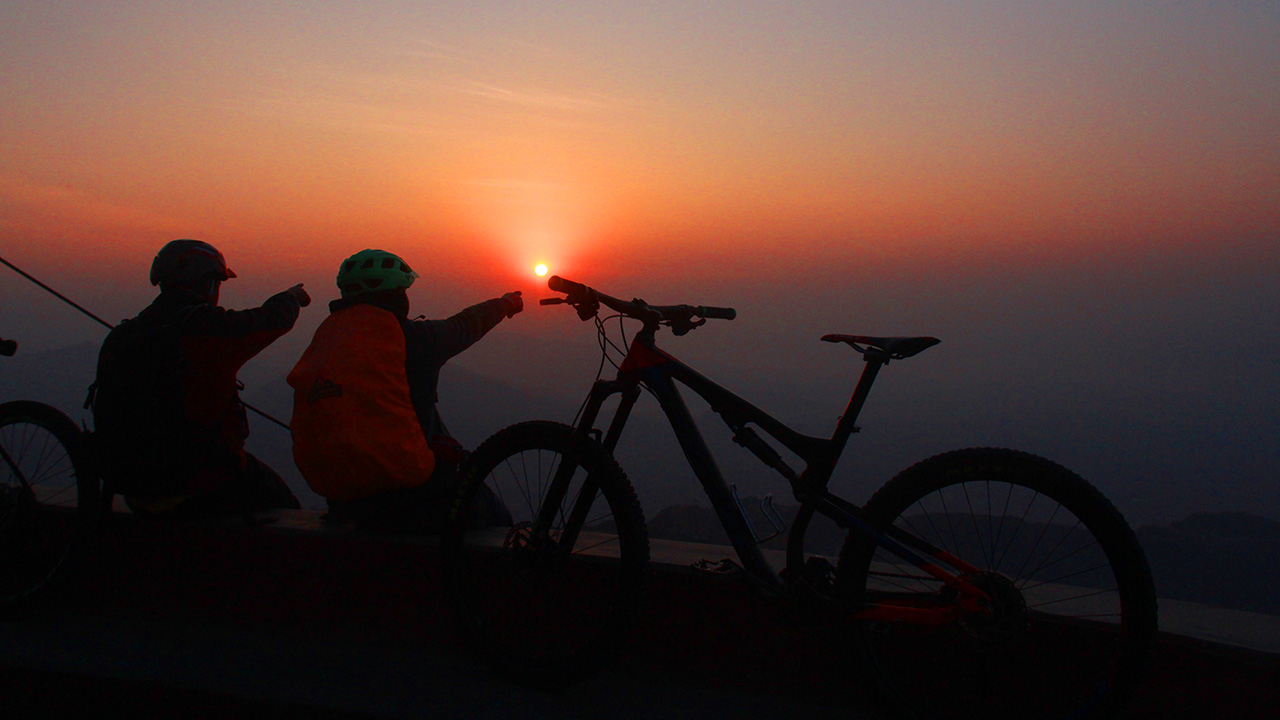
Forty minutes up from Lakeside in the dark, and colder at the top than you expect. You are 800 metres above the lake, and the sun has not touched this hill for twelve hours. Most visitors arrive in a T-shirt and shiver through the best hour of the day.
The light comes from the top down, not from where you are looking. Machhapuchhre turns pink first at 6,993 metres, then Dhaulagiri at 8,167 m, Manaslu at 8,163 m and Annapurna I at 8,091 m. First colour to full sun takes about twenty minutes.
Then the viewpoint empties. Two hundred people leave at once and the jeeps queue nose to tail on the single road down. That emptying is the part worth staying for: breakfast with the view to yourself, then riding down on trails while everyone else sits in the traffic.
What the riding is actually like
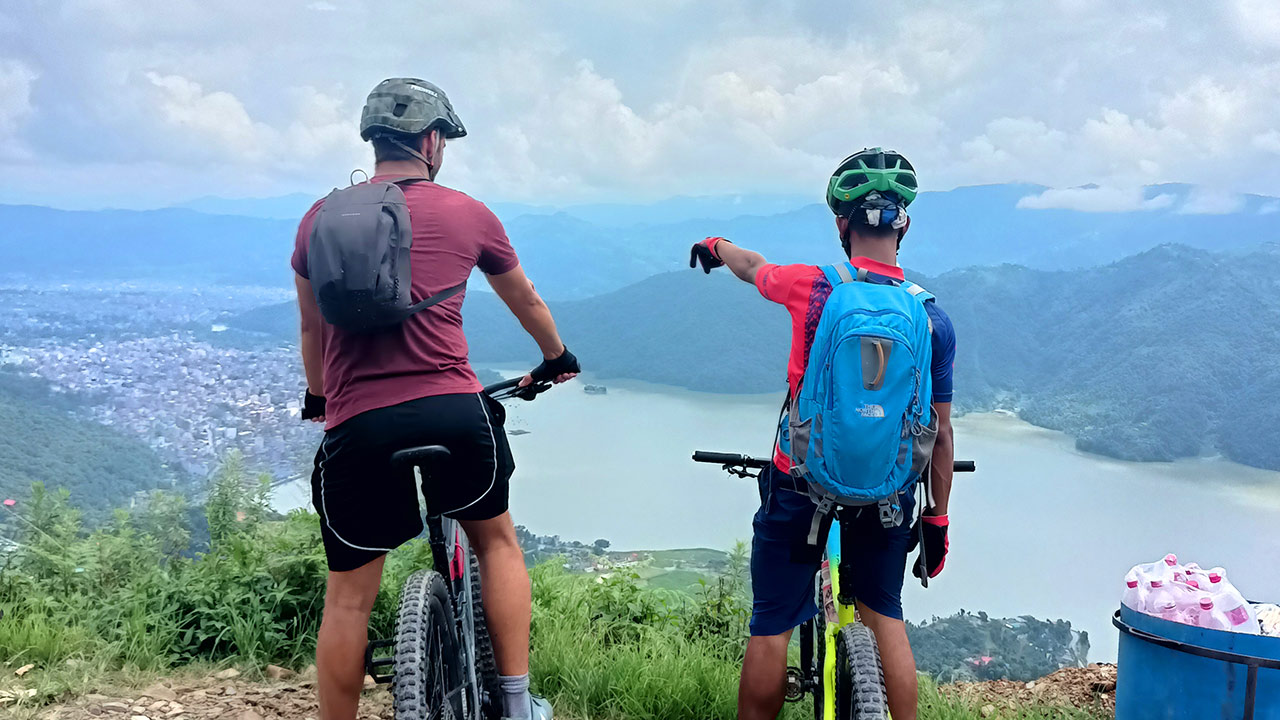
15 to 25 km, mostly downhill, which sounds easier than it is
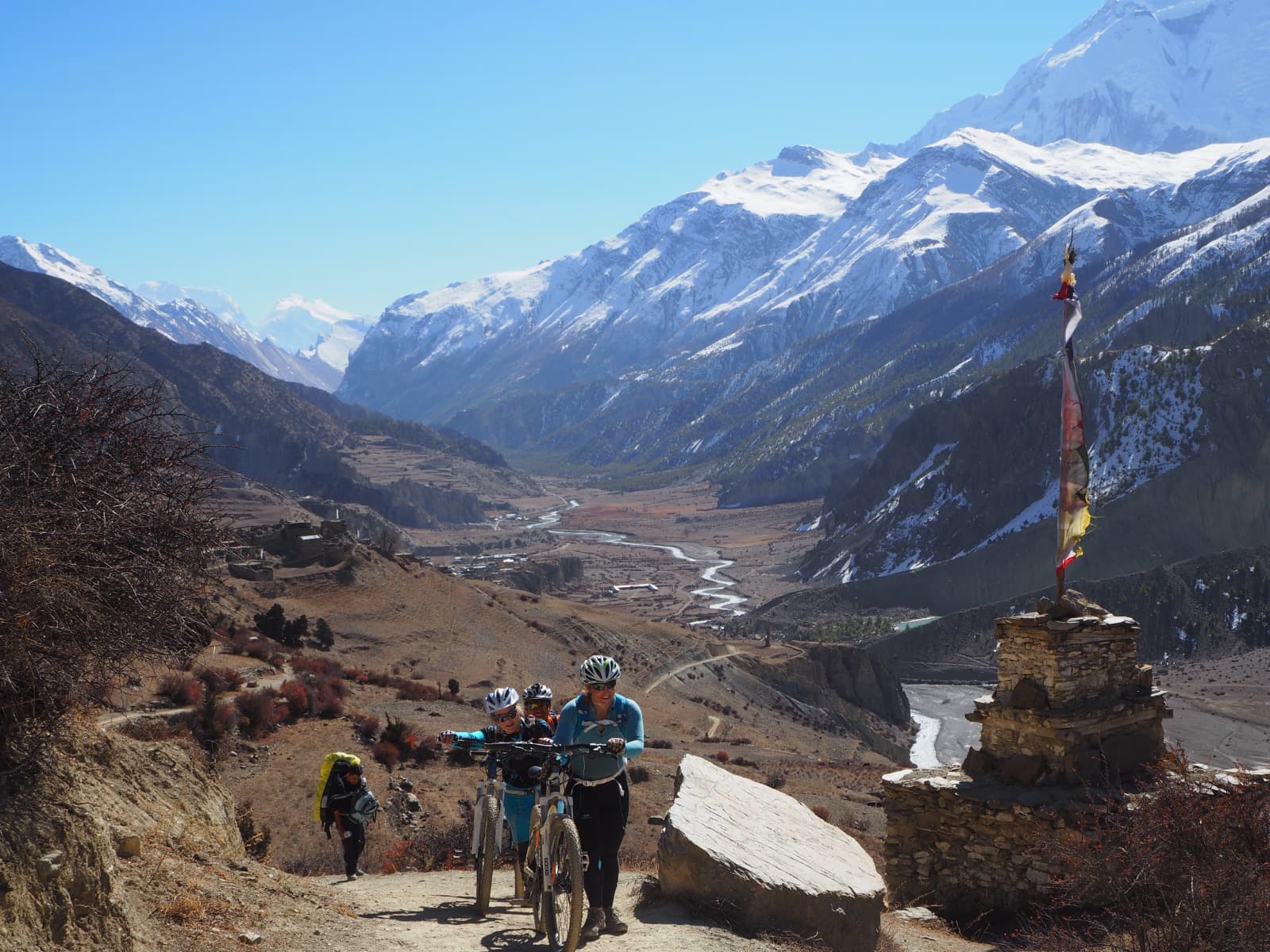
Loose surfaces, stone steps in places, and village paths built for feet
Cross-country and downhill trail, not a bike park run
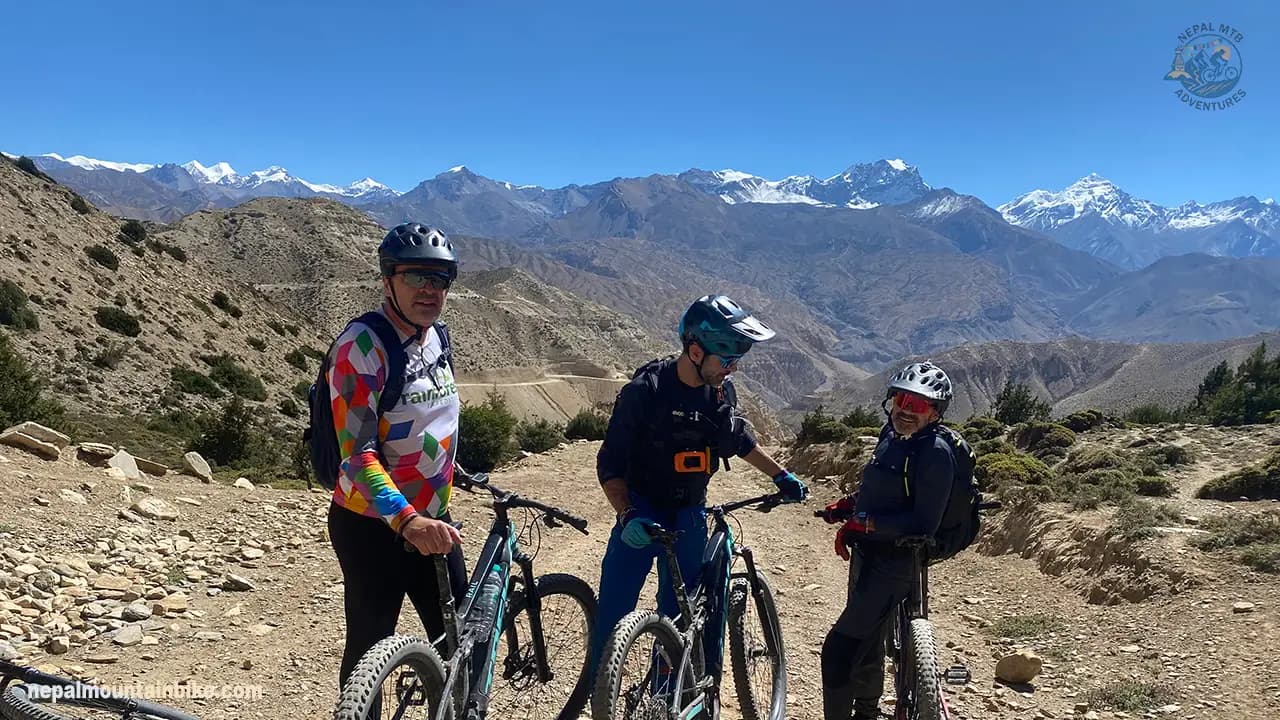
Through Naudanda, Kaskikot and Dhampus, past the ruins of the Kaskikot king's palace
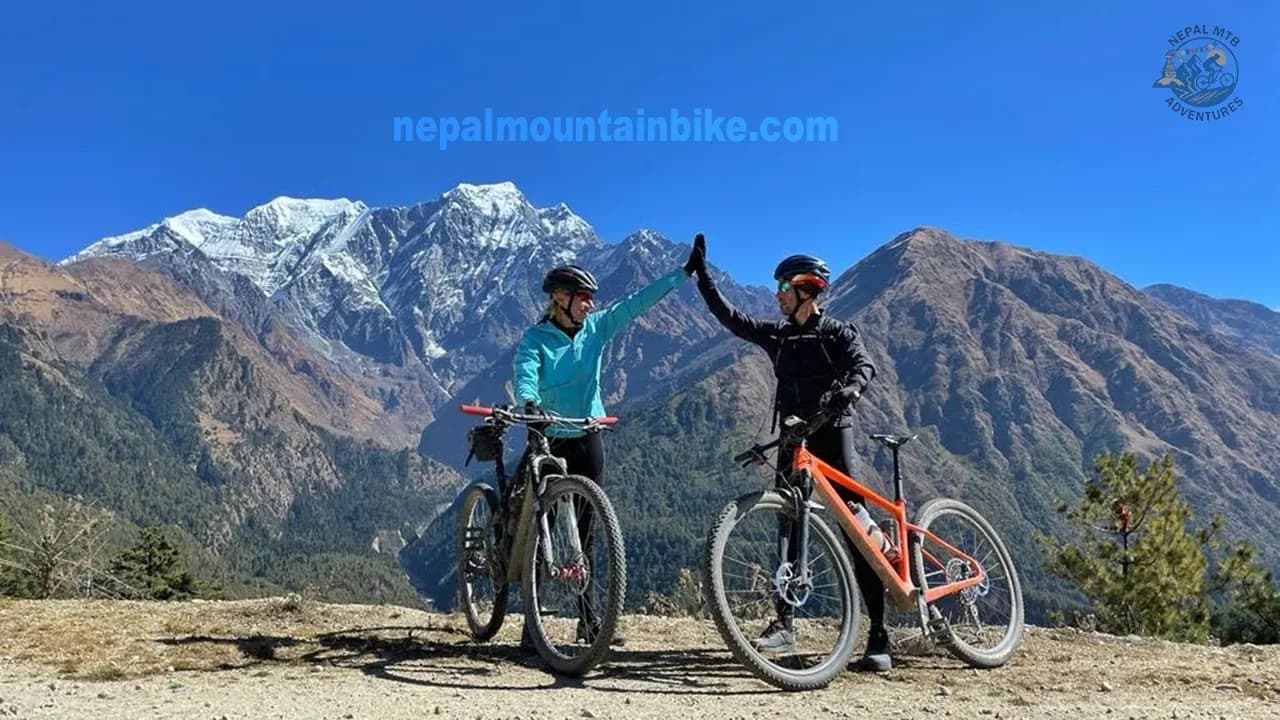
Hardtails with gears, helmet, and gloves included. Ask if you want full suspension or an e-MTB from our rental fleet
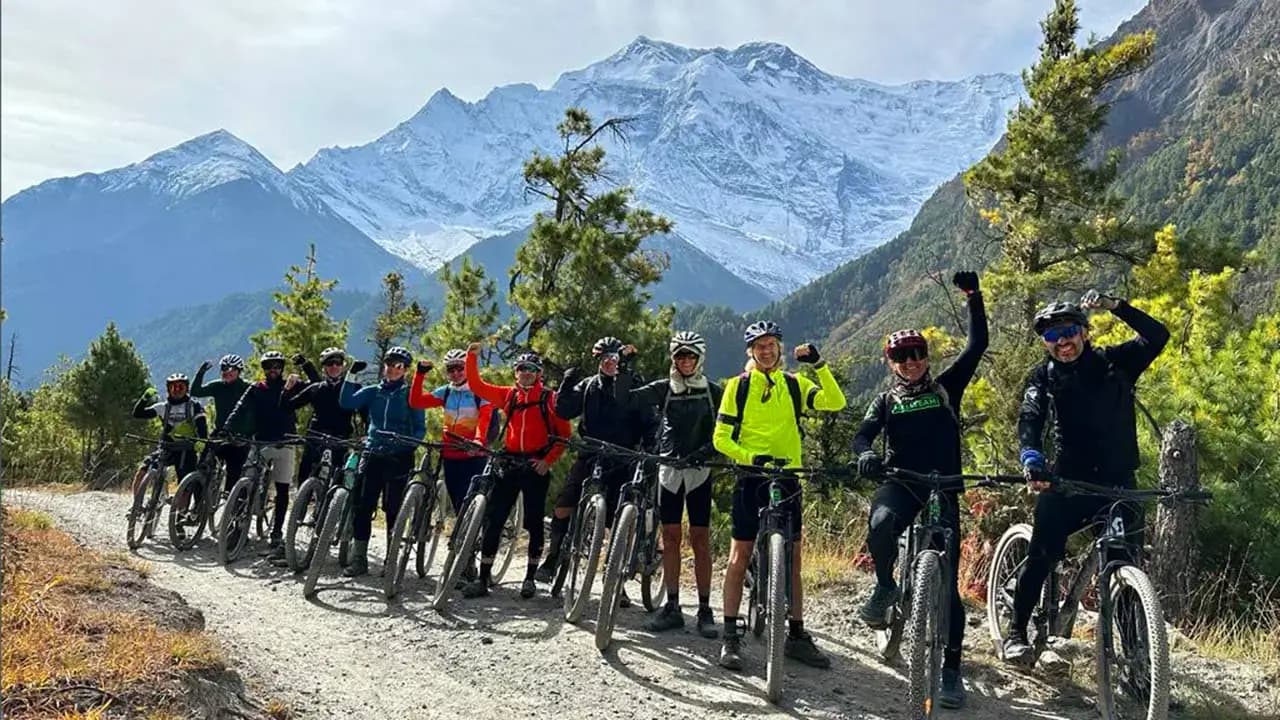
You do not need to be an experienced mountain biker, but you should be comfortable on a bike and reasonably fit. The guide sets the route and pace around whoever is riding.
Want the descent without the 4:45 am start? The Sarangkot day ride does the same hill at a civilised hour. Want it harder? The enduro and downhill day is the technical version.
What the rafting is actually like
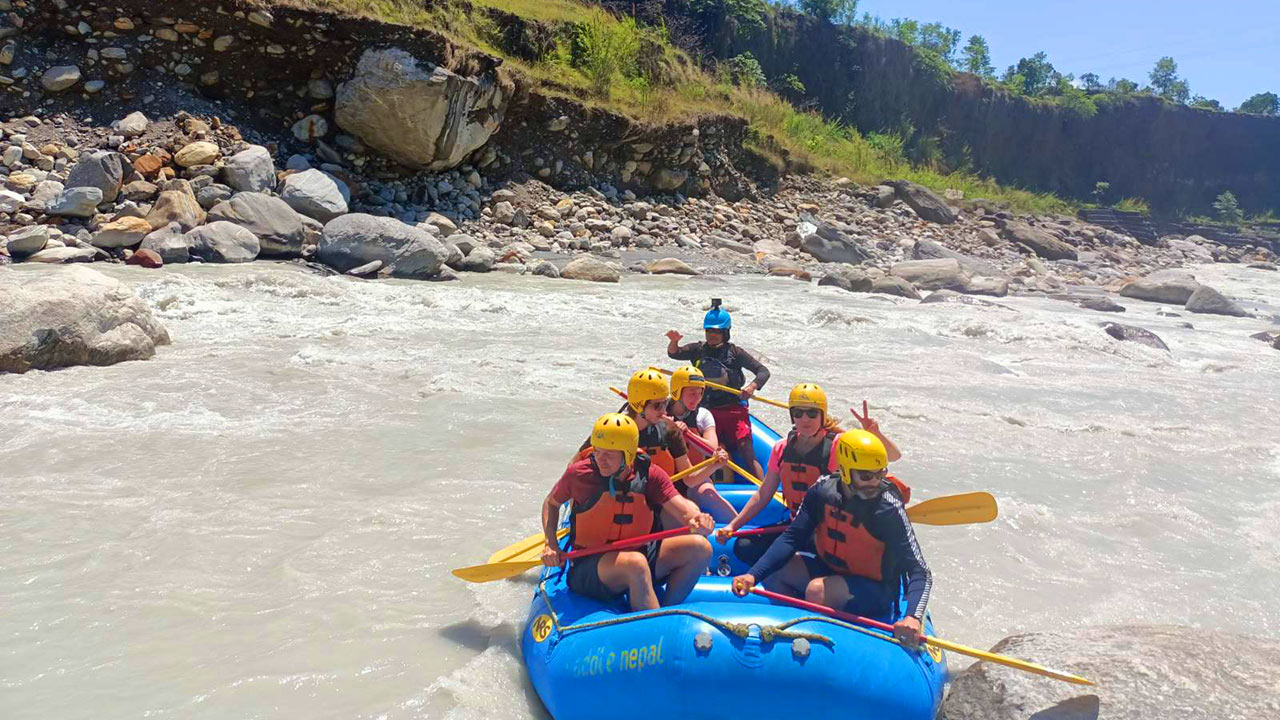
The Upper Seti is glacier-fed, running off Mardi Himal and the Annapurnas, and the section you raft takes about an hour and a half.
It is lively rather than terrifying. You get a full safety briefing, a professional rafting guide in the boat, and a safety kayaker on the water alongside you. No previous experience is needed, and most people who have never rafted before are fine.
Two practical things. You will get wet, properly wet, so bring a change of clothes and leave them in the vehicle. And leave your phone behind. A GoPro or something waterproof and securely mounted is fine, but a phone in a pocket on a raft is a phone in the river.
What it costs and what is included
The combo runs as a private trip for your own group.
Included:
Private jeep to and from the Sarangkot viewpoint
Breakfast at the viewpoint with organic coffee
English-speaking mountain bike guide with a first aid kit
Hardtail mountain bike with gears, helmet and gloves
Rafting guide, safety kayaker and all rafting equipment
All local permits and fees
Not included:
Lunch and any meals beyond breakfast
Travel and adventure sports insurance, which we do recommend
Tips for the guides and crew
Paragliding, if you add it
When to do it
Autumn, from October to November, is the clearest window and the busiest. Spring, March to May, is warmer and hazier, with rhododendron on the hills.
Winter mornings are cold at the viewpoint, but the air is sharp, and the mountain views are often the best of the year. Bring more than you think you need for the pre-dawn hour.
Monsoon, June to September, is the gamble. Sunrise is frequently clouded out, and the trails are slippery. The rafting, on the other hand, is at its most exciting. If you are here in the monsoon, our guide to the riding seasons sets out what works month by month.
If you only have one day, and if you have two
One day. Do this combo. It is the only way to fit three adventure activities into a single day in Pokhara without any of them feeling rushed, because it uses the one expensive hour, the drive up the hill, for three things instead of one.
Two days. Do this on the first day, then ride properly on the second. An easy valley loop such as Kristi Village or the Pame Valley if your legs have had enough, or the enduro and downhill day if the descent was the bit you enjoyed most. Two days is genuinely better than one, and the second is where you stop being a tourist and start riding.
Three days or more. You are now in range of an overnight trip out of the valley, which is a different article.
Before you book
A few things worth knowing.
Your pickup time changes with the season, so confirm it the night before rather than assuming.
It gets cold at the viewpoint before the sun comes up, colder than the daytime temperature in Pokhara suggests. A light down jacket or fleece that you can stuff in a bag for the descent is the right call.
Bring a change of clothes for after the rafting, and leave anything you care about in the vehicle.
Insurance that covers adventure sports is not included and is worth having. Rafting and mountain biking are both usually excluded from standard travel policies.
If anyone in your group is not confident on a bike, say so when you book. The route and pace are set around whoever is riding, and it is easier to plan for than to fix on the hill.
Book the day
The Sarangkot sunrise, mountain biking and Upper Seti rafting combo runs as a private trip on your dates, with the jeep, both guides, the bike and all the rafting kit included.
If you want the sunrise without the rafting, or the rafting without the early start, tell us, and we will split it.
Frequently asked questions
What time is sunrise at Sarangkot?
Around 5:00 am in summer and around 7:00 am in winter, which is why the pickup time moves with the season. Plan to be at the viewpoint at least thirty minutes before, because the light on the mountains starts before the sun clears the horizon. Our full Sarangkot viewpoint guide covers getting there and what to expect.
What three adventure activities can you do in one day in Pokhara?
Sunrise at the Sarangkot viewpoint, a 15 to 25 kilometre mountain bike descent through the hill villages, and about an hour and a half of whitewater rafting on the Upper Seti River. They happen in that order, and all three are on the same side of the valley, which is the reason they fit into one day at all.
Can you do sunrise, biking and rafting in one day in Pokhara?
Yes, and it is a comfortable day rather than a rushed one. Pickup is around 4:45 am, and you are back in Pokhara by early afternoon with time to spare. The reason it works is that all three start from the same side of the valley, so you are not crossing town between activities.
How long does the whole day take?
About ten hours door to door. Pickup is before dawn, and you are back in Pokhara by early afternoon, which leaves the rest of the day free. It is a long morning rather than a long day.
Do I need to be an experienced mountain biker?
No, but you should be comfortable on a bike and reasonably fit. The descent is mostly downhill, but the surfaces are loose in places, and there are village paths and steps. Your guide matches the route and pace to the group, so a confident beginner manages it fine.
Do I need rafting experience?
None. The Upper Seti is lively but manageable; you get a full safety briefing, and there is a professional guide in the boat plus a safety kayaker on the water. Most people on it have never rafted before.
How hard is the rafting on the Upper Seti?
It is a fun run rather than a serious one, about an hour and a half on glacier-fed water off Mardi Himal and the Annapurnas, through gorges and rapids. Water levels are higher and livelier in and just after the monsoon.
What should I bring?
A warm layer for the viewpoint before dawn, which you can pack away for the descent. A change of clothes for after the rafting, left in the vehicle. Sunglasses and sunscreen. A waterproof camera such as a GoPro if you want river footage, and leave your phone with the support vehicle.
Can we do it as a private group?
Yes, it runs as a private trip for your own group, so the pace and the route are set around whoever is riding.