


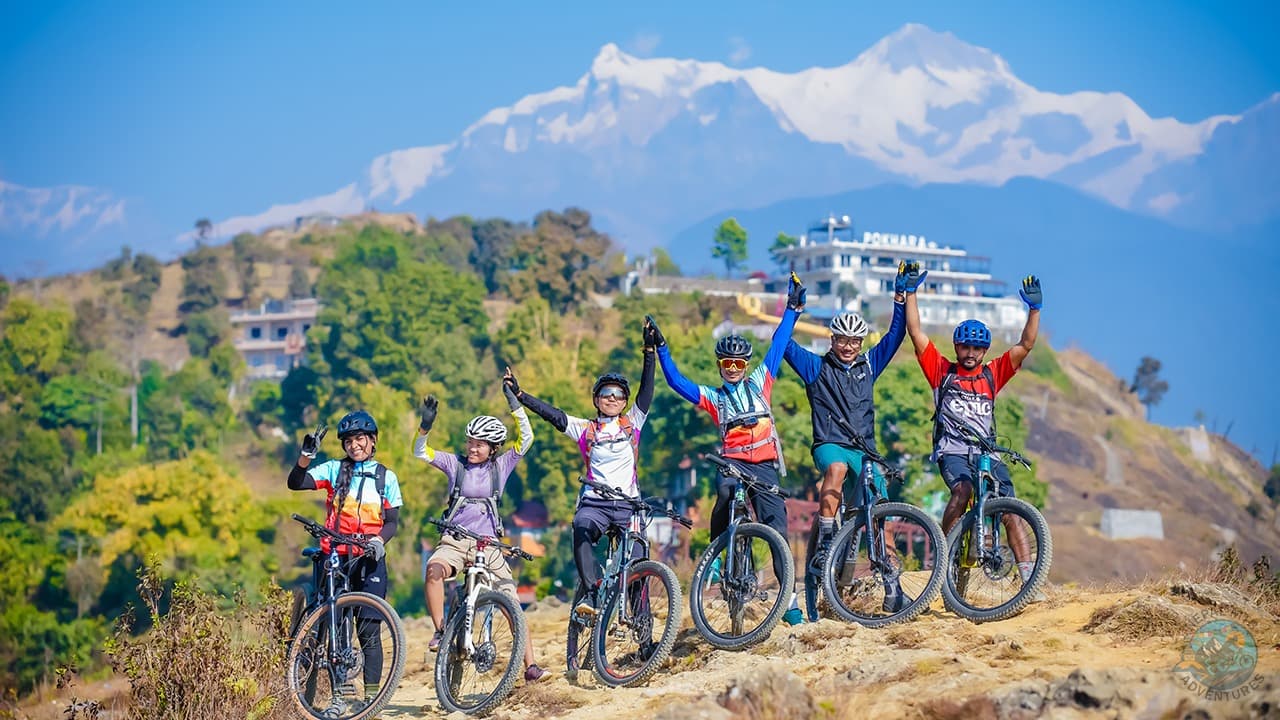
If you sell trips and need somebody to run them on the ground in Nepal, this is what we do. Tour operators, cycling clubs, adventure travel companies and agencies come to us for the part that cannot be built from outside the country: the bikes, the guides, the permits, and everything that happens between arrival and departure.
We are a mountain bike ground operator based in Pokhara, running since 2004. We are not a reseller, and we do not subcontract the riding. The guides on your clients' trip are our staff, the bikes are ours, and the person answering your email is in the country where the trip happens. There is more on how the company started on our About Us page.
We are a purely mountain bike company. Not a trekking operator with a bike department, not a general adventure agency that adds cycling to a brochure. Bikes are the only thing we have done since 2004.
What a mountain bike ground handler actually does here
Nepal is harder to operate in than it looks from outside, and the difficulty is not the trails.
Permits change. The mandatory guide rule arrived in April 2023, TIMS moved to a digital system that individuals can no longer buy, and the Upper Mustang restricted permit changed twice in the last eighteen months.
Routes change every monsoon. Bridges go. Roads move. A section that rode beautifully last October is a landslide this year. That knowledge is a person on the trail this month, not a map or a route guide.
Bikes are the hard part. Trekking logistics are a solved problem in Nepal, and dozens of companies do them well. Twelve working mountain bikes in the right frame sizes, at 4,000 metres, with a mechanic who can rebuild a rear hub in a teahouse, is a different business.
Restricted areas need a registered Nepali agency by law. For Upper Mustang and Nar Phu, that is not a preference; it is a legal requirement, and a foreign operator cannot satisfy it alone.
What we handle
You sell the trip and keep the client. We run everything on the ground.
Transport and transfers
Airport pickups and drops, Kathmandu and Pokhara
Domestic flights, including the Jomsom and Pokhara sectors
Private jeeps and buses, and jeep uplift where an itinerary uses it
Support vehicle on the sections that have road access
Paperwork
ACAP and other conservation area entry permits
e-TIMS, which individuals can no longer buy for themselves
Restricted Area Permits for Upper Mustang and Nar Phu
All of it arranged before your clients land, so nobody queues at a checkpoint
Riding operation
Licensed guides, which is a legal requirement for foreign visitors in protected areas
Bikes from our own fleet, or support for clients who bring their own
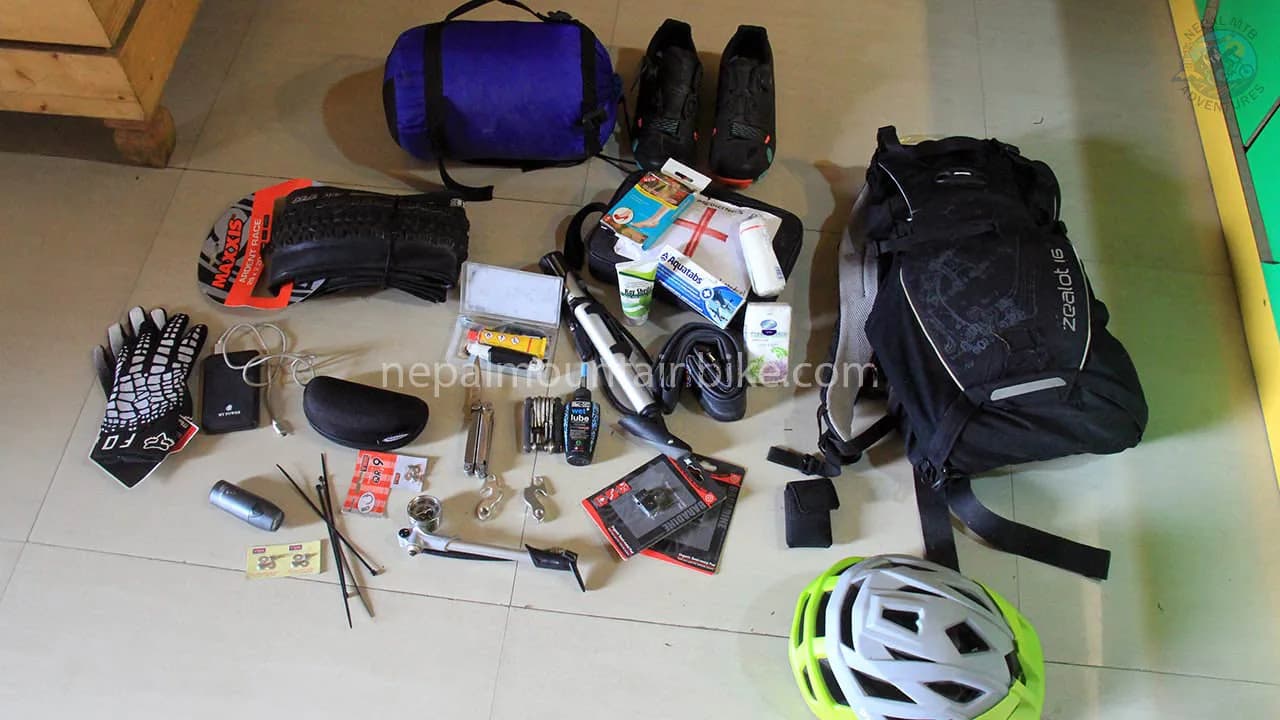
Mechanic and a trailside spares kit
Route adjustment when conditions force it, which they will
On the ground
Teahouse, lodge and hotel bookings along the route
Luggage transfer, and storage for bike bags during the trip
Treated drinking water on the mountain itinerary rather than bottled
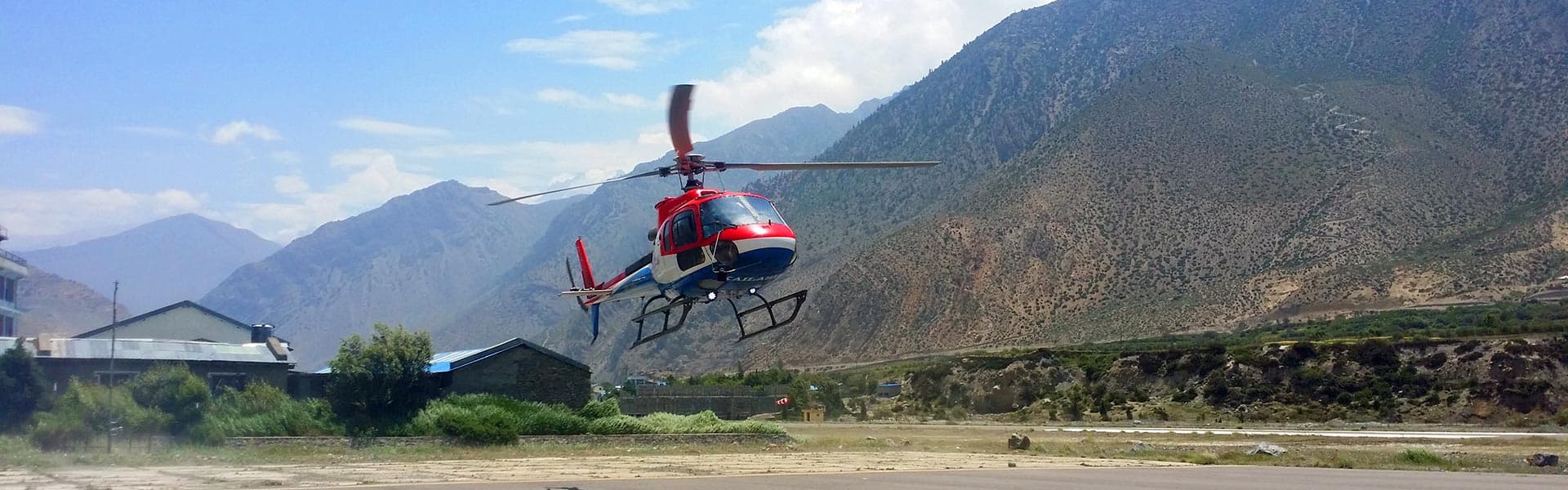
Emergency response and evacuation coordination
You can take all of it or only the parts you need. Several of our partners send their own trip leader and buy bikes, permits, transport, and a local guide from us.
Ways to work with us
White label
We operate in the background under your brand. Your clients see your company throughout. We provide the guides, bikes, permits and logistics, and we do not market to your clients during or after the trip.
Net rates
We quote net so you set your own selling price and keep the margin you decide.
FIT and GIT
Individual riders and couples joining our scheduled departures, or a full group departure built for your dates. Both are normal for us. For clubs bringing their own membership, we run a Circuit club charter, which is the whole trip taken privately on your dates.
Tailor-made
Send us a brief, length, fitness level, month, and what your clients care about, and we will build the itinerary and quote it. We will also tell you when the brief does not work, which is more useful than a yes.
Partial service
Bikes only, permits only, guides only, or logistics with your own leader. If you have part of the operation already, we fill the gaps rather than replacing what works.
Whichever of these fits, the partner enquiry form is the fastest way to start. It asks for your company, your role, and what you are interested in, so the first reply you get is already useful rather than a request for more information.
The bike fleet
This is the part most Nepal ground handlers cannot match, so it is worth being specific.
We own our fleet. Most operators here hire bikes per trip, which means neither they nor you know what will arrive until the morning it does. Ours live with us, are serviced by our mechanics between departures, and we know their condition because we are the ones who fixed them.
The bikes we run are listed individually with specifications, so you can see exactly what your clients would be on rather than taking "quality bikes" on trust. Expedition groups usually go out on something like the Trek Fuel EX 7 or the Scott Genius 950, with hardtails such as the Trek Procaliber where the route suits one.
That matters more than it sounds for three reasons.
Frame sizes. A European or North American group needs large and extra-large frames, and a hired fleet in Nepal is mostly medium. This is the question a partner asks that almost nobody in Nepal can answer.
Condition on a 5,416-metre pass. Brake pads on the Thorong La descent, drivetrain wear in Kali Gandaki dust, and tubeless at altitude are not theoretical problems. A fleet we maintain is a fleet we can predict.
E-MTB. We run electric mountain bikes as well as conventional ones, on machines like the Trek Rail 5 and the Bergamont E-Trailster. That widens the age range a partner can sell to. It is the clearest way to put a client in their sixties on Himalayan terrain, and it extends the season, because the rain-shadow Mustang routes ride when other regions are wet.
Guides, mechanics and crew
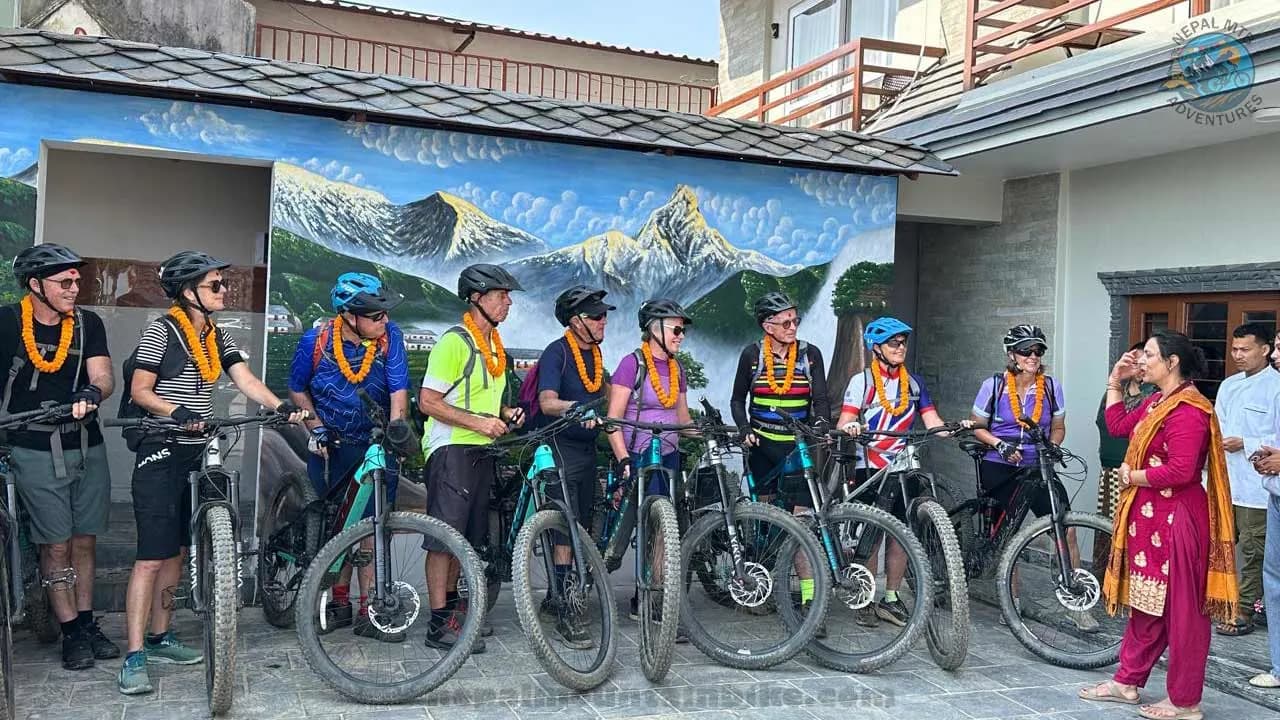
Our guides are employed by us, not assembled from a freelance list for each departure. They are licensed, which Nepali law requires for foreign visitors in protected areas, and they know these specific routes rather than routes in general.
What they do beyond leading the ride:
Brief the group on altitude, mule train etiquette, and village riding before the wheels turn, not after an incident
Read the group and adjust pace, which on an altitude itinerary is a safety function
Make the descent call when somebody is not acclimatising, without asking whether it inconveniences the schedule
Explain what the group is riding past, at the monasteries and sacred sites, rather than riding them through it
We also carry a mechanic on expedition itineraries and porters where the route needs them.
Where we operate
Region | Suits | Length | Permit Complexity | Season |
Annapurna Circuit | The flagship. High-altitude expedition, Thorong La at 5,416 m | 14 to 15 days | Standard, ACAP | Autumn best, spring good |
Upper Mustang | Restricted area, Lo Manthang, dramatic and remote | 12 to 14 days | High. Restricted Area Permit and registered agency required by law | Rain shadow, rides through summer |
Lower Mustang | Kali Gandaki, Muktinath, Marpha. Shorter and lower | 8 to 10 days | Standard | Wide window, rain shadow |
Tilicho | High lake branch off the Circuit | 11 to 15 days | Standard | Autumn |
Pokhara and around | Day rides, enduro and gravity, e-MTB, short breaks | 1 to 3 days | None | Most of the year |
Kathmandu Valley | Cultural day riding, good add-on either end | 1 to 2 days | None | Most of the year |
Custom routes across these regions are normal rather than exceptional. Tell us the length, the ability range, and the month, and we will tell you honestly what fits. Our guide to the best time to mountain bike in Nepal breaks the seasons down region by region if you are scheduling a programme.
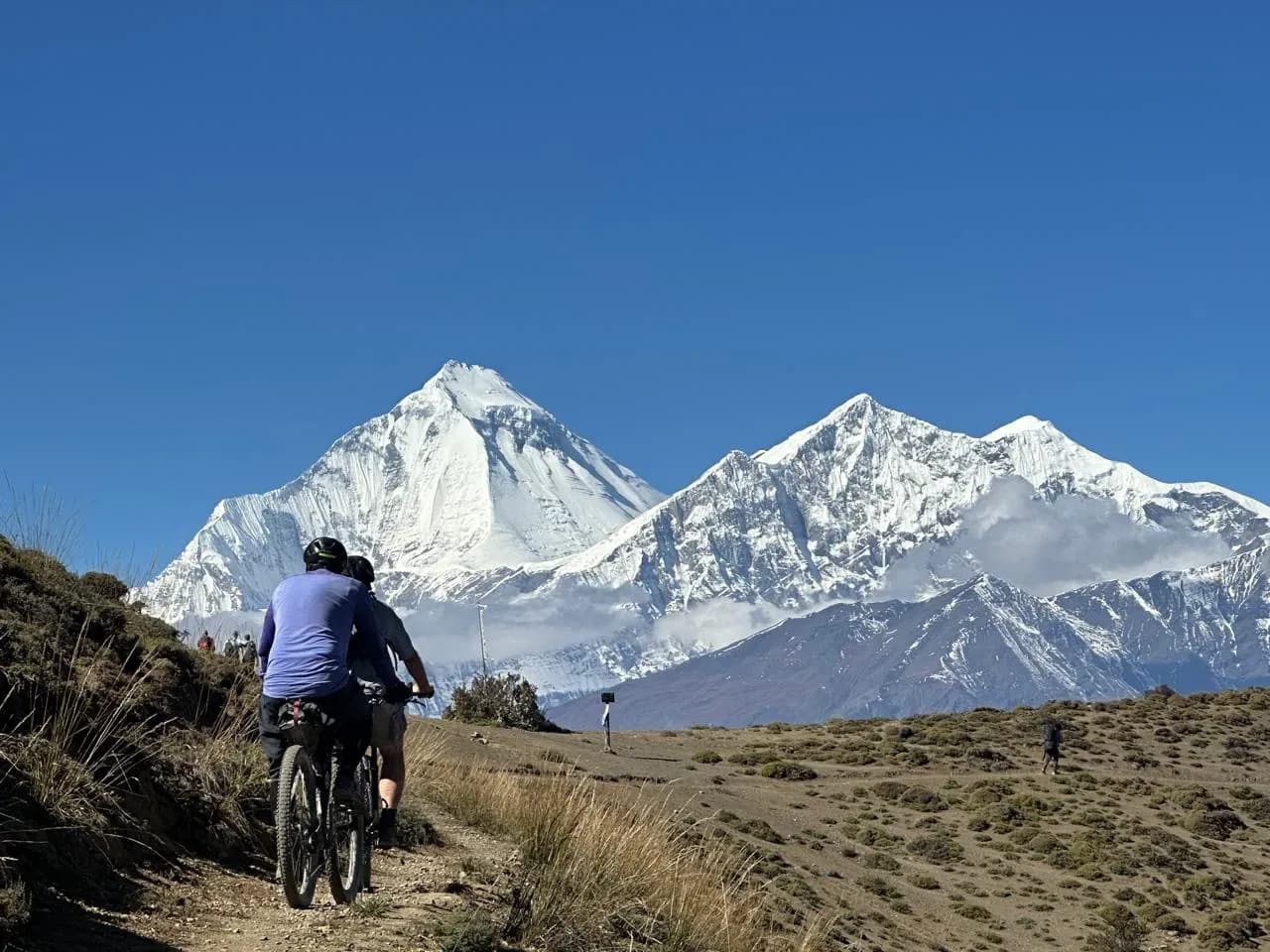
The rain-shadow point is worth knowing if you are planning a summer departure. Manang and everything west of it sits behind the Himalaya and stays rideable through the monsoon, when the rest of Nepal does not. That is a sellable season most operators write off entirely.
Permits and the rules that govern them
Two rules catch foreign operators out, and both are worth knowing before you build an itinerary.
A licensed guide from a government-registered agency has been mandatory for foreign visitors in Nepal's protected areas since 1 April 2023, and the rule was written to include cyclists rather than only walkers. Enforcement tightened through 2026, and checkpoints are consistent about it now. Nepali citizens are exempt. We cover how this plays out on the trail in our guide to riding responsibly on the Annapurna Circuit.
Restricted areas require a registered Nepali agency by law. There is no version of an Upper Mustang trip that a foreign operator runs alone, and the same applies at Nar Phu.
We arrange every permit before your clients land. That covers conservation area entry permits, e-TIMS, which individuals can no longer buy for themselves, and Restricted Area Permits where the route needs them. Rates change, sometimes mid-season, so we re-check them each season and flag any change to partners who already have trips on the books.
Lead times
This matters more in Nepal than in most destinations, and getting it wrong is the most common reason a partner's trip does not happen.
What | How Far Ahead |
Restricted area permits, Upper Mustang | The longest lead; start early |
Teahouse space in October | Peak month; books out quickly |
Domestic flight seats, peak season | Limited and in demand |
A standard Annapurna departure | Comfortable with reasonable notice |
Pokhara day rides and rentals | Short notice is fine |
We can hold dates while you sell, within reason. Talk to us as soon as you have a month in mind rather than when you have a deposit.
Safety, altitude and evacuation
The real risk on these routes is altitude, not crashing, and it should shape how a partner prices and schedules a trip.
Our high-altitude itineraries build in acclimatisation days rather than treating them as padding, and our guides descend when descent is the answer. Thorong La at 5,416 metres is the high point of the Annapurna Circuit, and a rider gains altitude faster than a walker does, which is a bike-specific risk most itineraries ignore. Where a group is not confident about the pass, the hike-and-bike itinerary walks the ascent and rides the descent, which is both safer at altitude and easier to sell to a mixed-ability club.
What we ask of partners:
Make sure your clients carry insurance that covers mountain biking above 5,416 metres with helicopter evacuation included. Many policies cap below that, which is lower than the pass. It is far easier to check at the point you sell than at the trailhead.
Brief your clients honestly on the difficulty. The Annapurna Circuit is not a beginner route. It includes a carry to the pass and sustained days at altitude, and a client who arrives expecting otherwise is a problem for both of us.
How we operate responsibly
Partners increasingly need this in writing, both for their own marketing and for their own supplier standards. Our full sustainability and CSR pledge has the detail and the project history. The parts a partner usually needs to provide evidence of are below.
People
Local guides employed and paid directly by us rather than through a labour contractor.
Over 100 families supported by the income these trips generate.
Free mountain bike training for young people from lower-income backgrounds. That programme has produced national and South Asian champions, which is the part we are proudest of
A female guide mentorship programme training women to work as professional guides in an overwhelmingly male industry. If your clients want a female guide, ask us.
Who we work with
Outbound tour operators adding Nepal to a cycling programme
Cycling clubs organising a members' trip, usually as a club charter on their own dates
Adventure travel companies and OTAs needing a ground handler
Travel agencies whose client has asked for a Himalayan bike trip
Corporate and incentive groups wanting a private departure
Brands, media and film crews needing riding logistics
Travel influencers and content creators, where there is a genuine audience fit
If you are weighing up whether your clients need a supported trip at all, our piece on guided versus self-guided riding in Nepal sets out what the law now requires and what a guide actually adds beyond it.
You can see the arrangements we already run, and who we work with, on the partner page.
Getting a quote
The quickest route is the partner enquiry form, which goes straight to the person who handles trade. If you would rather just write to us, contact us directly. Either way, you will get a real answer rather than a brochure.
Useful to include:
Rough dates, or just the month
Number of riders and their approximate ability
How long you want the trip to be
Whether you want us to run all of it or only part
Whether your riders bring their own bikes or need ours
Whether you want it white labelled
What riders and operators say about us
These are public reviews, not testimonials we collected.
From another mountain bike operator
"I run a mountain bike rental, guiding and wilderness dining company in Scotland called e-trail adventures and I can say with first hand experience that Jagan and his team of guides, workshop staff and drivers are all very experienced, professional and great people to hang out with. They are willing to go above and beyond to make sure their clients have the best possible experience... All our tours were fantastic, well organised and executed without any issues."
-TripAdvisor, February 2023.
From a professional tour guide
"The challenges with logistics were big and the team handled them all with no stress or fuss. The guides and porters team were faultless... I have worked as a tour guide in Australia, Thailand and for Dragoman overland and I couldn't recommend them highly enough."
-TripAdvisor, November 2023, after a Thorong La crossing.
On the size of group we can run
"We had a large group of 18, and were provided with 4 guides including 2 female guides (6 females in our group), 2 4WD vehicles including drivers and 2 porters. With Jagan back in Pokhara to keep an overview of our progress... this was a very well run company and itinerary with ample time to acclimatise as the vertical elevation climbed. We topped out at an impressive 5416m."
-TripAdvisor, November 2024. Thirteen-day Annapurna Circuit, rider brought his own gravel bike.
"What sets these guys apart from other companies is how organised they are. They carry all spares a bike might need; any issues we had were quickly resolved."
-Google, 2023, group of 12 on the Annapurna Circuit.
We picked those quotes, so read the rest without us in the way. Nearly a thousand reviews of our work sit on platforms we cannot edit: TripAdvisor, Google and Trustpilot. Read the low ones as well as the high ones.
Frequently asked questions
What is a mountain bike DMC and do we need one in Nepal?
A destination management company handles the ground operation in your destination while you keep the client relationship and the selling. In Nepal, you need one for two practical reasons and one legal one. Permits and route conditions change constantly and need somebody local watching them. Bikes, spares, and mechanics at altitude are a specialist operation rather than a logistics one. And restricted areas such as Upper Mustang legally require a registered Nepali agency, which a foreign operator cannot satisfy alone.
Can we white label your Nepal mountain bike tours?
Yes. We operate in the background under your brand; your clients see your company throughout, and we do not market to them during or after the trip. This is a normal arrangement for us rather than an exception.
Can we send our own guide and buy only logistics?
Yes. Some partners send their own trip leader and use us for bikes, permits, transport, accommodation, and a local guide alongside them. Note that Nepali law requires a licensed local guide from a registered agency for foreign visitors in protected areas, so your leader works alongside ours rather than instead of.
Do you provide bikes or do clients bring their own?
Either. We own and maintain our own fleet, so we can equip a whole group, and we are equally set up for riders who bring their own and need spares, mechanic support, and bike bag storage during the trip. Owning the fleet is the difference between knowing what will arrive and hoping. Every bike is listed with its specifications on our rental pages, so you can see what your clients would be riding before you quote them.
Do you handle the permits?
Yes, all of them, arranged before your clients land. That covers ACAP and other conservation area entry permits, e-TIMS, which individuals can no longer buy for themselves, and Restricted Area Permits for Upper Mustang and Nar Phu. Permit costs are published in the permits section above so you can price a trip without waiting for a quote.
Can you run trips in the monsoon?
Yes, west of the mountains. Manang and everything beyond it into Mustang sits in the rain shadow and stays rideable through the summer, when most of Nepal does not. If you are planning a summer programme, that is the region to build it in, and our season guide sets out the windows region by region.
Do you run e-MTB trips for partners?
Yes. E-MTB widens the age range you can sell to, and it is the clearest way to put a client in their sixties on Himalayan terrain. It also pairs well with the rain-shadow regions for a longer season.
Do you work with cycling clubs and corporate groups?
Yes, as well as with tour operators, agencies and OTAs. Clubs and corporate groups usually want a private departure built around their own dates and a mixed ability range, which is straightforward for us. The Annapurna Circuit club charter exists specifically for that.
What insurance do our clients need?
Cover for mountain biking above 5,416 metres with helicopter evacuation included. Many policies cap below that, which is lower than Thorong La on the Annapurna Circuit. Checking at the point of sale is far easier than discovering it at the trailhead.
Are you a licensed operator?
Yes, a registered Nepali company operating since 2004.