

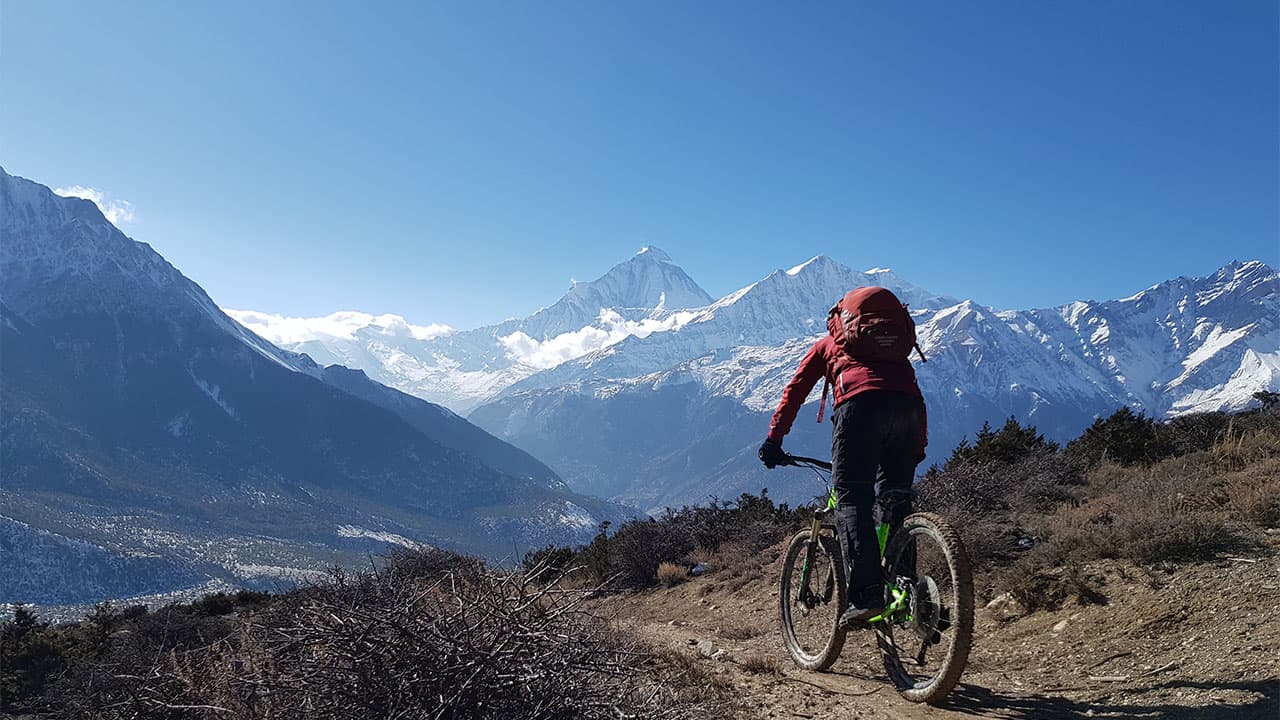
Mountain biking came to Nepal in 1983, when two Americans flew to Lukla with their bikes and rode them up to Everest Base Camp. Kathmandu turned it into a sport over the next fifteen years, with the first rental shop, the first races, and a national association. Pokhara came later. It became a riding town over the last twenty years, through local riders who became guides, the trails on the ridges around Phewa Lake, and, since 2023, an international enduro race of its own.
I am Jagan Biswakarma. In 2004, I started Pokhara Mountain Bike Adventures, the company now called Nepal MTB Adventures, here in Pokhara. This is the story of the sport I have given my working life to, told as accurately as I can. Every date comes from a published source, listed at the end. Where the sources disagree, I say so.
Key takeaways
The first mountain bikes reached Nepal in spring 1983, when Brad Grunewald and Craig Moffet rode from Lukla up to Everest Base Camp.
Sonam Gurung of Manang is remembered as the first Nepali to ride a mountain bike to Everest Base Camp in 1988.
Kathmandu built the sport: the first mountain bike shop in 1988, the first Himalayan Mountain Bike Championship in 1993, the national association in 1995.
Nepali riders now win at home and abroad, including all four mountain bike golds at the 2019 South Asian Games.
Pokhara grew into a riding town after 2004, and since 2023 it has hosted the Pokhara Enduro.
The first mountain bikes in Nepal (1983 to 1988)
Bicycles reached Kathmandu long before mountain bikes did. Asta Narayan Manandhar opened the city's first bicycle shop near Asan Tol in 1925. The mountain bike, with gears and fat tyres made for dirt, took almost sixty more years to arrive.
Year | What happened | Who |
|---|---|---|
1925 | Kathmandu's first bicycle shop opens near Asan Tol | Asta Narayan Manandhar |
21 April to 1 May 1983 | The first production mountain bikes in Nepal. The riders fly to Lukla and pedal up to Everest Base Camp | Brad Grunewald and Craig Moffet, USA |
1984 to 1985 | Geared bikes appear on the lanes of the Kathmandu Valley. Locals call the riders "gear wallahs" | James Giambrone and other foreign riders |
1988 | Himalayan Mountain Bikes opens in Thamel, renting out Raleigh bikes. It is the first shop of its kind | Francis Higgins |
1988 | First Nepali to ride a mountain bike to Everest Base Camp, then on home to Manang | Sonam Gurung of Gyaru village, Manang |
The 1983 ride made the news wires. A Ministry of Tourism official told the reporter it was the first time anyone had done it, and Brad Grunewald explained why they went: "Eventually, someone is going to do it. So we decided to be the first."
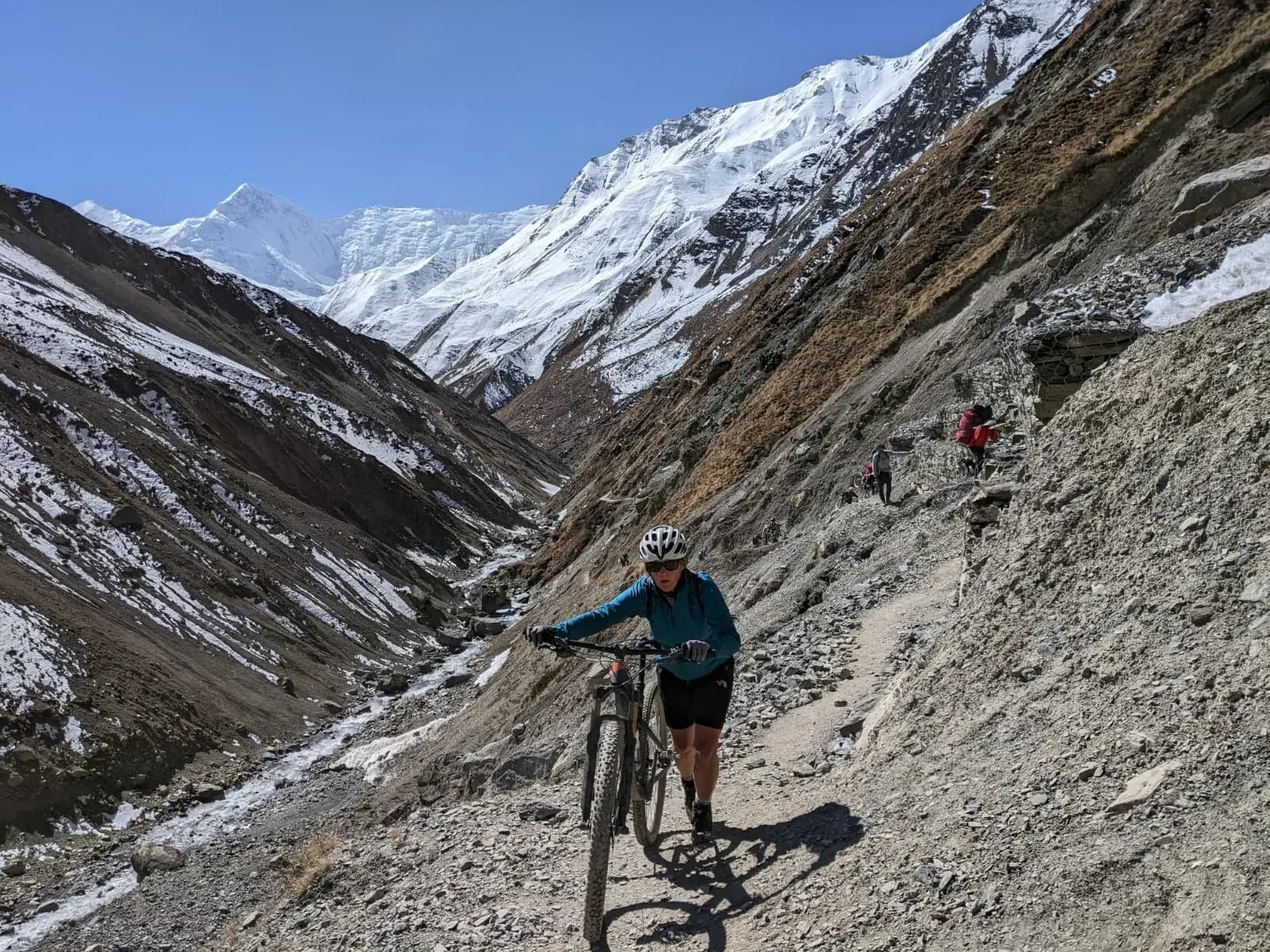
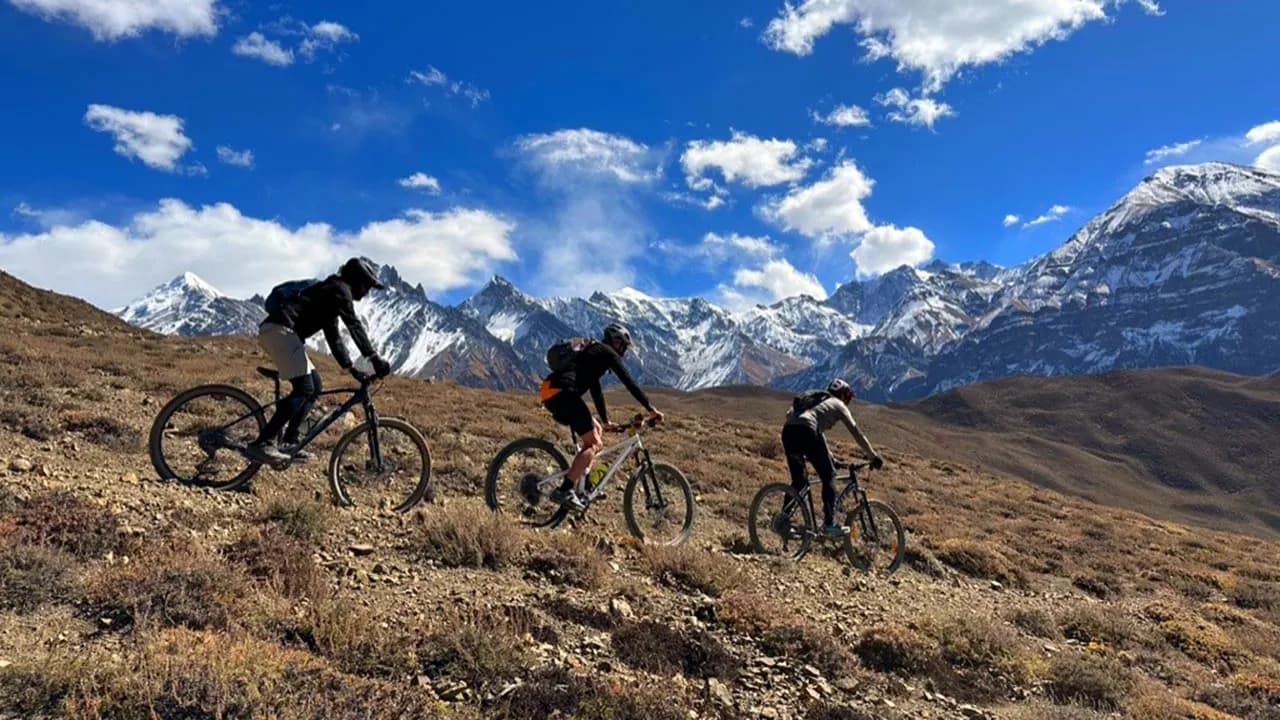
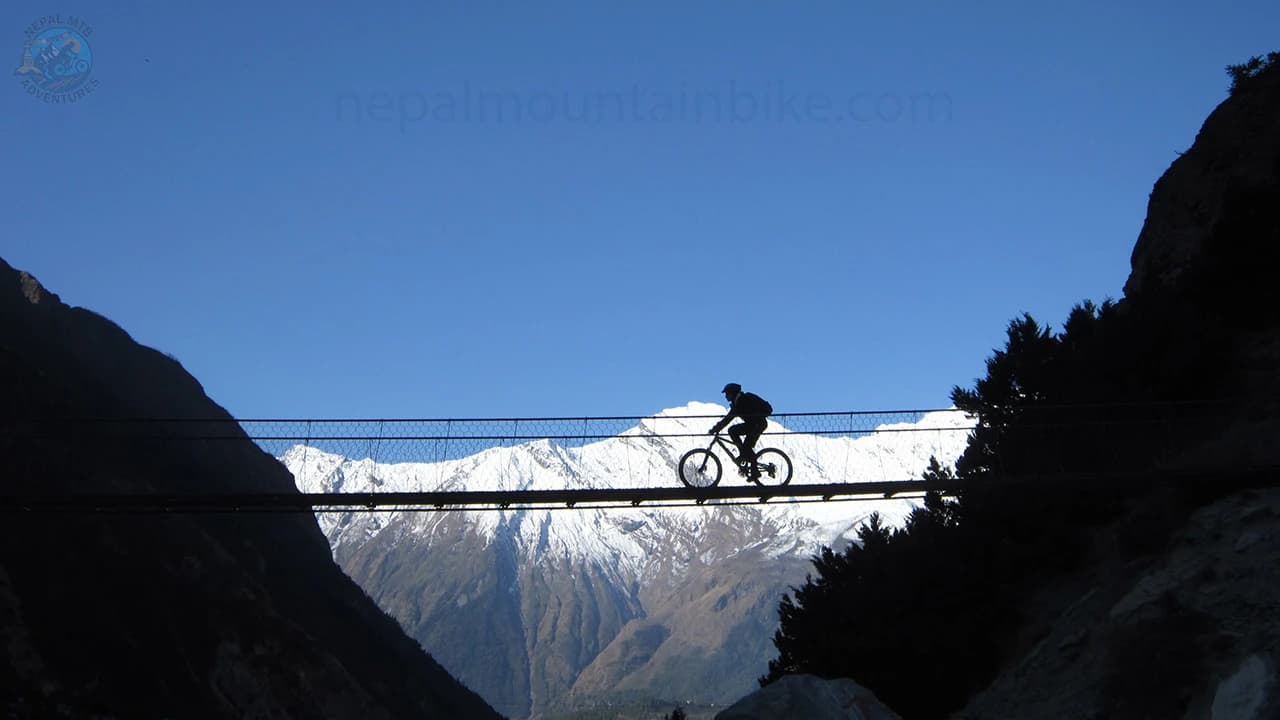
What I notice is how our sport began: on trekking paths, with riders who had come for the mountains. Forty years later that is still the heart of mountain biking in Nepal. Our big rides follow old village and trade trails, and the biggest of them still have sections where you walk beside the bike.
Sonam Gurung started out at Himalayan Mountain Bikes, along with his cousin Chhimi Urkyen Gurung. Both of them come back into this story.
A note on the sources for these early years. Much of what is written about the 1980s goes back to James Giambrone's 1994 Kathmandu guidebook, which later articles drew on. The 1983 ride is the exception: a news report written at the time confirms it.
Kathmandu builds a sport (1992 to 2006)
In the 1990s, mountain biking in Nepal meant Kathmandu. The shops, the races, and the first Nepali racers were all in the valley.
Year | What happened |
|---|---|
1992 | James Giambrone buys Himalayan Mountain Bikes. It adds guided tours, overnight trips and Nepal's first heli-bike tours |
1993 | The first Himalayan Mountain Bike Championship runs from Kakani to Budhanilkantha. Jack Maitland of Scotland wins, and 27 Nepali riders start |
Mid-1990s | Sonam and Chhimi Urkyen Gurung found Dawn Till Dusk, the first Nepali-run mountain bike company. Sources give 1994 and 1996 |
1995 | The Nepal Mountain Biking Association is formed |
March 1996 | The first national mountain bike championship, in Kathmandu. Khagendra Gurung is the first Nepali home, in third place behind two foreign riders |
2000 | Nepali riders take all three podium places in the Himalayan Mountain Bike race series: Ramesh Tamang, Ranjan Rajbhandari and China B. Lama |
2001 | Nirjala Tamrakar rides her first race and becomes Nepal's first woman mountain bike racer |
2006 | The association is renamed the Nepal Cycling Association |
The line in this table I like best runs from 1993 to 2000. In 1993, 27 Nepalis lined up behind a Scottish winner. Seven years later, riders from 19 countries came to the race series and Nepalis took the whole podium. Nobody handed them that. Several of them started out working in the shops, as Sonam and Chhimi did at Himalayan Mountain Bikes.
Nirjala Tamrakar matters just as much. In 2006 she was Nepal's only cyclist at the South Asian Games in Colombo. Every woman who guides or races here today, including the women on our own team, rides on a trail she opened.
Races, roads and champions (2007 to 2019)
After 2006, Nepal joined the wider mountain bike world. The big international races arrived, famous riders came to ride, and the Nepal Cycling Association brought the Asian Championship to Kathmandu.
Year | What happened |
|---|---|
March 2007 | The first Yak Attack, in the Annapurna region, run that year as a combined cycling and running race |
April 2007 | Hans Rey, Richie Schley and Wade Simmons ride Mustang and Langtang, and give 30 bikes to local people through Wheels 4 Life |
November 2008 | Nepal hosts the Asian Mountain Bike Championship at Chobhar for the first time: 66 riders from 13 countries |
2010 | Fabien Barel, Nicolas Vouilloz and other pro riders race Urge Nepal through Lower Mustang |
2010 | Rob Story, Dan Milner and Seb Liljberg ride the old salt route to Lo Manthang in Upper Mustang |
2010 | Nepal rides mountain bike at the Asian Games for the first time, in Guangzhou |
2010 to 2015 | Ajay Pandit Chhetri, a former mechanic from Kathmandu, wins Yak Attack five times |
December 2012 | The first Trans Nepal stage race runs from Kathmandu to Pokhara. Narayan Gopal Maharjan wins |
April 2016 | The first enduro race held in Nepal, a round of the Asian Enduro Series at Nagarkot |
May 2017 | Usha Khanal and Roja KC become the first Nepali women certified as mountain bike guides by the AMGA |
December 2019 | At the South Asian Games, Nepal wins all four mountain bike golds: Buddhi Tamang, Rajesh Magar, Laxmi Magar and Nishma Shrestha |
At the 2008 championship, Chhimi Urkyen Gurung, then president of the Nepal Cycling Association, said: "Mountain biking and Nepal were made for each other." I agree with him.
This period also brought a loss. In June 2018, Narayan Gopal Maharjan, the reigning national champion and the first Trans Nepal winner, drowned during a race in Sri Lanka. He was 33, and he had won 14 gold medals in his racing career.
The roads changed the riding
The same years that made Nepal a racing country also changed its trails, because the roads arrived. In spring 2007, Hans Rey described the valley around Jomsom as having no road access. In January 2008, the road still had not reached Jomsom, but motorcycles and tractors were already there, flown in by cargo helicopter. On the eastern side of the Annapurna Circuit, the road towards Manang began in 1994, and sources disagree on when it was finished.
A road takes away a trail, and it also brings riders. In 2019, Diwaslal Pradhan of Pangro told Nepali Times: "Because trekking routes have been turned into motorable roads, many young people are taking up cycling."
Since then, much of a Nepal guide's work has been finding the singletrack beside the jeep track: the old trail on the other bank, the village path that cuts a bend. What makes a Nepal route good today often comes from that searching.
How Pokhara became a riding town
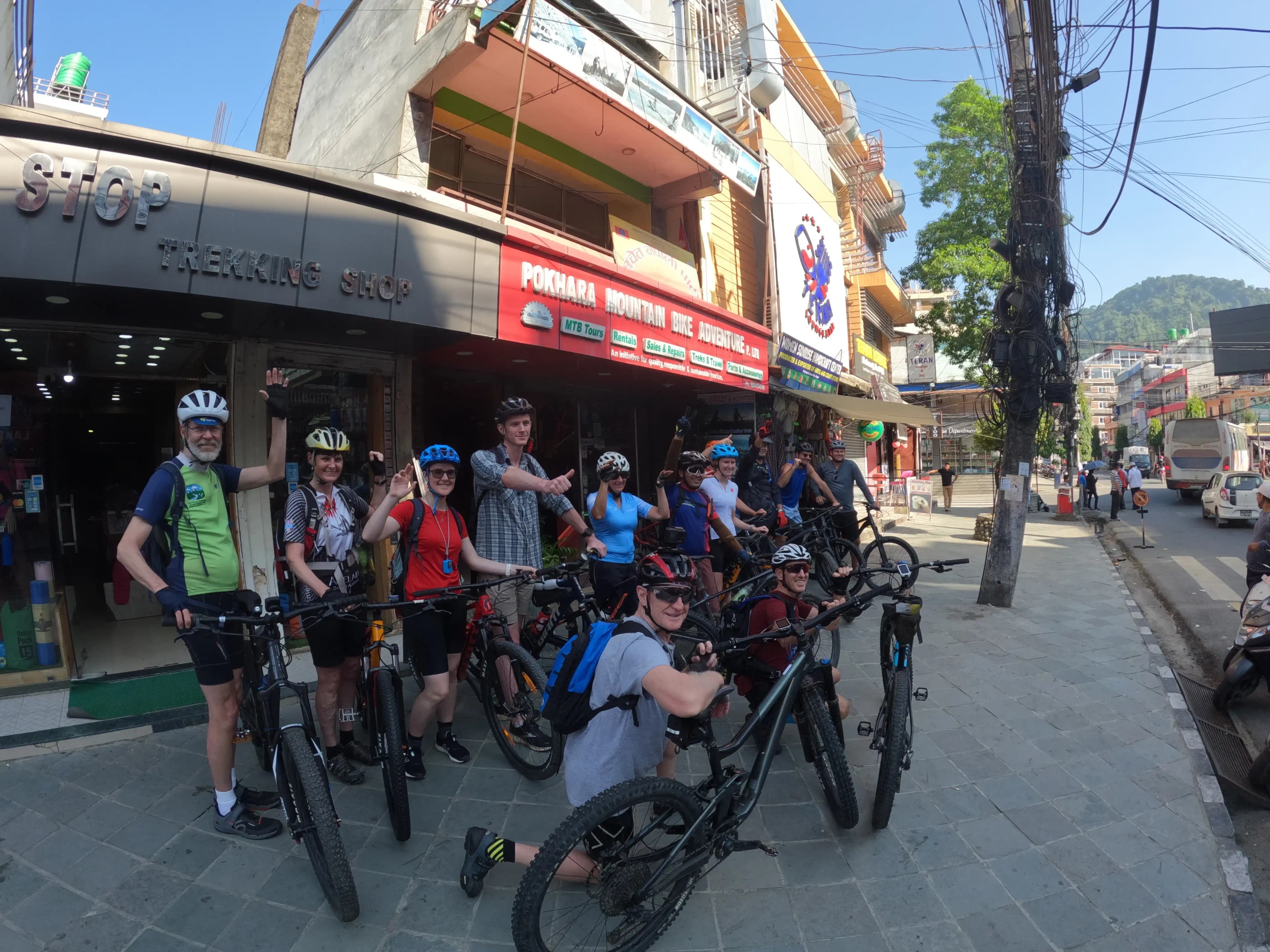
For most of this history, Pokhara was where a ride ended, not where it started. In the 1990s, Himalayan Mountain Bikes chartered helicopters to fly riders to Mustang so they could ride down to Pokhara, and ran overnight trips from Pokhara to Tansen. The cycling writer Steve Thomas made Pokhara the goal of his first trip to Nepal in the late 1990s, but illness stopped him. Mountain biking in Nepal, he wrote, was then "still very much in its infancy".
Where I come in
I grew up in rural Nepal, in a community my own country once pushed to the margins. As a boy, I slid down grassy hills on aloe leaves, and I dreamed of riding across the Himalayas. That dream became this company.
In 2004, a small team of us, all local riders and guides, started exploring the trails around Pokhara. We ran our first guided tours over the next few years. Between 2011 and 2015, we added multi-day trips into the Annapurna region. From 2016, we began training young people from rural and marginalised communities as guides. From 2020, we invested in better bikes, e-MTBs, and ride support. You can read more about the company on our about us page.
Why Pokhara works for riding
Pokhara has what a riding town needs. The lake sits at the bottom of the valley, with forested ridges rising on every side: Sarangkot, the World Peace Pagoda ridge, Kristi, the Pame valley, the hills towards Begnas Lake. You can start a ride from a Lakeside café and be on dirt within minutes. Beyond the ridges are the Annapurna Circuit and Mustang, the two biggest rides in the country. Our Pokhara destination page covers the riding area itself.
When the world noticed
Year | What happened |
|---|---|
November 2017 | Steve Thomas's article for SBS in Australia is headlined "Pokhara: Nepal's mountain bike capital" |
2017 | The Yak Attack organisers announce Pokhara IV, a stage race with loops at Phewa Lake, Kristi, Begnas Lake and Bat Cave |
2022 | The Annapurna cable car opens from Sedi, on Phewa Lake, up to Sarangkot. Riders now use it to reach the top of the trails |
1 January 2023 | Pokhara International Airport opens |
Steve Thomas summed up Pokhara's riding in one line: "It really does not come much better than this." After twenty years of riding these hills, I won't argue with him.
The Pokhara Enduro
Pokhara now has an international race of its own. The Pokhara Enduro grew out of Yak Ru, the high-altitude enduro race that Sunil Sharma and Chhimi Gurung started in 2014. That first year, the riders finished at Beni and held the prize-giving in Pokhara.
Trail building for the Pokhara race began in the Arba hills in January 2020, with builders from six countries. The first race was planned for April 2020, and COVID postponed it.
Edition | Dates | What happened |
|---|---|---|
1st | 23 to 25 November 2023 | Raced at Mahaprabhu Dham, Arba: 56 riders from 11 countries. E-bikes raced for the first time, and Laxmi Magar won the women's open |
2nd | 27 to 29 November 2024 | The race returns for a second year |
3rd | 13 to 15 November 2025 | Raced at Arba–Bijay Danda. Around 50 riders came from 8 countries. Riders from more countries had entered, but some cancelled after the Gen Z protests that autumn |
4th | 10 to 12 December 2026 | One practice day with shuttles, then two race days, with the field capped at 100 riders |
Dawn Till Dusk, the Kathmandu company that also runs Yak Ru, organises the race. At the first edition, the Pokhara mayor, Dhanaraj Acharya, called it "a celebration of our city's commitment to fostering adventure sports". The race is run by other riders, not by us, and it is good for every rider in Pokhara. It brings racers from abroad, it gives local riders a stage, and it shows our trails to people who have never seen them.
If you come for the race, give yourself extra days to ride. Our enduro tours use the gravity trails on Pokhara's ridges, and our bike rental is there if you would rather not fly your own bike.
The riders who make Pokhara a riding town
A town becomes a riding town because of its riders, not its scenery. Pokhara's riders are mostly young Nepalis who learned on these trails.
At Nepal MTB Adventures, we train and employ young people from rural, disadvantaged and Dalit backgrounds, women included. Our women guides include Sophiya Biswakarma, Nikita Pariyar and Isha Rai. In 2023, our women riders led "Green Generation" sessions in schools and colleges, and we run free cycling programmes for local school children.
In an August 2025 feature, Flow Mountain Bike, the Australian magazine, wrote about riding with three of our team, Anil, Suman and Dan Di. The writer described them like this: "Ever humble and with boundless energy, they would show us the best riding in the Pokhara districts." I could not have put it better.
In 1993, the winner of Nepal's big race was a visitor. Today Nepali riders win South Asian golds, Nepali women are certified guides, and the riders who show visitors Pokhara's trails grew up on them. That is the biggest change in this whole history, and I am proud that Pokhara is part of it.
Ride the places in this story
Most of the places in this history are places we ride today. Here is where each part of the story happened, and how to ride it.
Place in the story | When it entered the story | Ride it with us |
|---|---|---|
The Kathmandu Valley rim, Kakani to Budhanilkantha | 1993, the first championship race | |
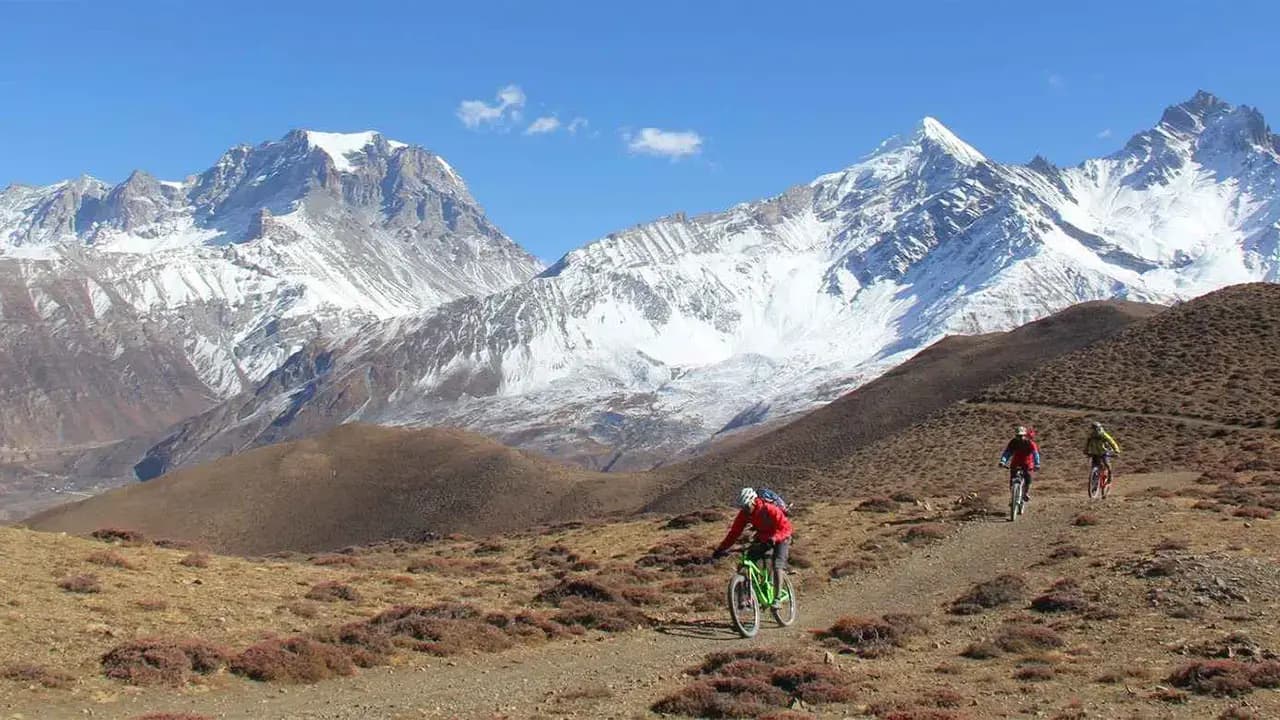
Lower Mustang: Jomsom, Kagbeni and the Kali Gandaki | 1990s heli-bike trips, Hans Rey in 2007, Urge Nepal in 2010 | |
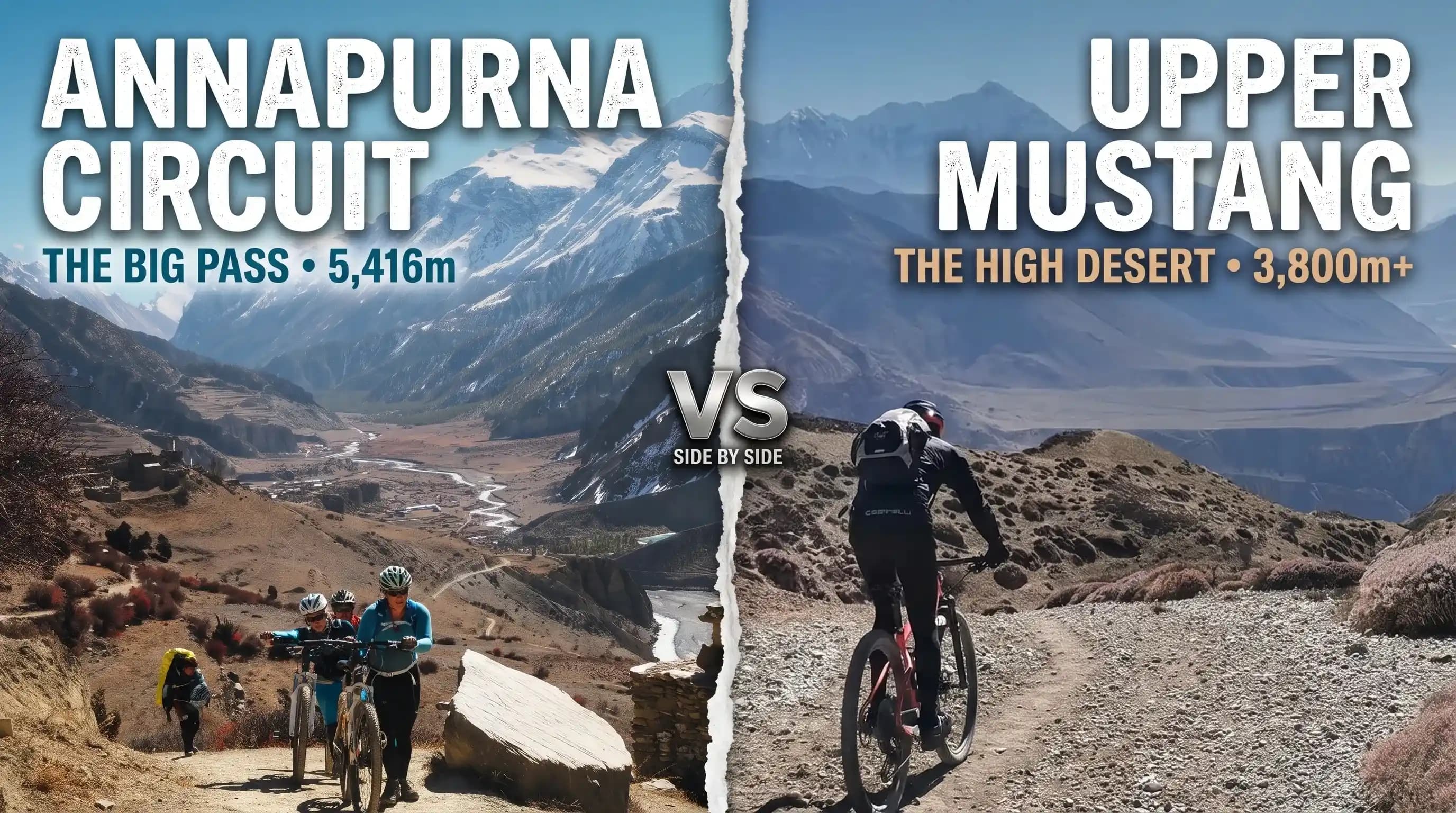
Upper Mustang and Lo Manthang | 2010, the salt route ride | |
The Annapurna Circuit | Yak Attack since 2007, Yak Ru in 2014 | |
Kathmandu to Pokhara | 2012, the first Trans Nepal | |
Sarangkot and Pokhara's ridges | Our home trails since 2004 | Sarangkot mountain biking and the Pokhara enduro and downhill day |
If you are not sure which ride suits you, our trail grading guide gives every tour a grade you can compare with the trails you ride at home.