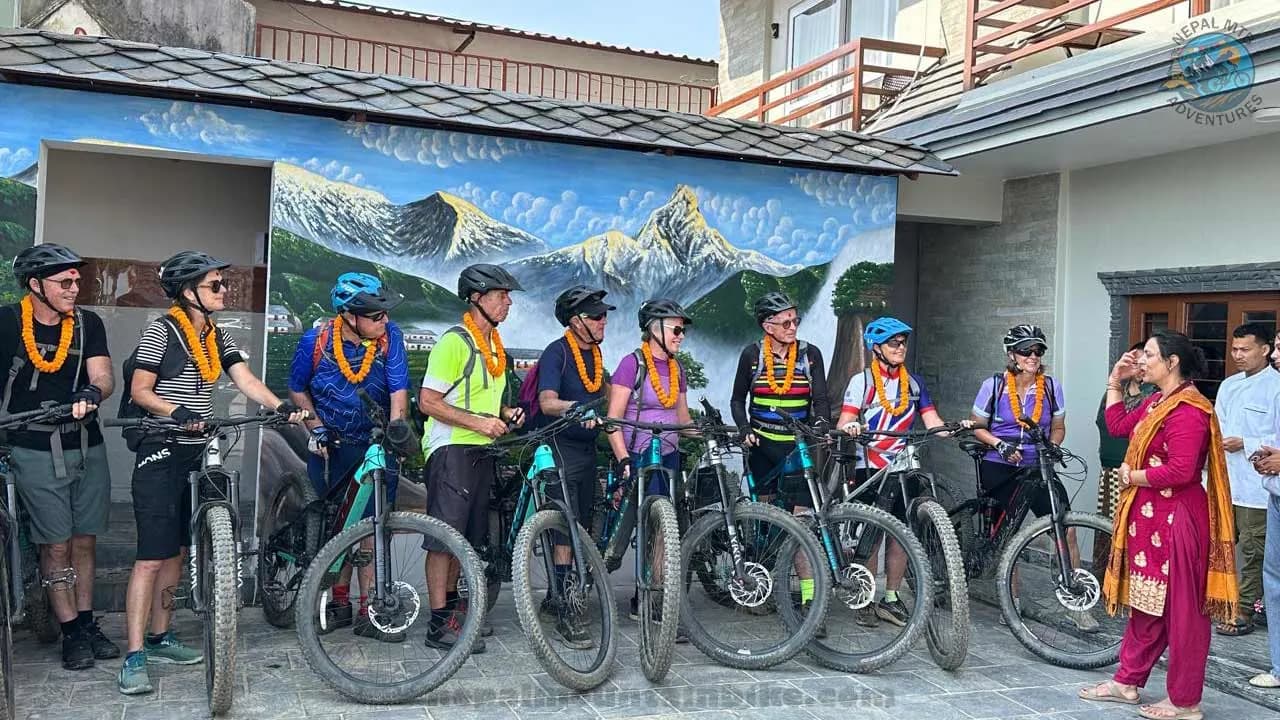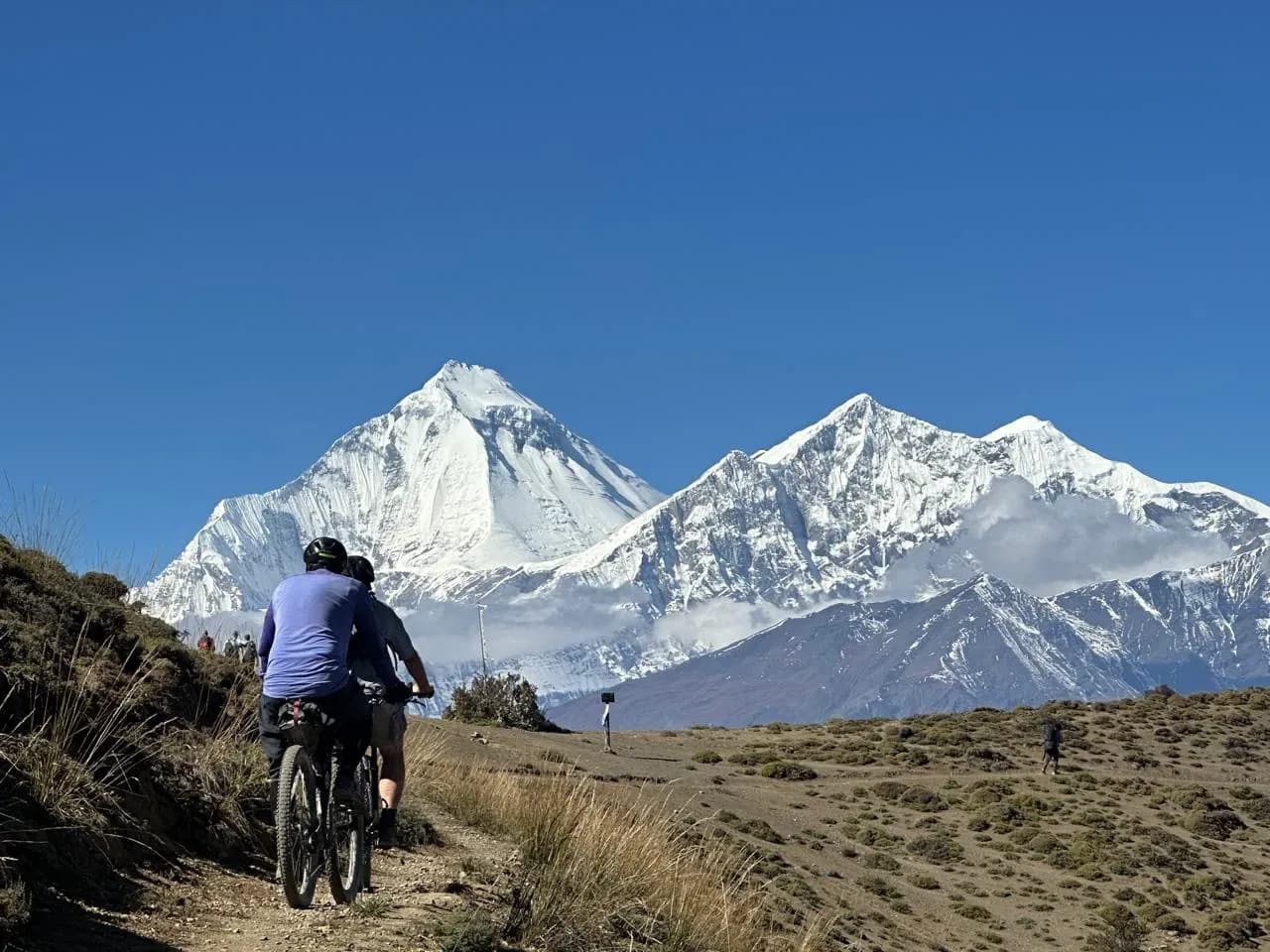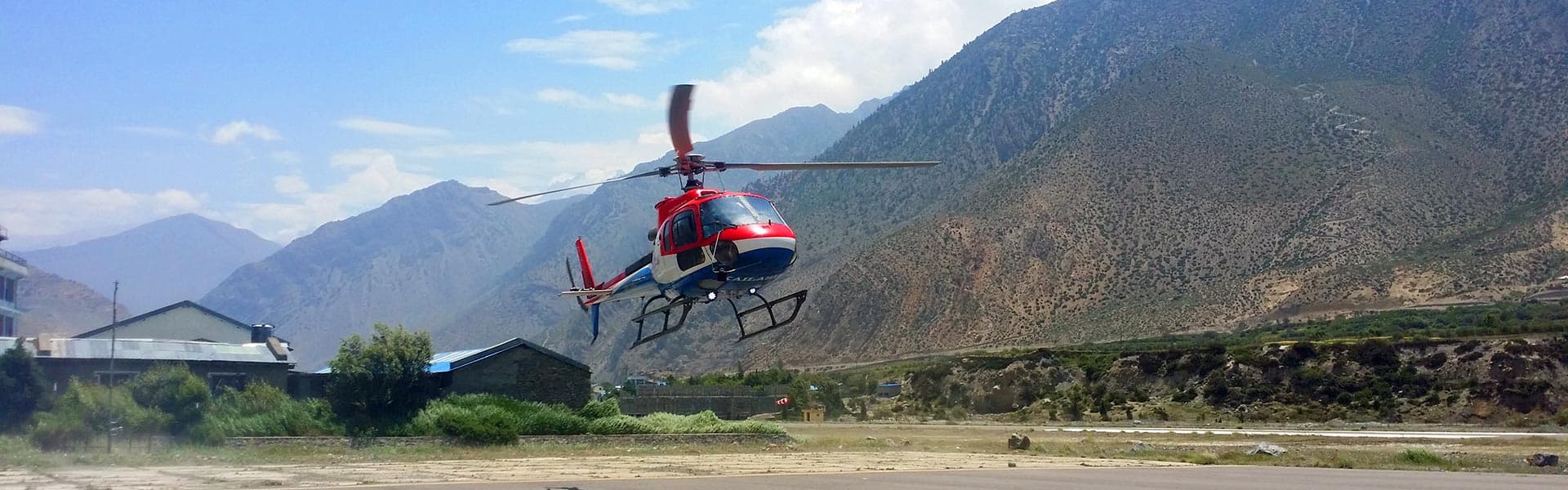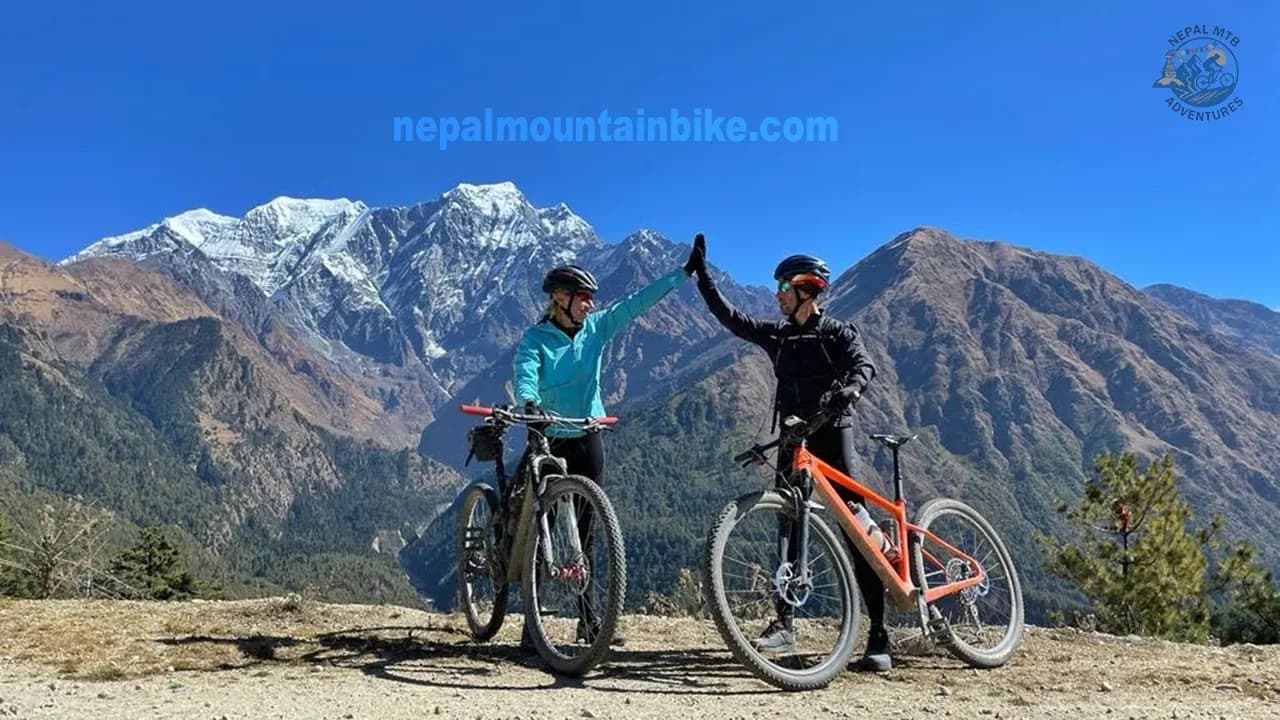


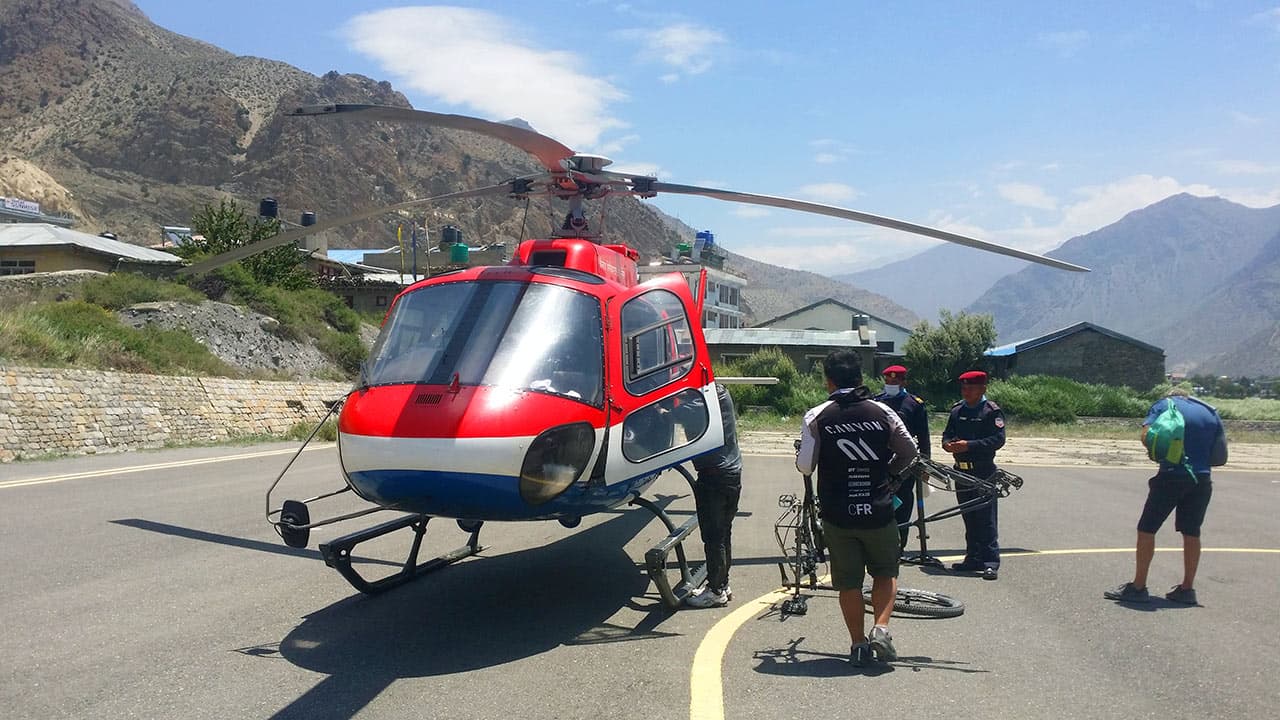
Nepal is one of the best places in the world for heli mountain biking. It has the highest mountains on earth, deep desert valleys, and remote trails that few riders ever reach. A helicopter flies you and your bike to a high start point, and you ride the descent all the way down. Instead of spending days climbing, you save your energy for the best part, the long ride down through the Himalaya.
A heli drop you above 4,400 meters, with peaks rising thousands of meters higher still, and a single descent can run more than 2,000 vertical meters, from cold alpine ridges down to warm green valleys. You ride old trails that link village to village, cross pilgrim paths, and pass monasteries that are hundreds of years old. With more than 20 years of guiding these mountains since 2004, our team knows where the best lines and the safest drops are.
What is heli biking?
Heli biking uses a helicopter to carry you and your bike to a high, remote drop-off point that you cannot reach by road. From there, you ride down instead of pedaling up. The idea is simple, but the payoff is huge:
You skip days of driving and uphill climbing
You reach untouched terrain that other riders never see
You get a bird's-eye view of valleys, glacial lakes, and peaks on the flight up
You spend your effort on the descent, not the climb
How heli biking works in Nepal
A lot of people picture heli biking but do not know how it actually happens. Here is the real process.
The flight. A helicopter carries you, your guide, and the bikes to a high drop point that cannot be reached by road. The bikes are loaded for the flight, then set up and checked at the top before you ride down.
The altitude limit. High in the mountains, the air is thin, so a helicopter that lifts five riders near Kathmandu may only carry two or three to the highest drop points. For larger groups, the helicopter shuttles riders up in stages, which is normal and helps keep every flight safe.
The drop. Heli drops in Nepal can place you above 4,400 meters, sometimes higher, with peaks towering thousands of meters over your head. From the drop point, your guide helps assemble and check the bikes, and the descent begins. A single drop can give you 2,000 meters or more of vertical in one day.
The permits. Some zones, like Mustang and parts of the Annapurna region, are restricted and need special permits and landing fees. We arrange all of the permits, including the ACAP permit and local landing charges.
Why Nepal is the best place for heli mountain biking
A few things come together here that you cannot find anywhere else:
The height. Nepal holds eight of the world's fourteen highest mountains, so heli drops reach altitudes most countries cannot offer. You can start a descent from above 5,000 meters.
The variety. In one trip, the terrain shifts from high desert and alpine meadow to pine forest, river gorge, and warm jungle, so the riding never feels the same twice.
The trails. Nepal is home to some of the highest singletracks in the world, much of it built from old trade and pilgrim paths that link village to village.
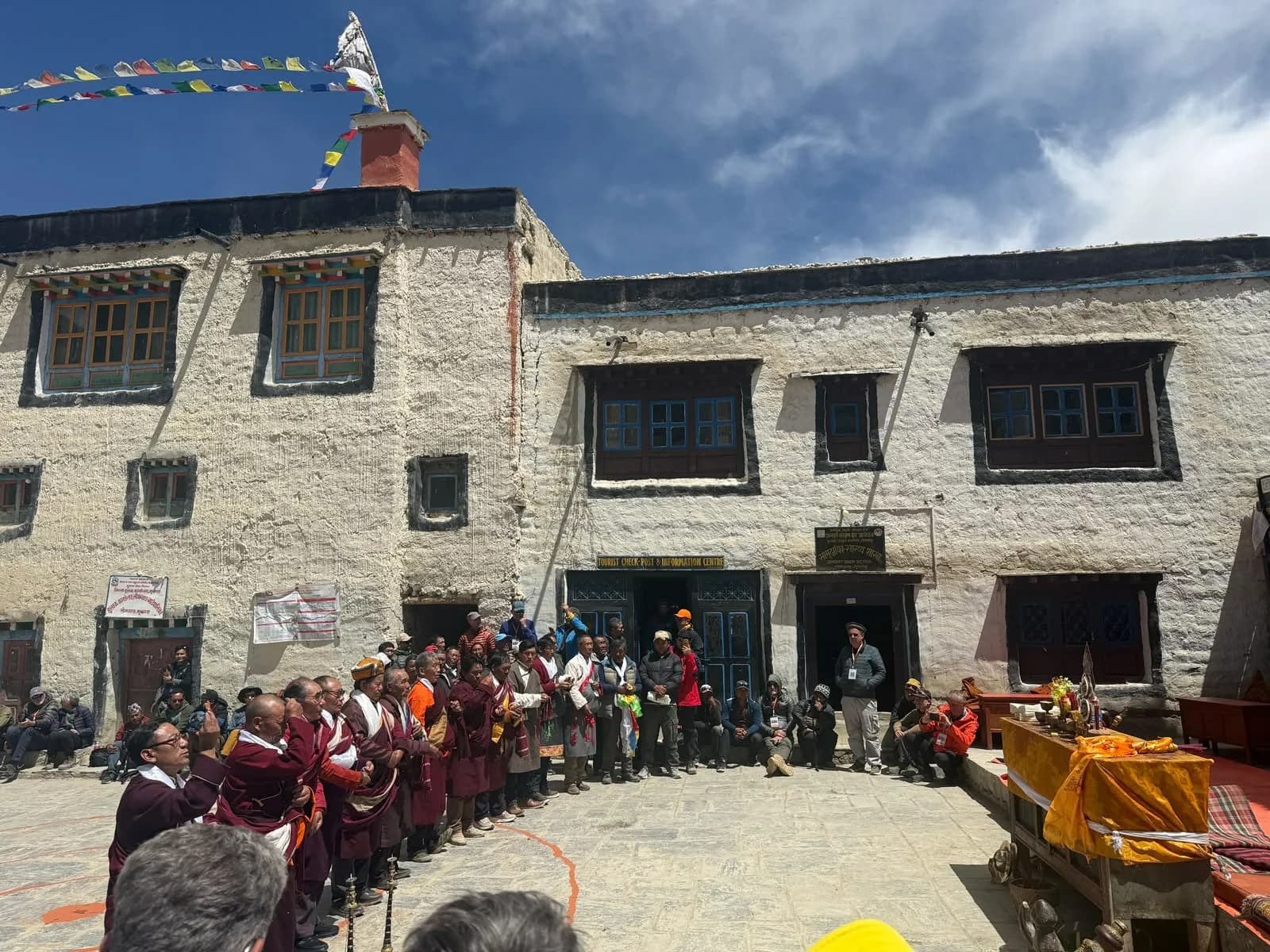
The culture. Between descents, you pass monasteries, temples, and the homes of Gurung, Thakali, Sherpa, Rai, and Tamang communities, so the ride is an adventure and a cultural journey at once.
Best heli biking destinations in Nepal
Nepal has several world-class regions for heli enduro riding, each with its own feel, and we take you to those destinations.
Lower Mustang
Lower Mustang is the heart of heli-biking in Nepal and the setting for our flagship trips. A helicopter lifts you out of Pokhara and drops you high near Thorong Phedi, below the Thorong La pass, for a long descent to the ancient walled village of Kagbeni at the gateway to Upper Mustang. From there, the riding strings together some of the finest singletrack in the country, from the trail below Muktinath down through the Lupra valley, to the wild line off Windy Pass into the Mustang valley, and the run past Dumba Lake and Thini village to the apple town of Marpha. Lower down, you follow the Kali Gandaki, the deepest river gorge on earth, through the hot springs at Tatopani, all beneath the giants of Nilgiri and Dhaulagiri. This desert is freeride royalty. It starred in the 2012 film Where the Trail Ends, made by Red Bull Media House and directed by Jeremy Grant, which brought riders like Cam Zink, Darren Berrecloth, Kurt Sorge, and Andreu Lacondeguy to ride its raw terrain. It also holds famous lines such as the Lupra Pass and the Gyu La Pass at 4,077 meters. The whole region is exactly what our nine-day heli biking tour through Mustang is built around.
Upper Mustang, the Forbidden Kingdom
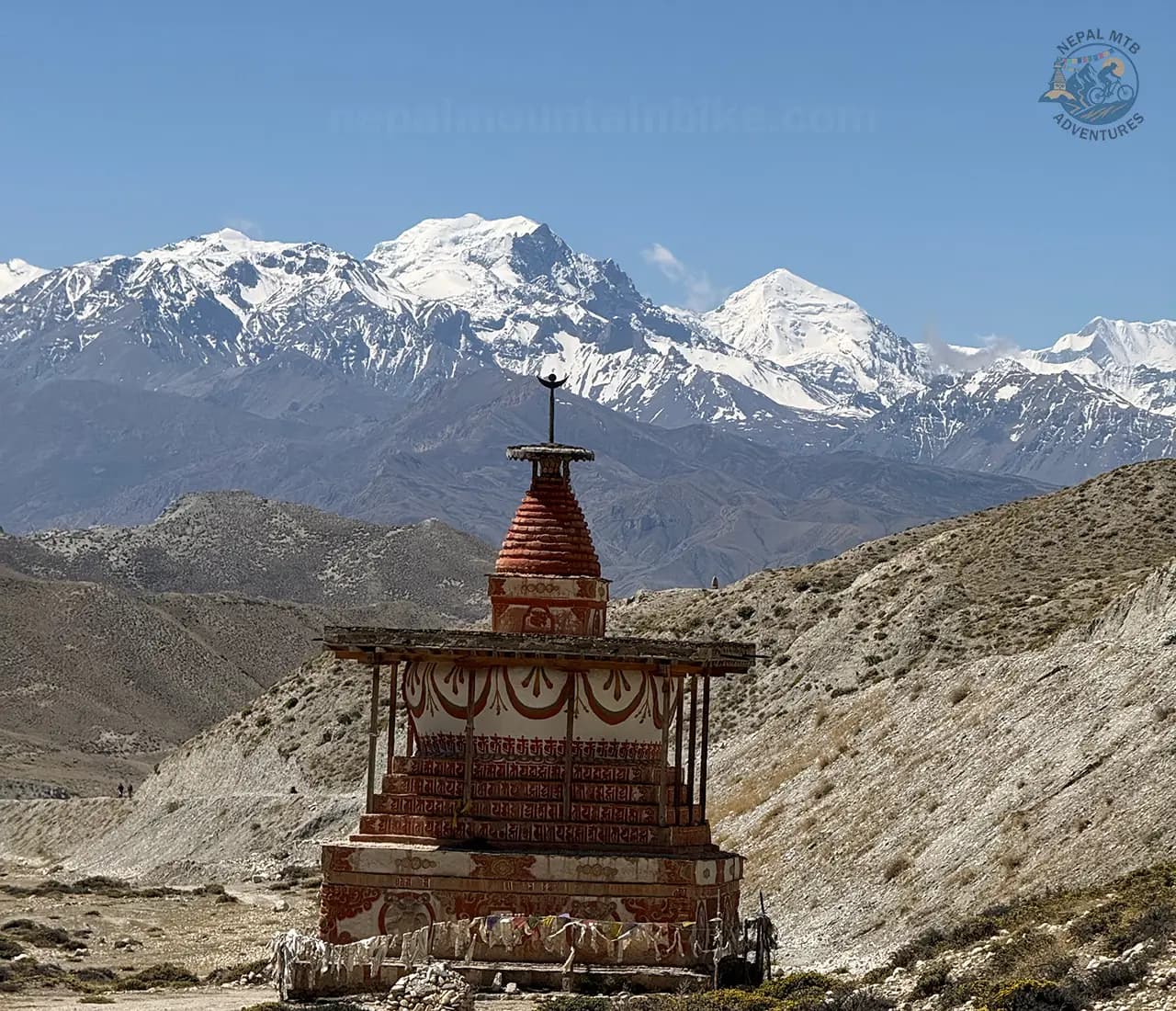
Upper Mustang is the ultimate high desert ride and was closed to outsiders until 1992, which is why it is still called the Forbidden Kingdom. A heli start can place you near the Thorong La pass at 5,416 meters, one of the highest rideable points on earth, for a long drop toward the sacred village of Muktinath. Because it sits in the rain shadow behind the high peaks, Upper Mustang stays dry and rideable even in the monsoon, when most of Nepal is wet. The riding crosses red rock canyons and wind-carved valleys, passes ancient sky caves, painted monasteries, and prayer flag villages of the Loba people, and runs toward the old walled capital of Lo Manthang, once the seat of the Kingdom of Lo. The Tibetan culture here is some of the best preserved anywhere, so the ride feels as much like a journey through history as a descent. It is the centerpiece of a full ride through Upper Mustang and a bucket list line for experienced riders.
Pikey Peak (around 4,065m), in the Everest region
Pikey Peak is a special one. You fly by helicopter from Kathmandu and, from near the summit at about 4,065 meters, look out over Everest, Makalu, and Kanchenjunga, three of the world's five highest peaks, before you even start riding. The descent drops into the Ratnange Trail Center, Nepal's first community-built mountain bike trail center, made for enduro, downhill, and all-mountain riding. The trail begins on open rocky ground up high, then flows into mind-bending singletrack through dense rhododendron and pine forest, passing places like Taksindu monastery and the town of Salleri as the land changes from high alpine to warm forest. The area also carries history, as it sits on a route once walked by Sir Edmund Hillary on his way to Everest. It is the kind of remote, high country riding you find on our Pikey Peak wilderness tour.
Pokhara and Poon Hill (3,200m)
Pokhara is the home of mountain biking in Nepal and the easiest base for a heli ride. A drop near Poon Hill at about 3,200 meters opens flowing descents through blooming rhododendron forest down to the riverside village of Birethanti, with warm Gurung villages and views of the Annapurna range along the way. It is a gentler, greener heli experience than the high desert, and a great way to taste the sport. To plan around the city, our complete guide to mountain biking in Pokhara covers the trails, seasons, and logistics.
Langtang National Park
Langtang is the closest big mountain region to Kathmandu, which makes it a strong choice when time is short. A high heli start at about 4,380 meters near the holy Gosaikunda lakes, a sacred pilgrimage site for both Hindus and Buddhists, leads into a long descent through alpine meadow and rhododendron forest. The whole area lies inside Langtang National Park, the first Himalayan national park in Nepal, home to red pandas, Himalayan tahr, and langur monkeys, with the wall of Langtang Lirung at 7,234 meters rising overhead. The trail runs past Tamang and Tibetan villages, stone prayer walls, and deep river gorges, so you get raw alpine riding and rich mountain culture only a short flight from the capital.
Tilicho Lake and Meso Kantala Pass (5,340m)
For the most adventurous riders, heli shuttles can reach the wild country around Tilicho Lake, which sits at about 4,900 meters and is one of the highest lakes in the world, set among glaciers in the Manang valley of the Annapurna region. From the Meso Kantala Pass at 5,340 meters, you drop into huge, high alpine descents that run toward Mustang on one side or down to Tilicho base camp on the other. This is raw, glacier-carved terrain with almost no other riders and no villages for long stretches, framed by views across the Annapurna range. It is the kind of ride only a helicopter can reach, and only strong, experienced riders should take on.
The trails: what the riding is like
Heli enduro trails in Nepal are wild, natural, and demanding in the best way. On a single descent, you can expect:
- Steep, open rocky sections off grassy hilltops
- Tight switchbacks and technical singletrack
- Rooty, slick jungle trail lower down
- Old stone staircases and natural rock features
- Suspension bridges over deep gorges
- Fast-flowing loamy stretches through the forest
These are real mountain trails shaped by farmers, traders, and pilgrims over centuries, not built bike park tracks, so smooth riding and good line choice matter. The terrain often shifts from high alpine to tropical jungle within a single day's descent.
Bikes and gear
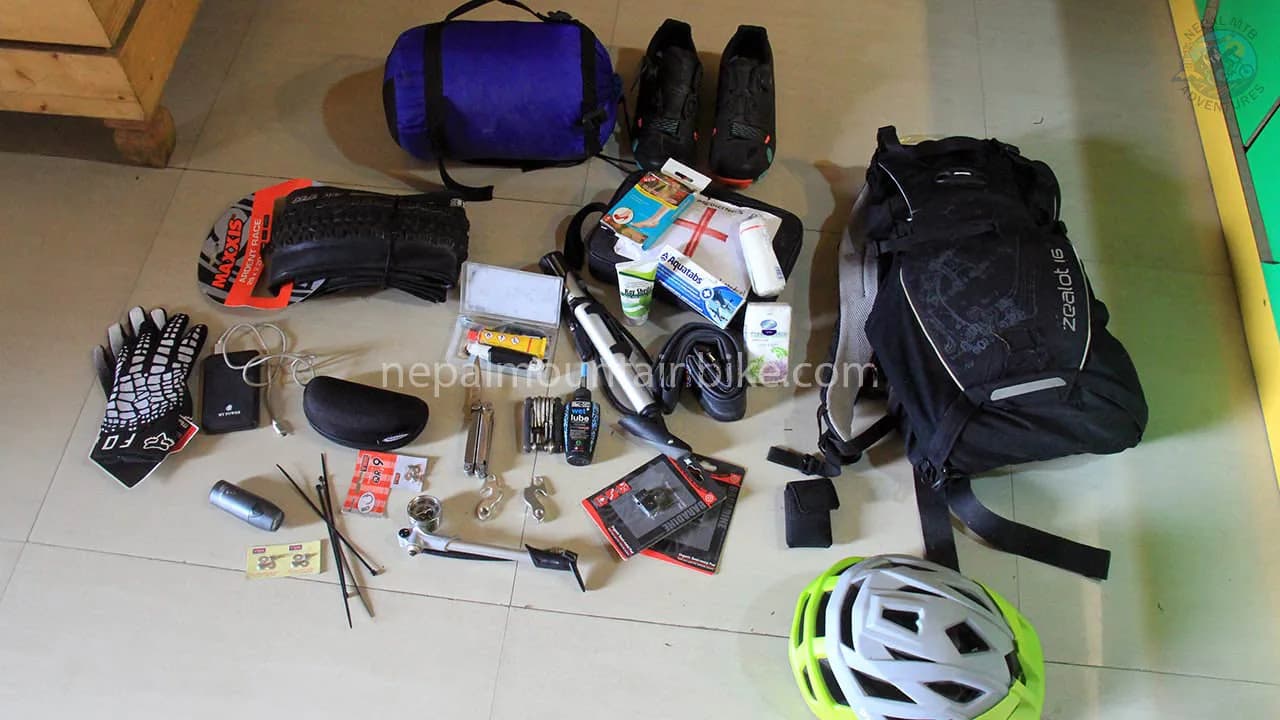
Heli enduro riding needs a capable full-suspension bike and proper protection. We provide top-quality mountain bikes with full maintenance support on the trip, and you can also rent a bike and gear from our fleet if you are not bringing your own. For the descents, provide:
- A mountain bike helmet, with a full-face helmet for the steepest terrain
Knee and elbow pads and riding gloves
Padded cycling shorts and lightweight layers for changing temperatures
A hydration pack and energy snacks
Sunglasses and sunblock for the strong mountain sun
Who is heli biking for?
Nepal's trails suit a range of riders, but heli enduro leans toward the experienced end, usually intermediate to advanced. Gentler drops around Pokhara and Poon Hill can work for confident intermediate riders, while the big lines in Upper Mustang, Pikey Peak, and the high passes are for strong riders who handle rock gardens, steep sections, roots, and small drops at altitude.
Safety, support, and planning your trip
Heli biking is a serious adventure, so the way it is run matters more than anything. Here is how a well-planned heli trip keeps you safe.
Licensed local guides, scaled to your group. You ride with experienced, licensed MTB guides, and the number of guides grows with the size of your group, so no one is left without support.
A warm-up before the big drops. Good trips do not throw you straight off a 5,000-meter pass. Ours begin with practice descents in the Pokhara valley, using cable car and jeep shuttles, so you get used to your bike, the guides, and downhill technique before any helicopter drop.
Bike and mechanical support. Bikes are well-maintained, and a mechanic supports the trip, so a small problem on the trail does not end your day.
Permits and logistics handled for you. Restricted regions like Mustang need special permits, landing fees, and the ACAP permit. Our team arranges all of it, along with flights, transfers, and accommodation.
Flying in the safe months. Heli trips run in the clear, stable seasons of autumn, from September to November, and spring, from March to May, when skies are clear, and flying is safest. Riding outside these windows risks snow and monsoon weather. You can see the full timing in our guide to the best time to mountain bike in Nepal.
Weather-based flying. Helicopter flights depend on clear weather and thin air at altitude, so guides plan flexible timing and shuttle larger groups in stages for safety.
Nepal's place in the world freeride
Nepal is not new to gravity riding. The Pokhara Mountain Bike Club helped put the country on the map by organizing an enduro and downhill event back in 2010, and over the years, the scene has drawn famous names from world championship freeride and downhill racing. When the makers of Where the Trail Ends chose Lower Mustang as one of just a handful of locations worldwide, alongside Utah, the Gobi Desert, British Columbia, and Argentina, they showed the world just how wild and rideable this terrain is. That heritage is exactly why heli enduro in Nepal feels so special today.
Frequently asked questions
What is heli biking?
Heli biking uses a helicopter to fly you and your bike to a high, remote drop-off point you cannot reach by road, so you ride the descent down instead of pedaling up. It saves days of climbing and opens wild, untouched trails almost no one else reaches. In Nepal, it means dropping into long enduro and all-mountain descents beneath the highest peaks on earth.
How does heli biking work in Nepal?
A helicopter carries you, your guide, and the bikes to a high drop point that cannot be reached by road. The bikes are loaded for the flight, set up, and checked at the top before you ride down. Because the air is thin at altitude, the helicopter sometimes carries fewer riders and brings a bigger group up in stages, which is normal and keeps every flight safe.
Where can you go heli-biking in Nepal?
The top regions are Lower and Upper Mustang, Pikey Peak in the Everest area, Pokhara and Poon Hill, Langtang National Park, and the high passes near Tilicho Lake. Each one has a different feel, from high desert to alpine forest, so we match the region to your skill and the season.
Do I need to be an expert rider?
Heli enduro favors experienced, intermediate to advanced riders. Even though the helicopter does the climbing, the descents are long and technical, with rock gardens, steep sections, roots, and drops, so you need solid singletrack skills and a good level of fitness. Gentler drops around Pokhara can suit strong intermediate riders, while the high mountain lines like Upper Mustang and Pikey Peak are for advanced riders. Your guide always matches the route to your level.
Is altitude sickness a risk on a heli-biking trip?
It is worth understanding. About three out of four people feel some effect of altitude, usually a mild headache or tiredness, and the risk rises above 2,500 to 3,000 meters. The good news with heli biking is that you spend only a short time at the high drop point and then descend quickly, and descending is the natural cure for altitude sickness, so you are never sleeping at extreme height. Our guides still limit time at the top, watch every rider for symptoms, and plan the trip so your body is not rushed.
Can I bring my own bike?
Yes, and many experienced riders prefer to, because your own bike gives the best fit and comfort on technical descents. If you would rather travel light, we provide top-quality full suspension bikes with full maintenance on the trip, or you can rent a bike and gear from our fleet. Either way, your bike is checked and set up before the first drop.
What bike and gear do I need?
A capable full suspension enduro or all-mountain bike plus full protective gear. We provide top-quality bikes and maintenance, and can rent you a bike if you need one. Bring or rent a helmet with a full face for the steepest terrain, plus knee and elbow pads, gloves, padded shorts, lightweight layers, a hydration pack, sunglasses, and sunblock.
Do I need travel insurance?
Yes, and this matters. Heli biking takes you into remote, high country where a helicopter evacuation may be the only way out in an emergency, so travel insurance that covers high altitude mountain biking and helicopter rescue is essential. We ask every rider to hold a policy and bring a copy before the trip starts, and we recommend cover for trip interruption too, so you are protected if the weather changes your plans.
What happens if the helicopter cannot fly because of bad weather?
Mountain weather changes fast, and a clear morning can turn to cloud, wind, or snow that grounds a helicopter for hours or even a day. This is normal in the Himalaya, and a good trip plan for it. We build buffer time into the schedule, fly early in the day when conditions are usually best, and if a flight is delayed, we switch to ground riding, valley trails, jeep shuttles, or other activities while we wait for a safe window. We will always explain our reschedule and refund policy before you book.
How many days is a heli-biking trip?
Heli biking trips range from a short two-day heli extension to longer expeditions of eight to eleven days, depending on the region. Our flagship Mustang heli trip runs nine days, which allows time for arrival, a warm-up, the helicopter drops, the descents, and a buffer for weather.
Ready to fly and ride
Heli enduro and all-mountain biking in Nepal is the rarest kind of adventure, where a helicopter lifts you above the climb and sets you loose on the descent of a lifetime. From the deserts of Mustang to the Everest views of Pikey Peak, some of the highest singletrack on earth is waiting.
Plan your trip with a team that has guided these mountains since 2004. Use the Plan Your Ride button or visit Nepal Mountain Bike, and see the full route on our heli mountain biking tour in Mustang.