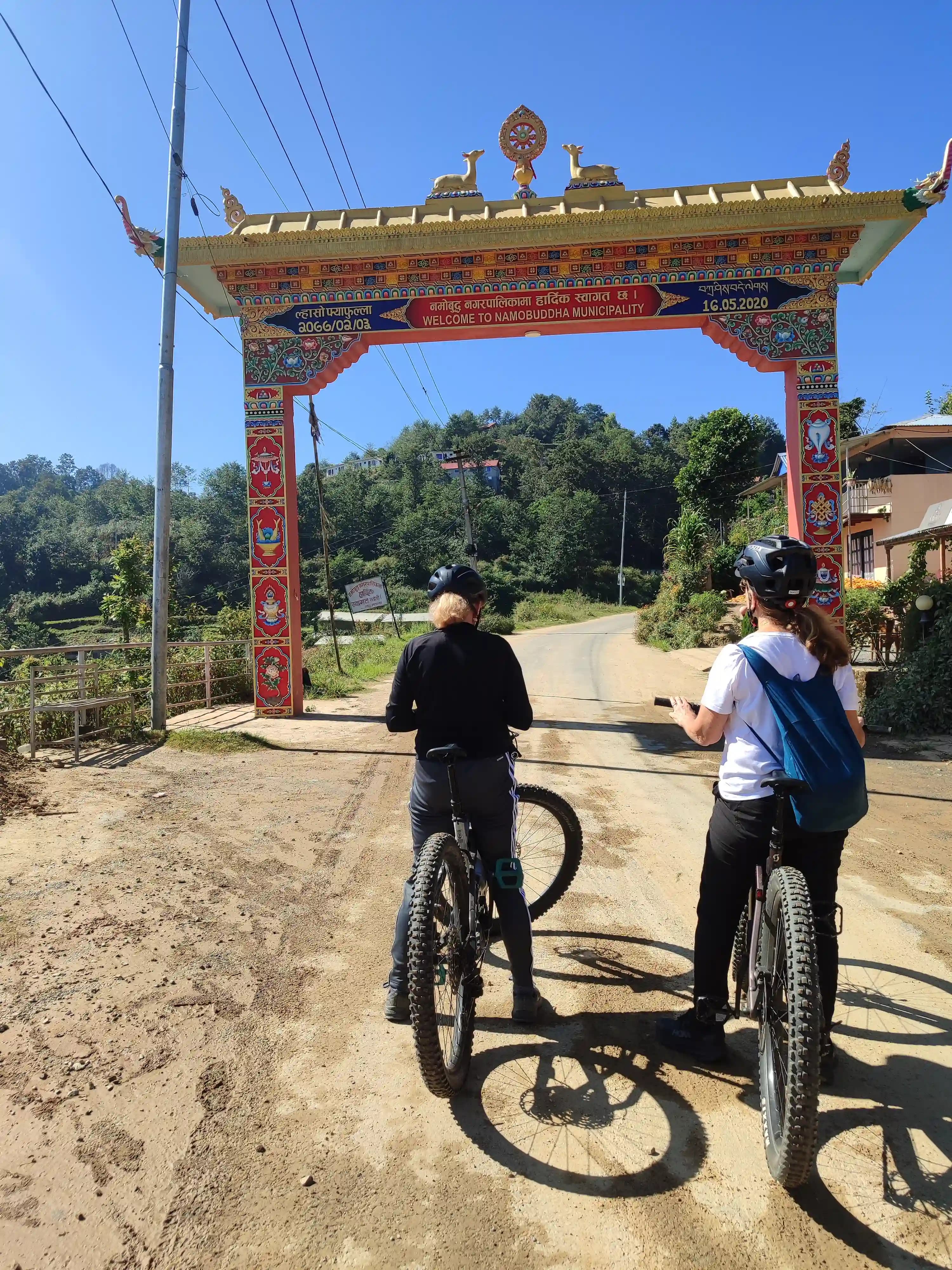
The Begnas Lake E-MTB Day Tour takes you to the quiet eastern side of Pokhara. A short 4x4 drive drops you at Matepani, above the city. From there you ride east along a chain of hill villages, including Arba, Kafalghari, Shanti Maidan and Kalikasthan, then descend to Begnas Lake for lunch by the water.
After lunch, you ride back to Pokhara on a different line. You cross the Damsadi suspension bridge and finish with three well-known landmarks: Devi's Fall, Gupteshwor Mahadev Cave and Kedareshwor Mahadev Temple.
You ride a pedal-assist electric mountain bike with a Bosch motor. On a regular mountain bike, this ridge makes for a hard day, but the motor makes the climbs manageable for many more riders. A certified local mountain bike guide rides with you all day, and lunch, water, and hotel pickup are included. The tour is private, so you choose the date and ride only with your own group.
Quick Facts
Why Ride East of Pokhara?
Most visitors stay on the west side of the valley, around Phewa Lake, Lakeside and Sarangkot. The east side is quieter, where people still farm, fish, and live at their own pace. Here is what you get by riding there:
Two calm lakes. Begnas is the second-largest lake in the Pokhara Valley, and smaller Rupa lies just to the north. Both are part of a Ramsar-listed wetland, and you can see them together from the Kalikasthan ridge.
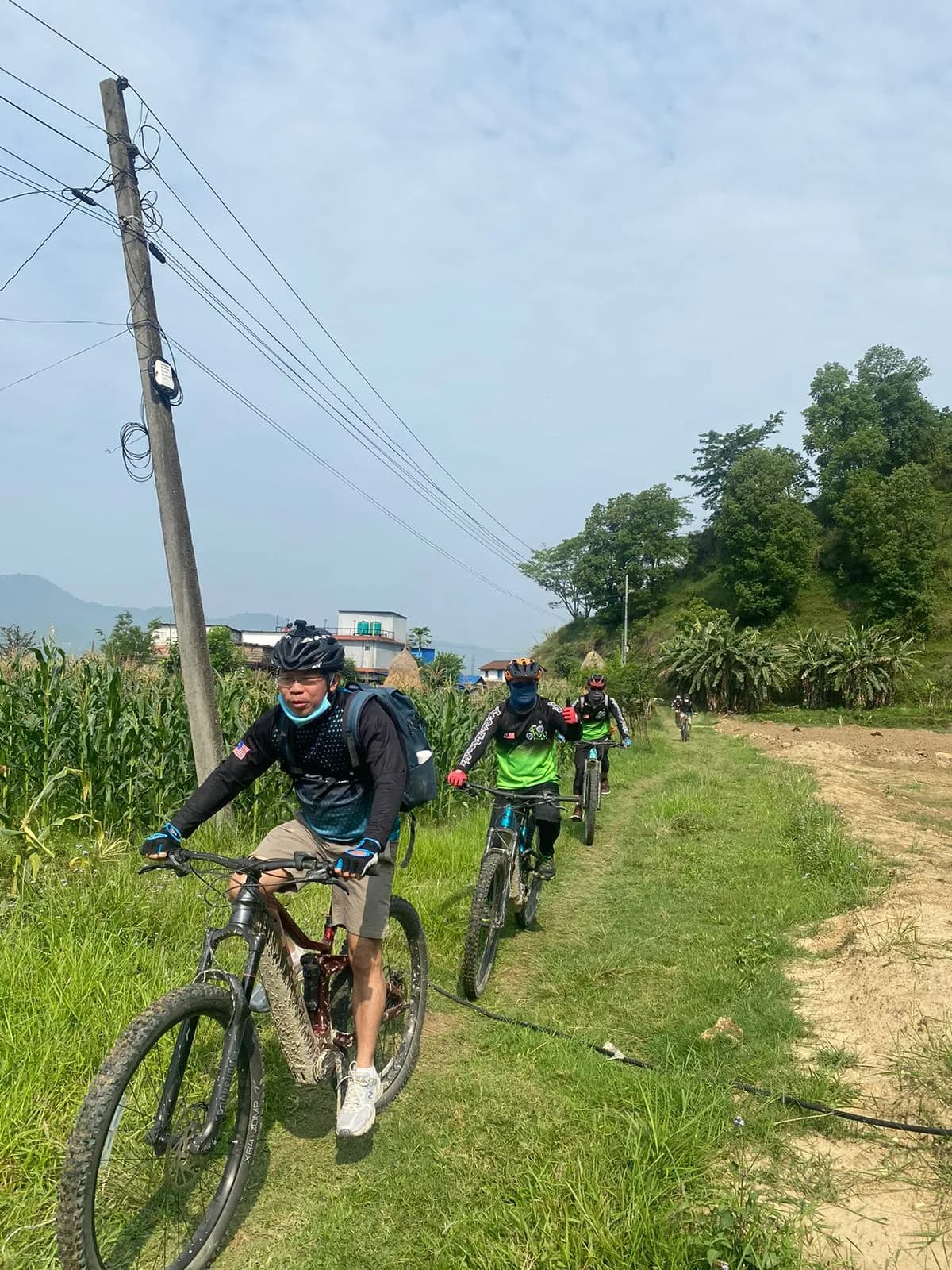
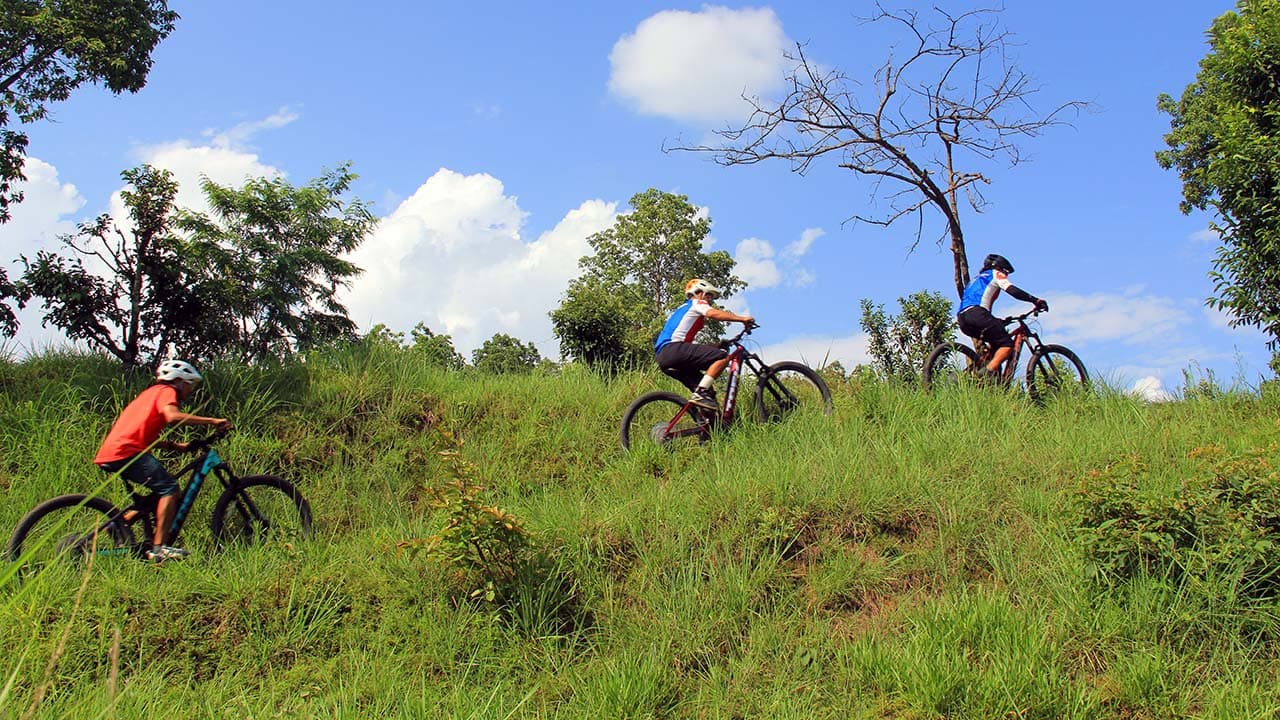
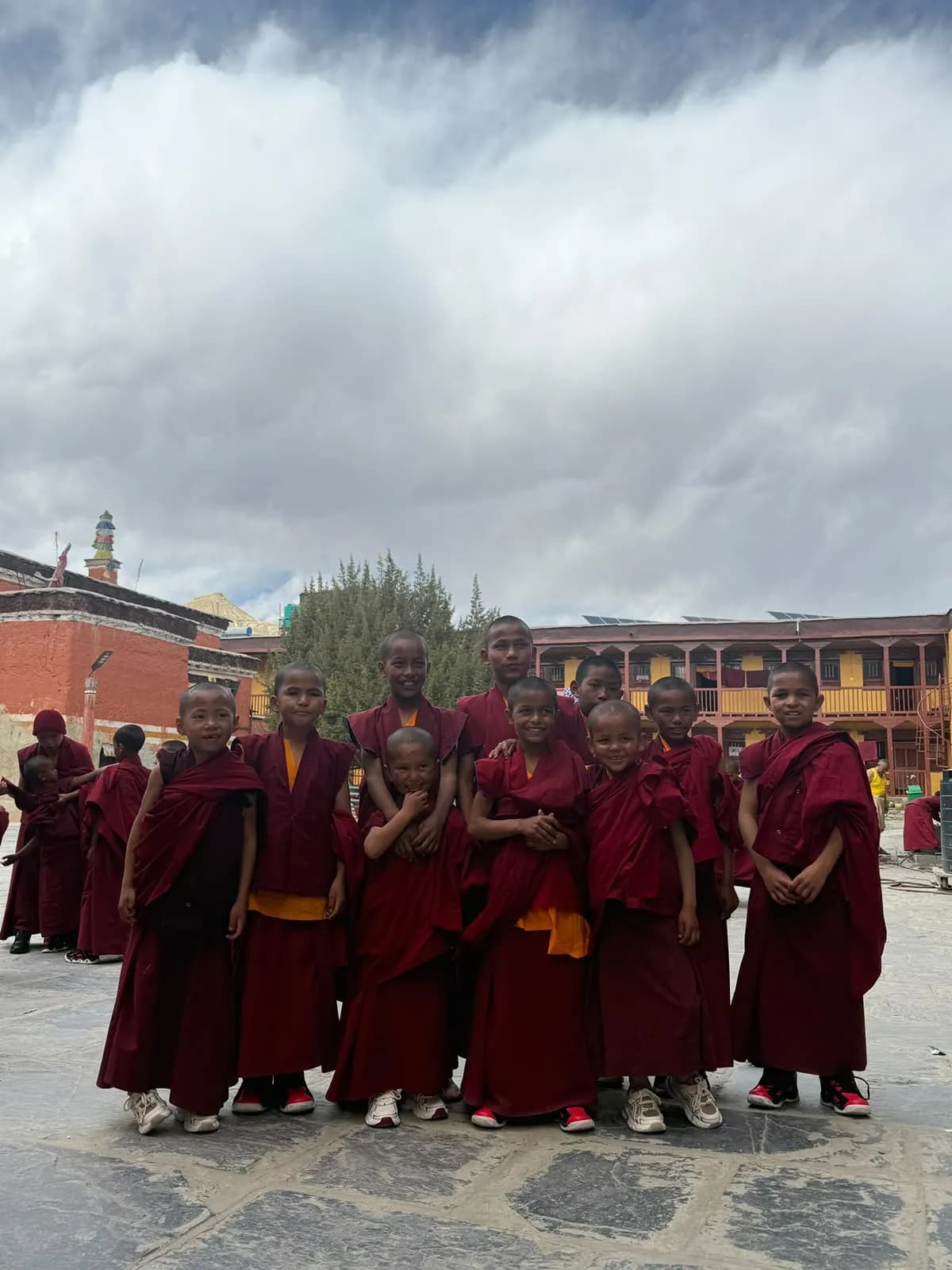
Real village life. You ride past terraced paddies, farmhouses, and livestock through Gurung and Brahmin-Chhetri villages, including Kalikasthan with its old Kalika temple.
Forest and farmland. Shady forest climbs near Kafalghari, named after the wild kafal (bayberry) tree, give way to rice terraces stepping down to Begnas.
A route that keeps changing. A ridge crossing in the morning, lunch by the lake, then a different line home over a gorge and past Pokhara's best-known sights.
Your Day at a Glance
Riding times include photo stops, village stops, and short breaks. The exact pace depends on your group, and your guide will adjust it to suit you.
Trail Composition
This route is a mix of rough and smooth ground. Most of the riding is off-road on dirt roads, farm trails and forest singletrack, with short stretches of village lanes and town roads that link the sections together.
What the trail is made of
The trail, stage by stage
Morning, Matepani to Begnas Lake. This is the most off-road part of the day. You start on a dirt track through Arba, climb forest singletrack at Kafalghari, cross open ground at Shanti Maidan, and ride ridge trails to Kalikasthan. The descent mixes farm trails and forest paths down to the lake.
Afternoon: Begnas Lake to Pokhara. The trails get easier as you head back. Farmland and forest tracks through Dovilla lead to the Damsadi bridge. The last part, past Devi's Fall, Gupteshwor Cave and Kedareshwor Temple, is on town roads.
What this means for you
You need basic off-road skills. Be ready to ride loose dirt, uneven farm paths and short forest sections.
Full suspension helps. It smooths out the roots, stones, and rough farm tracks, so you stay comfortable all day.
You can always walk a section. If a steep or tricky bit does not feel right, get off and walk. Your guide will wait.
Trail conditions change with the weather. After rain, farm trails and forest singletrack get muddy and slippery, and your guide may choose an easier line.
Begnas Lake, Your Lunch Stop
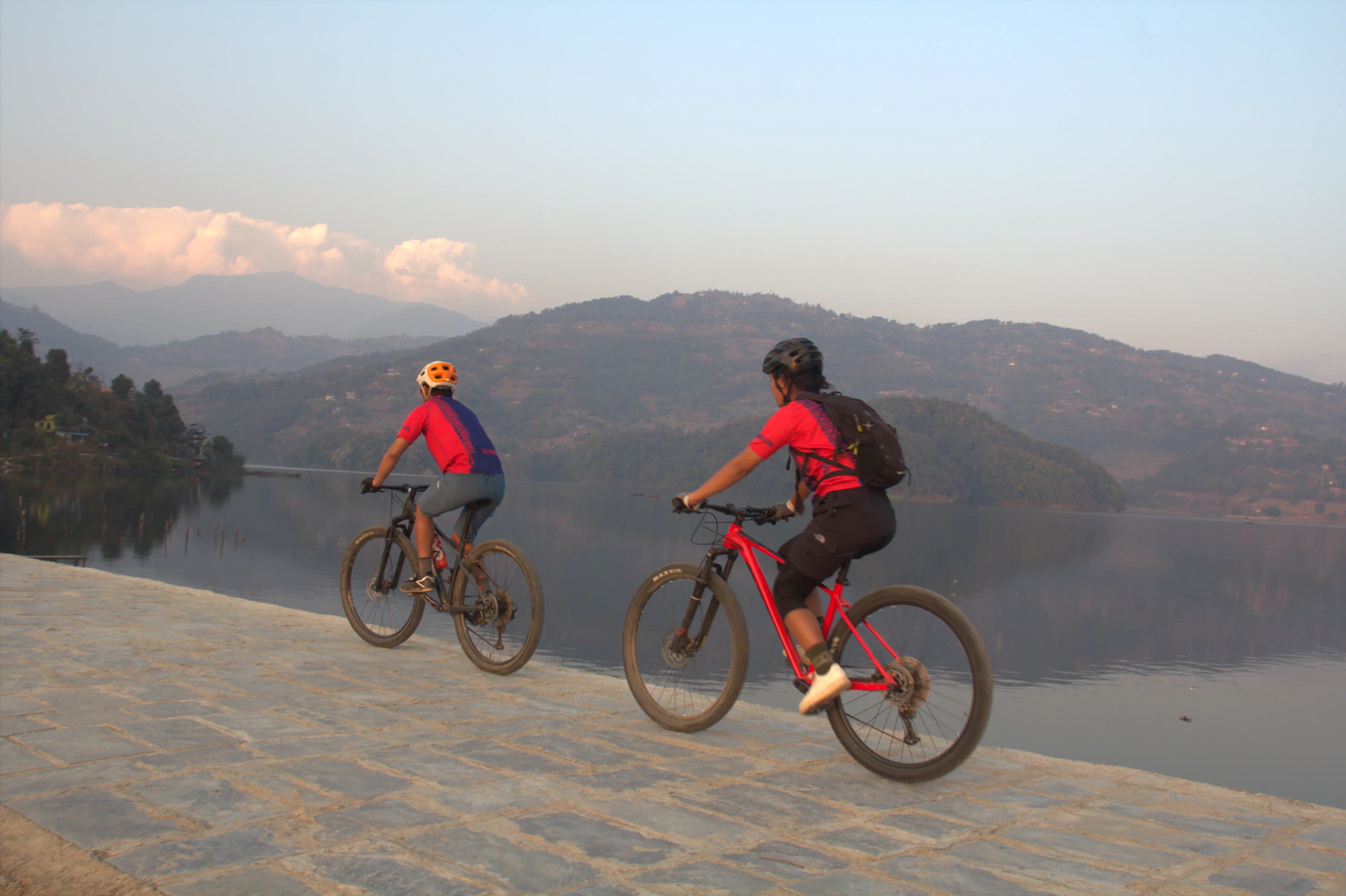
Begnas Lake sits at about 650 m on the eastern side of Pokhara. It is the second-largest lake in the Pokhara Valley. It is quieter and less built-up than Phewa, with forested hills on the far shore and still water that reflects them on a calm day.
Begnas is also a working lake. Fishing families live along its shore, and you will see fish-farming cages out on the water. Together with Rupa Lake and the other lakes of the valley, Begnas is part of the Lake Cluster of Pokhara Valley, a Ramsar wetland of international importance.
For riders, Begnas is the natural halfway point. You arrive after the long ridge crossing, eat by the water, and rest your legs before the ride home. If you want to see the lake from the water, ask your guide to arrange a short boat ride during the lunch stop.
Three Pokhara Landmarks on the Ride Home
Many visitors see these sights on a separate taxi tour. On this ride, they are built into the route.
Devi's Fall (Patale Chhango)
Devi's Fall is where the Pardi Khola, the stream that flows out of Phewa Lake, plunges into a narrow gorge and disappears underground. Its Nepali name, Patale Chhango, means "underground waterfall". This is a short walking stop. There is a small entry fee, paid in cash.
Gupteshwor Mahadev Cave
Gupteshwor Mahadev Cave is across the road from Devi's Fall. It is one of the longest caves in Nepal and a sacred Hindu site with Shiva shrines inside. Deeper in the cave, you can see the water of Devi's Fall pouring through the rock from below. The cave also has a small entry fee, paid in cash.
Kedareshwor Mahadev Temple
Kedareshwor Mahadev Temple is a Shiva temple on the final stretch back into Lakeside. After a day of dust, forest and farmland, it is a quiet place to finish before the short ride back to the shop.
Your E-MTB and Equipment
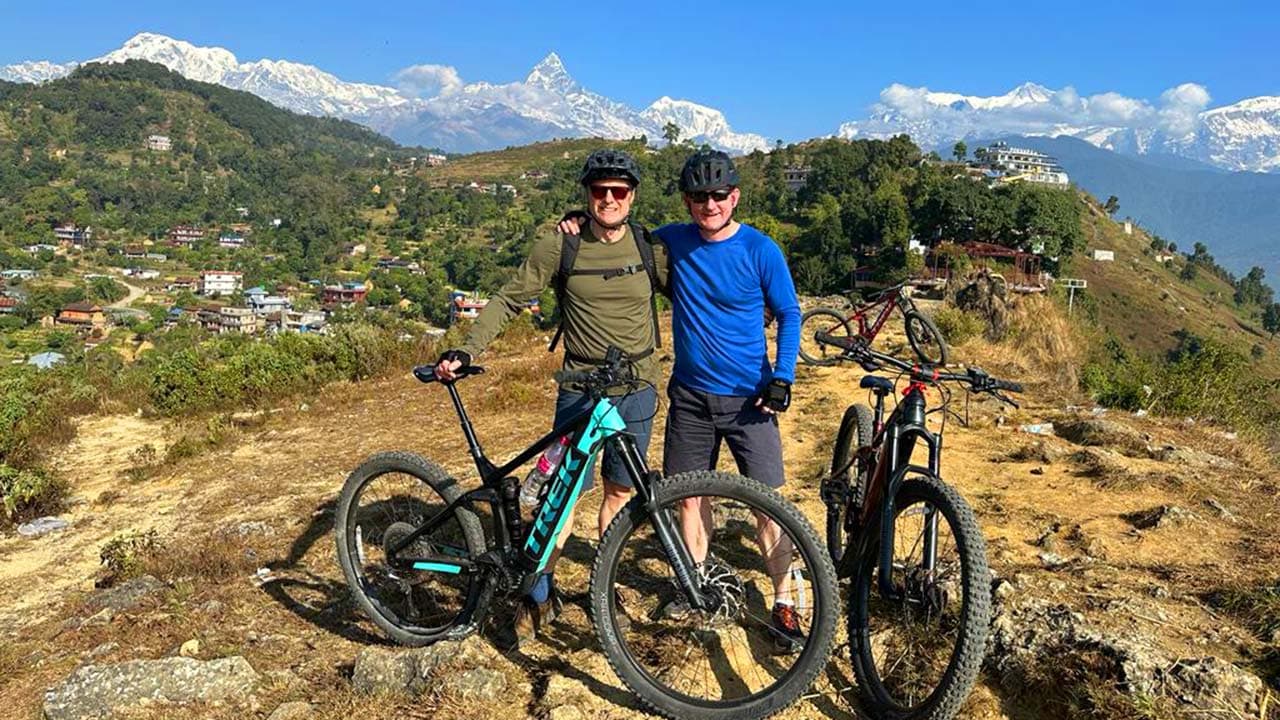
You ride this tour on an electric mountain bike from our own Pokhara fleet. Our e-MTBs have Bosch drive units, batteries built into the frame and rated for a full day of mixed climbing and descending, hydraulic disc brakes, and trail-ready full suspension. The e-MTBs in our fleet are the Trek Rail 5 Gen 3 and the Bergamont E-Trailster, and both can also be hired on their own for a day.
Every bike is checked by our mechanics before it leaves the shop. Your guide then sets it up for you: frame size, saddle height, brake reach, tyre pressure and gears.
How the assist modes work. Before you ride, your guide takes you through the assist modes. On our Bosch bikes, these are Eco, Tour, eMTB and Turbo. You choose how much help you want on each climb:
Eco gives a light push and saves the most battery. It is good for flat village lanes.
Tour gives steady, even help for long, gentle climbs.
eMTB changes the help to match how hard you pedal. It is the mode most riders use on forest trails.
Turbo gives the most power for the steepest pitches.
You still pedal, steer, and brake yourself. The motor only helps while you are pedalling.
Included for every rider: helmet (a MIPS helmet on the Premium package), gloves, and the e-bike briefing.
Your Guide and Support
Certified local mountain bike guide. Trained in trail leadership, first aid, and the hazards of this route, and rides with your group the whole day.
4x4 vehicle and driver. Handles the transfer to Matepani. On the Premium package, the vehicle also provides on-route support if needed.
Mechanical support. Your guide carries a trail repair kit for punctures and small adjustments, plus mechanical spares.
First aid. Your guide carries a full first-aid kit.
Our guides are local Pokhara riders who know this route well. Ask them about the villages as you ride. That local knowledge is a big part of the day.
Is This Tour Right for You?
This tour suits
Confident beginners and intermediate riders who are comfortable on dirt roads, farm trails and some singletrack
Riders who want a full day of distance and real village life, not just a quick ride to one viewpoint and back
Travellers who have already seen the Phewa Lake and Sarangkot side of Pokhara and want to see the quieter eastern valley
Couples, small groups and families who have ridden an e-bike before, or who are happy to learn with a guide
How hard is it?
The tour is graded Moderate. The e-bike makes the climbs much easier, but this is still a full day in the saddle, with about 35 to 40 km of riding and about 850 to 950 m of climbing.
You should be able to:
Ride a bike confidently and brake with control
Handle loose dirt, farm tracks and short sections of forest singletrack
Stay in the saddle for 5 to 6 hours of riding, with breaks
You do not need to be a strong climber. That is the motor's job. If you have never ridden an e-bike, your guide will teach you the controls before you start.
Altitude
The whole route stays in Pokhara's mid-hills, between Begnas Lake at about 650 m and the Kalikasthan ridge. Altitude is not a concern on this ride. Your main concerns are the trail surface and the weather.
Best Time to Ride
A Ride for Every Season
Pokhara is a year-round riding destination, and this route can be enjoyed in every season. What changes is the scenery. The same trail from Matepani to Begnas Lake looks and feels different depending on when you come.
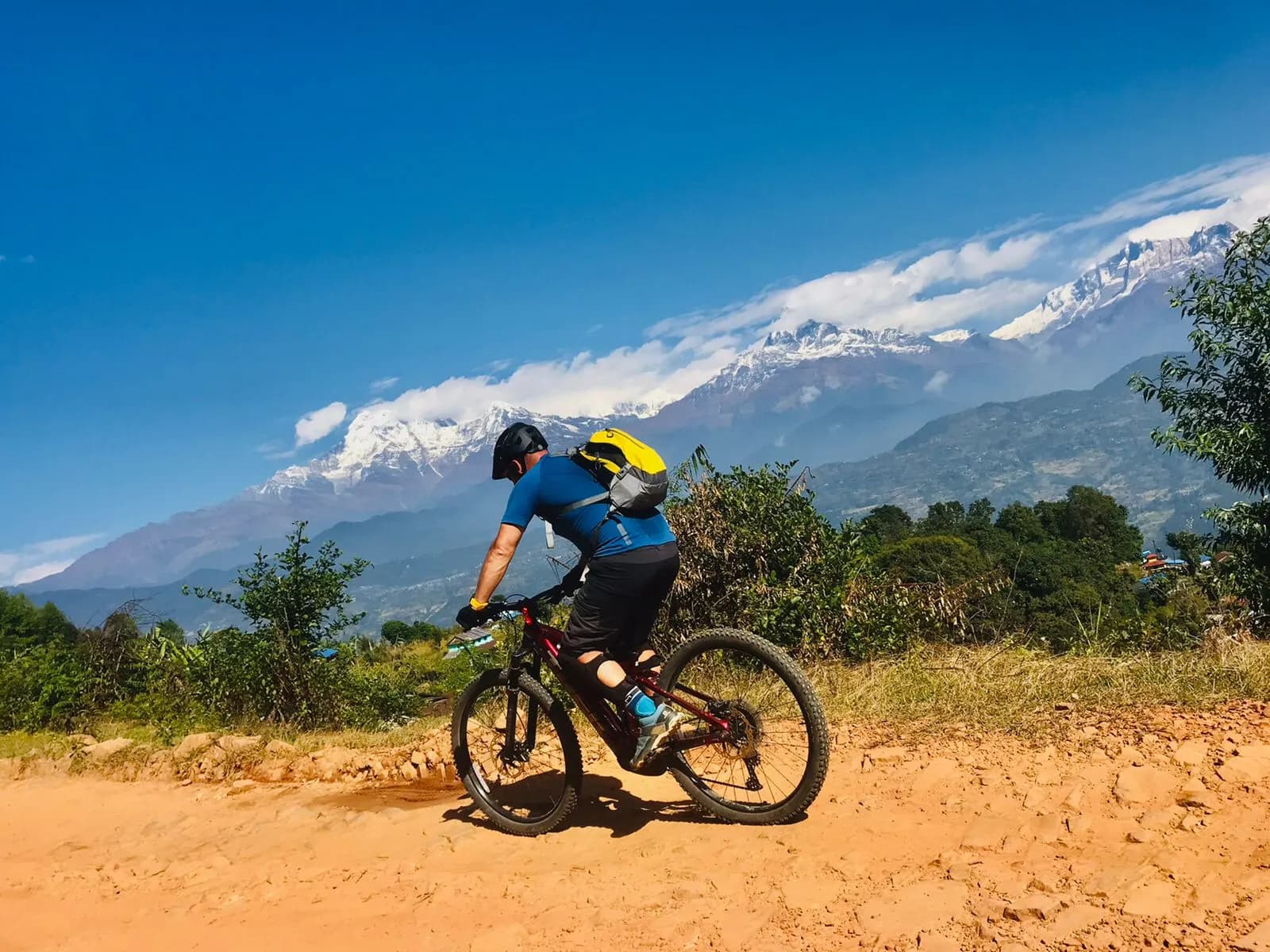
Autumn (October to November). The monsoon has just washed the air clean, so this is when the Annapurna range and Machhapuchhre look sharpest from Kalikasthan. The hills are still green, and the rice terraces on the way down to Begnas turn golden as harvest time arrives.
Spring (March to May). Days are warm and long, and the trails are dry and fast. Early spring usually brings the clearest mountain views. By late spring the sky can turn hazy, so an early start gives you the best chance of seeing the peaks.
Winter (December to February). Mornings are cool and crisp, days are mostly dry and sunny, and the village trails are quiet. It is a comfortable time to ride, and a light layer is all you need for the ridge.
Monsoon (June to September). This is the green season. The rice paddies are freshly planted, the forest is at its thickest, and Devi's Fall runs at its most powerful. Rain and clouds are part of the day, trails get muddy and slippery, and the mountains often hide behind the clouds. Your guide will choose the safest line and may reroute some sections.
For clear views from Kalikasthan, choose autumn or spring and start early. Morning skies are usually clearer than afternoon skies. If you want lush green scenery and quiet trails, and you do not mind some mud, the green season has its own charm.
Weather works very differently in the high mountains, so the best time to mountain bike in Nepal depends on where you ride. Around Pokhara, the low hills keep this route rideable in every month of the year.
What to Pack
This is a day ride, so you need far less than the full mountain biking checklist for Nepal that longer trips call for. A small daypack is enough.
What to wear
Padded cycling shorts or comfortable sports clothing
A moisture-wicking T-shirt or jersey, plus a light layer for the ridge
Closed-toe shoes with good grip, such as trail running shoes or flat-pedal MTB shoes
Sunglasses and a buff or neck gaiter for dust
What to bring
High-SPF sunscreen, because the ridge has little shade at midday
Your own water bottle or hydration pack for top-ups (we provide the water)
A small daypack for your camera, phone, and an extra layer
Cash in small Nepali rupee notes for the Devi's Fall and Gupteshwor Cave entry fees and any personal extras
Any personal medicines or first-aid items you use (your guide carries a full kit as well)
A light rain jacket, because mornings in October, November and March to May can start cool
What we provide
More E-MTB Riding Around Pokhara
Why Ride With Nepal MTB Adventures
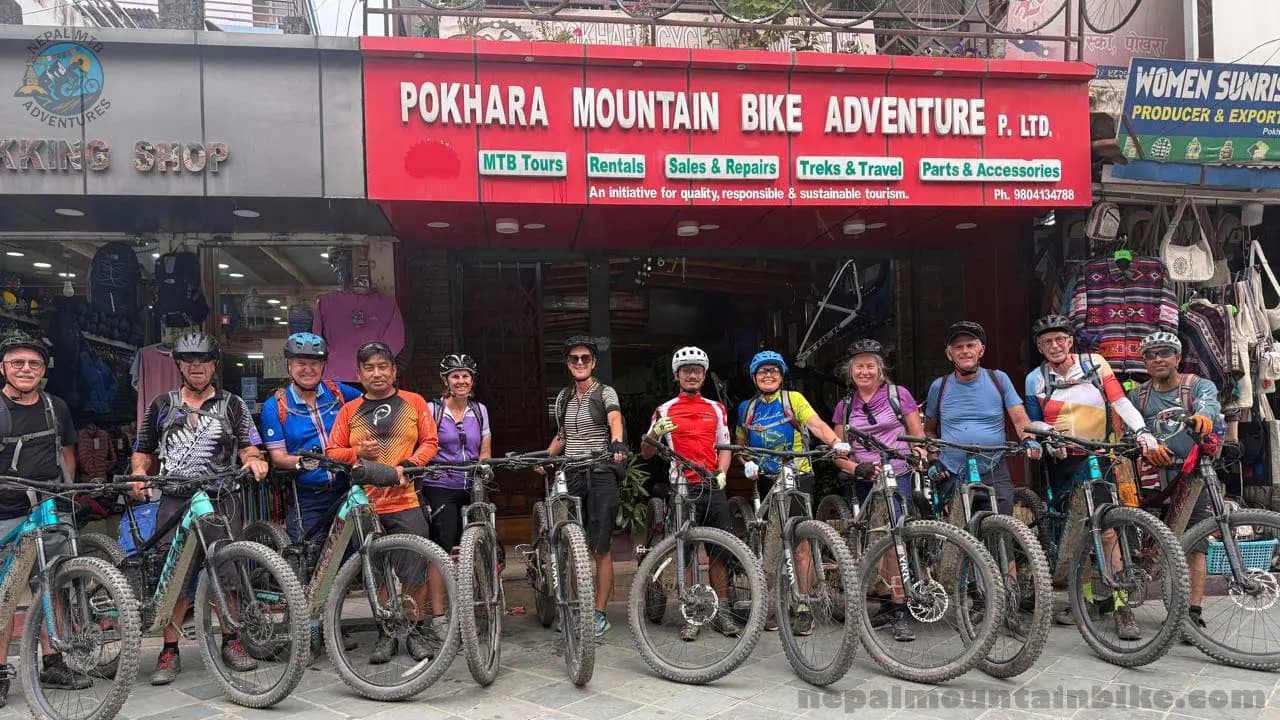
Nepal MTB Adventures, formerly Pokhara Mountain Bike Adventures, has been running mountain bike tours and rentals from Pokhara since 2004. We are a team of riders, guides, and mechanics, and our shop is in Lakeside, where your tour starts. The bikes you ride are our own; they are maintained in our own bike workshop, and our guides ride these hills every season.
Local guides. Pokhara riders who know every village path on this route.
Our own e-MTB fleet. Bosch-powered full-suspension bikes, serviced in our Pokhara workshop.
Private tours only. Your group, your dates, your pace.
Everything arranged. Hotel pickup, the 4x4 transfer, lunch, and water are handled for you.
More than 20 years in Pokhara. Riding the valley since 2004.
Real rider reviews. Read what past guests say on TripAdvisor.
Book Your Begnas Lake E-MTB Day
Pick your date, tell us how many riders are coming, and choose Standard or Premium. We will confirm your booking, collect you from your hotel, and have your e-MTB fitted and ready.
Have a question first? Contact our Pokhara team. We are happy to help you plan the day.