

 Tripadvisor
 Google
 Facebook
 Trustpilot
 hard
hardE-MTB Upper Mustang: Unique Biking Experience
Upper Mustang15 days
$ 4650
Price may vary according to your plan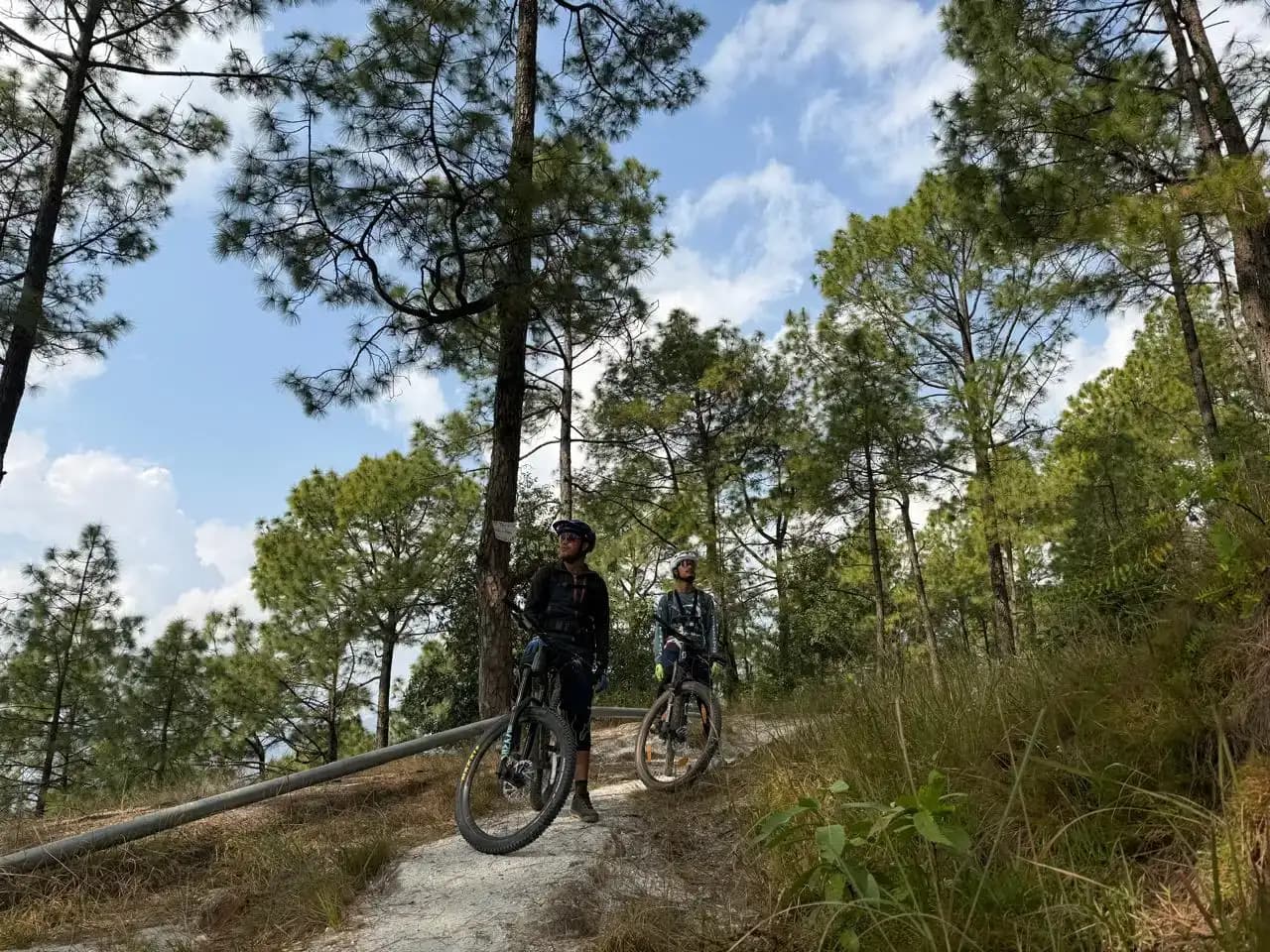
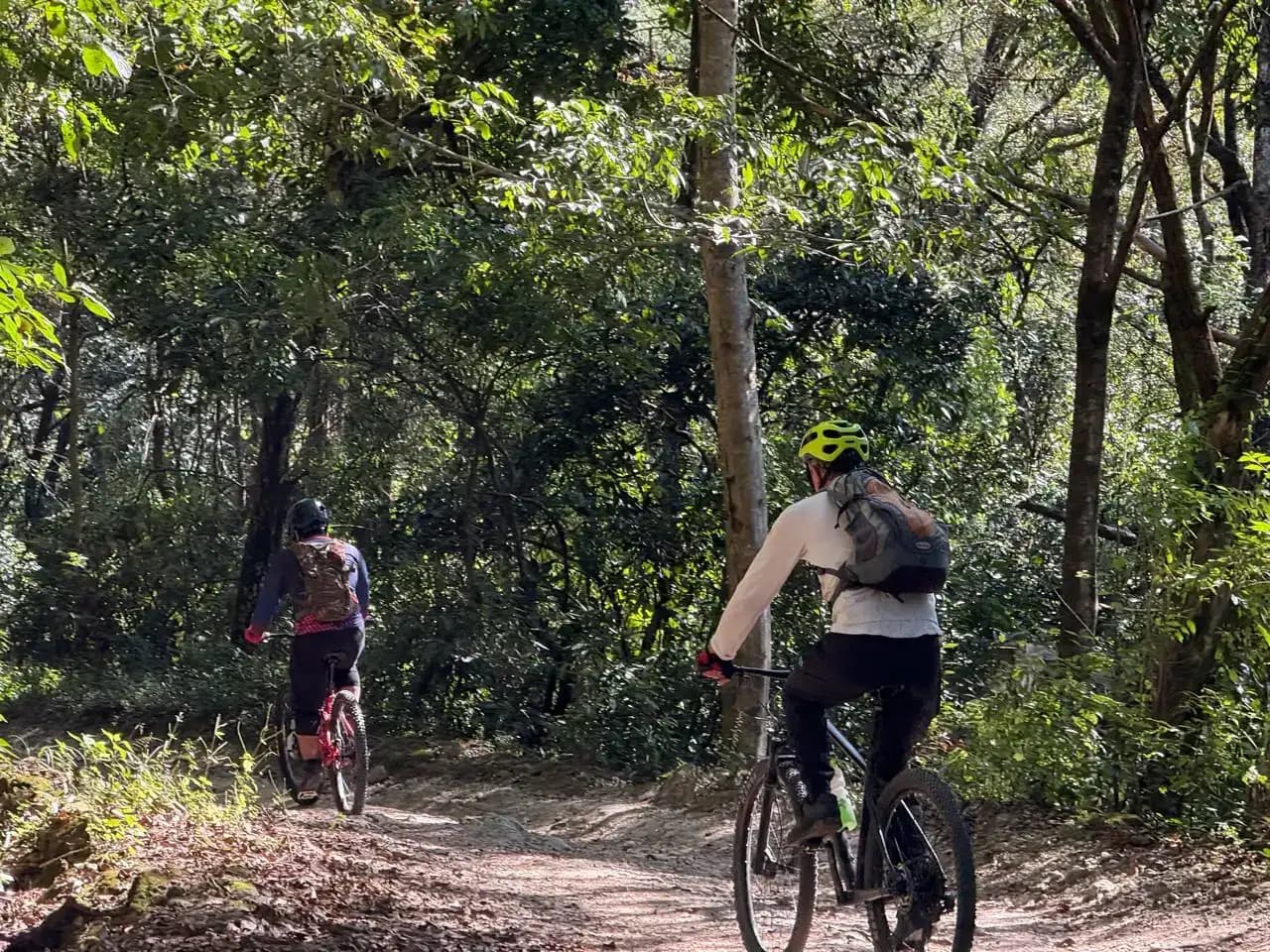
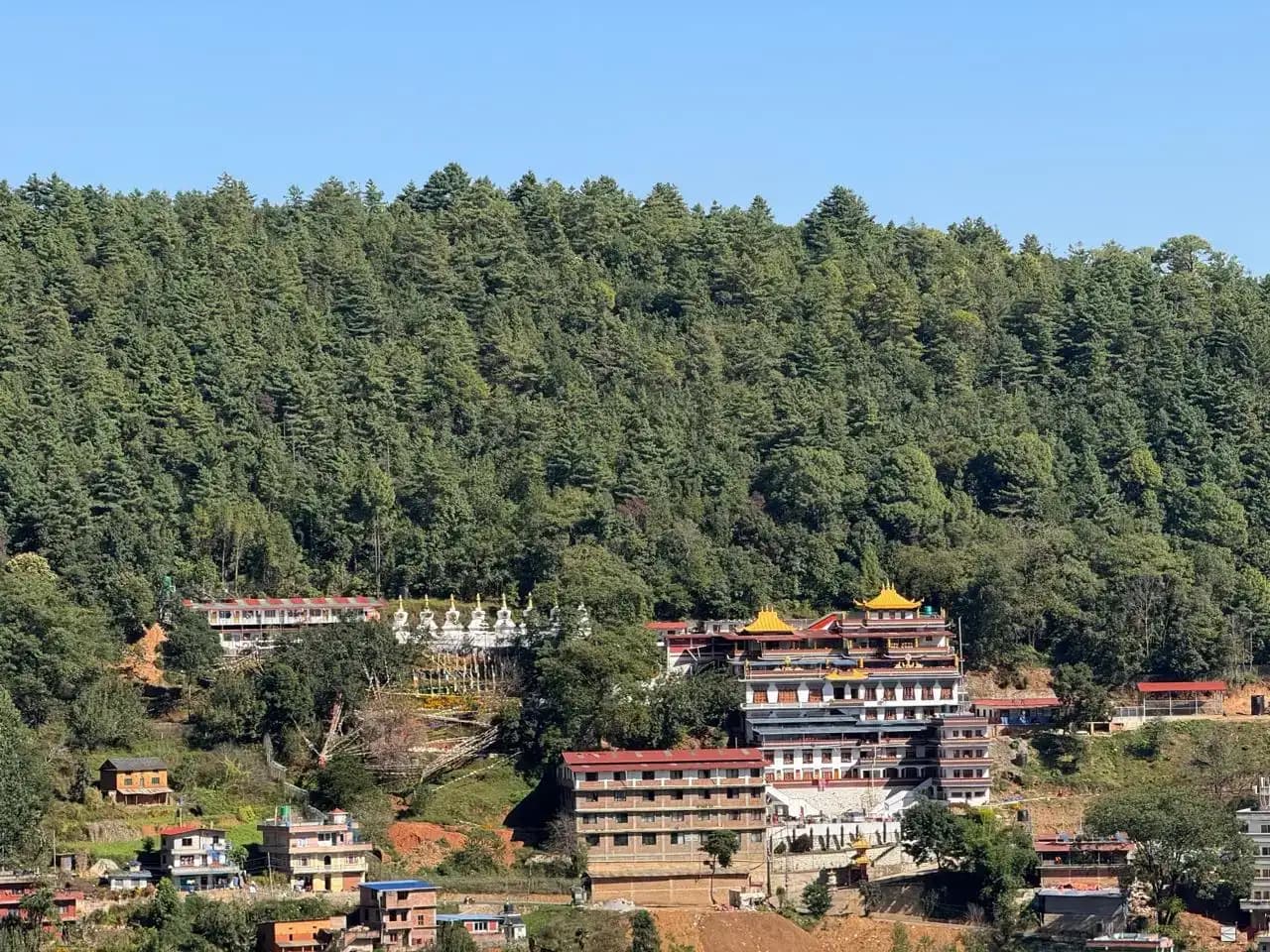
Kathmandu Valley Rim E-MTB Tour. A one-day ride through the forested hills along the valley's north and east edge, covering about 45 to 52 km with roughly 1,280 m of climbing and a 650 m descent to Changu Narayan.
You ride a full-suspension mid-drive e-MTB. The motor handles the long climbs through Shivapuri Nagarjun National Park so that you can focus on line choice, the Himalayan skyline, and the villages along the way. You still steer, brake, and descend yourself.
Your guides are WFR-certified Nepali riders who grew up on these trails. The route passes cliffside Tarebhir, climbs to Dhap Dam, stops for lunch in Jhule, and finishes at Changu Narayan, a UNESCO World Heritage site with stone inscriptions from the 5th century. We handle pickup, transfers, permits, spare parts, and batteries. You just ride.
Detail | What to expect |
Distance | About 45 to 52 km |
Elevation gain and loss | +1,280 m / -1,450 m |
Maximum altitude | 2,150 m |
Altitude range | Between about 1,400 m and 2,150 m |
Riding time | 5.5 to 6.5 hours, including technical stops, photo breaks and lunch |
Driving time | 1.5 hours total, about 45 minutes out and 45 minutes back, in a private vehicle |
Terrain | 45% flowing jeep track, 35% singletrack, 20% rural asphalt and concrete link roads |
Activity level | Moderate to intermediate. The e-assist handles steep grades, basic off-road bike handling is required |
Bike | Full-suspension mid-drive e-MTB |
Group size | Minimum 2, maximum 6 riders per guide. Solo departures available at a supplement |
Maximum rider weight | 120 kg (264 lbs) |
Scenery | Pine and rhododendron forest, Himalayan panoramas, terraced farms, a UNESCO World Heritage Site |
Best season | Autumn and spring. Rides run all year, with modified routes in the monsoon |
This ride keeps moving all day. You start on the northern rim at Budhanilkantha, work east through the national park, then turn south along the eastern ridge and drop off the far side of the valley to Changu Narayan. By the time you load the bike onto the vehicle, you have ridden a real line across the top of the valley, from one side to the other.
That line is what makes the day feel full. The landscape changes every hour or so, and each change is a different part of Nepal.
The first hours are forest. Pine forest on the lower slopes gives way to oak and rhododendron as you climb into Shivapuri Nagarjun National Park, the protected forest that is an important source of Kathmandu's drinking water.
Then comes the rim itself. Dhap Dam sits high on the ridge, and on a clear day the snow peaks line up along the northern skyline.
Lunch is a village stop. Jhule is a quiet farming village on the eastern edge of the park, and the dal bhat is cooked for you there while your battery charges.
The afternoon is farmland. Terraced paddies, mustard fields and hillside farmhouses fill the eastern ridge, and you see how people on the edge of the valley actually live.
The finish is heritage. The last descent ends at Changu Narayan, a temple to Vishnu on a hilltop that has been a place of worship for more than 1,500 years.
There is a nice symmetry to the day as well. You set off from Budhanilkantha, the town named after its famous sleeping statue of Vishnu, and you finish at the gates of Changu Narayan, one of the oldest temples to the same god in the country.
The ride begins at Budhanilkantha, at the foot of Shivapuri Nagarjun National Park on the northern edge of the city. After the bike fit and briefing, you set the motor to Tour mode for a steady warm-up climb through subtropical pine forest toward Danda Gaun.
The air cools as you gain height. Soon you reach Tarebhir, a Tamang village named after the tall rock cliff that rises above it (bhir means cliff in Nepali). The village sits right on the edge of the hillside, and the view drops away across the whole valley floor. This first section mixes flowing jeep track with pine-needle singletrack, so it is a good place to get a feel for the bike before the park.
What it rides like: a smooth, steady climb with some soft singletrack. Easy to settle into.
From Tarebhir you enter the national park and ride through quiet oak and rhododendron woods toward Mulkharka, a Tamang village on the hill above Sundarijal. From there, the route climbs along the northern ridge to Dhap Dam.
Dhap Dam is a reservoir built high on the rim to store monsoon rain and release it in the dry season, helping keep the sacred Bagmati River flowing through Kathmandu. With forest all around it, it is one of the best places on the ride to stop and breathe. On clear days, the snow peaks of the Langtang Himal, Ganesh Himal and Jugal ranges stand along the northern horizon above the water.
What it rides like: the big climb of the day on forest jeep track and trail, with the best mountain views at the top.
From Dhap you ride on to Jhule, a small farming village on the eastern edge of the park. Lunch is at a local mountain lodge, where you sit down to fresh organic dal bhat: lentil soup, rice and seasonal vegetables. Vegetarian, vegan, lactose-free and gluten-free options are available if you tell us when you book.
While you eat, your bikes are plugged in and topped up at the charging point, so there is plenty of battery for the afternoon ridge. It is a proper rest, not a rushed snack stop, and it splits the day neatly into two halves.
With fresh batteries, you head south along the eastern ridge toward Dakshin Pauwa. The forest opens up and the riding gets faster. Flowing jeep tracks cut through hillside farmsteads, terraced rice paddies and, in season, bright yellow mustard fields.
This is everyday rural Nepal, up close. You pass farmhouses, grazing animals and families working their fields, and your guide is happy to stop when something catches your eye. The riding is fast and fun, so keep your speed in check around blind corners and people on the track.
What it rides like: quick, flowing descents and short rolling climbs through open farmland.
The ride finishes with a 650 m descent to Changu Narayan, and you choose how to ride it.
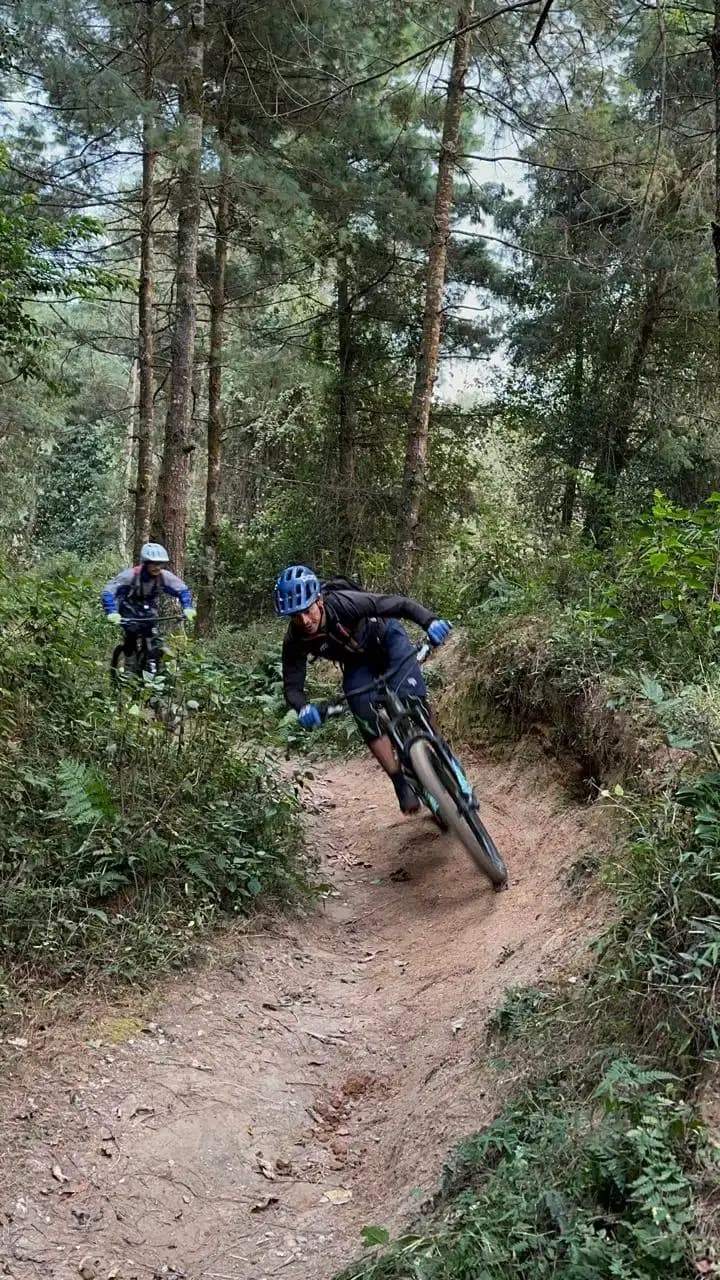
The singletrack line follows an old walking trail through natural rock gardens, flowing dirt switchbacks and open forest. It is the most technical riding of the day and the highlight for confident riders.
The jeep track line is a smoother, flowing descent on a wider surface. It suits riders who want to enjoy the views and keep things relaxed at the end of a long day.
Your guide will look at the group and the trail conditions and help you pick. Either way, the descent ends right outside the gates of Changu Narayan Temple.
The ride covers about 45–52 km, mixing flowing jeep tracks, singletrack, and rural asphalt and concrete roads. Jeep tracks handle the long climbs, singletrack provides the most fun, and link roads offer short, easy recovery sections.
Surface | Share of the ride | About how far | What to watch for |
Flowing jeep track | 45% | 20 to 23 km | Loose gravel on corners, ruts after rain, and local people, animals and vehicles using the same track |
Singletrack | 35% | 16 to 18 km | Rock gardens, dirt switchbacks, and pine needles that can be slippery underfoot |
Rural asphalt and concrete link roads | 20% | 9 to 10 km | Local traffic in and around villages, and concrete that turns slick when wet |
Section of the ride | Main surface |
Budhanilkantha to Danda Gaun and Tarebhir | Flowing jeep track and pine-needle singletrack |
Shivapuri Nagarjun National Park, Mulkharka and Dhap Dam | Forest tracks through oak and rhododendron woods |
Jhule | Lunch and battery top-up |
Eastern ridge toward Dakshin Pauwa | Fast, flowing jeep tracks |
Final descent to Changu Narayan | Singletrack or flowing jeep track, your choice |
The trail mix above is the planned route in good conditions. Two things can change it on the day.
Your descent choice. If you take the flowing jeep track down to Changu Narayan instead of the singletrack, your day has a little less singletrack and a little more jeep track. The distance and the finish point stay the same.
The weather. In an extreme downpour, or if the ridge is unsafe, your guide moves the group onto sealed rural link roads or flowing, lower forest tracks. In the monsoon months of June to August, the tour runs on modified paved and gravel routes depending on the daily rainfall, so expect more road and less singletrack.
If you are not sure which surfaces suit you, tell your guide at the briefing in Budhanilkantha. They will point out the harder sections before you reach them, so you are never surprised.
The Kathmandu Valley rim is not one big climb. It is a long series of climbs spread across a full day, most of them in the first half. On a regular mountain bike, a rider who is fit but not a regular climber would spend most of the morning in the lowest gear and arrive at the good descents already tired.
A full-suspension mid-drive e-MTB changes that. The motor adds power only when you pedal, so the bike still feels like a mountain bike. You choose how much help you get, you keep a steady rhythm on the steep grades, and you reach Dhap Dam with enough in the tank to enjoy the view and the afternoon.
We ride modern mid-drive full-suspension e-MTBs from our Trek and Scott fleets, fitted with Bosch Performance Line CX or Shimano drive systems. The batteries are 625 Wh and 750 Wh, which cover 40 to 65 km in mountain conditions when you ride mainly in the lower assist modes. The midday top-up at Jhule means you do not need to ration power in the afternoon.
Every bike is set up for you before the ride. Your guide checks the fit, the brakes, and the tire pressure, and walks you through the assist modes.
On a Bosch bike, you have four main modes:
Eco gives a light boost and saves the most battery. Good for flat sections and easy rolling.
Tour gives a steady, even boost. This is the mode you use most of the day, including the warm-up climb.
eMTB adjusts the power to how hard you push on the pedals. It feels natural on loose, technical climbs.
Turbo gives maximum power. Save it for the steepest pitches, because it drains the battery fastest.
Shimano bikes use their own names (Eco, Trail and Boost) and work in the same way. Your guide will show you the controls on your bike.
A simple tip from our guides: on loose or rooty climbs, more power is not always better. Too much power spins the rear wheel. A lower mode with smooth pedaling keeps the tire gripping and gets you up more often.
If you are still deciding between a regular bike and an electric one, our guide to traditional mountain biking or e-MTB in Nepal explains the difference in detail.
This day was built for visitors to Kathmandu who want to get out of the traffic and onto real trails, without committing to a multi-day trip.
This tour is a great fit if:
You have a free day in Kathmandu before or after a trek, a tour, or a flight, and you want an active day outdoors instead of another round of sightseeing.
You ride a mountain bike at home, even occasionally, and you want to ride Nepal's forests and ridges without spending the whole day grinding uphill.
You are fit and adventurous but not a regular climber, and you want the motor to take care of the steep sections.
You want to see village life and a major heritage site in the same day, and you would rather arrive at a temple by trail than by taxi.
You are a couple or a small group of friends with slightly different fitness levels. The e-assist evens out the climbs so everyone rides together.
You want to try an e-MTB in Nepal before booking a longer trip like our 7-day Kathmandu Valley Rim E-MTB Tour.
This tour is probably not the right fit if:
You have never ridden a bike off a paved road. The route includes gravel, dirt tracks, and singletrack descents that need basic braking and balance skills.
You are looking for a gentle town cycling tour. This is a full mountain biking day of 5.5 to 6.5 hours.
You prefer a regular pedal bike. Our Kathmandu mountain bike day tour from Thamel to Budhanilkantha is built for that.
The activity level is moderate to intermediate. The e-assist takes care of the steep grades, so fitness is less of a barrier than on a regular bike. Riding skill still matters, because the motor does nothing for you on the way down.
Before you book, make sure you are comfortable with:
Braking with control on gravel and loose dirt
Cornering on dirt roads and jeep tracks
Keeping your balance on uneven ground
Standing on the pedals on a descent
Spending most of a day, 5.5 to 6.5 hours including stops, on and around the bike
If that list sounds like you, you will enjoy the day. If you are unsure, send us a message about your riding experience, and we will give you an honest answer.
A few firm requirements apply to every rider:
Minimum age: 14 years.
Maximum rider weight: 120 kg (264 lbs), the limit for our full-suspension e-bike fleet.
Travel insurance: personal travel and medical emergency insurance that covers off-road cycling up to 2,500 m is mandatory. We check it before the tour departs.
For a clear explanation of how trails are rated, see our guide to mountain bike trail grading in Nepal.
Your ride is led by our Kathmandu guiding crew: Suman BK, Anil BK, Laxman, and Laxmi Magar. Together they have more than 20 years of combined mountain bike guiding experience across the Kathmandu Valley rim and Mustang. They have spent more than five years guiding the Shivapuri to Changu Narayan ridge system, and more than a decade racing in national cross-country, enduro, and downhill events.
Certifications: Nepal Government-certified mountain bike guides, Wilderness First Responder (WFR), Trail First Aid, and Bosch e-bike system training.
Local knowledge: raised around the northern trails of the Kathmandu Valley, they know every microclimate shift, singletrack bypass, and village trail on the route personally.
Safety training: altitude risk evaluation, emergency evacuation procedures, and technical trail repair.
What that means on the day is simple. Your guide knows where the trail gets slippery after rain, which line through the rock garden flows best, where the best view opens up, and which lodge in Jhule will have lunch ready when you arrive.
The route stays between about 1,400 m and 2,150 m. Altitude sickness is extremely rare at these heights. You may feel a little short of breath on the longer climbs, and the motor assist greatly reduces that strain.
Guides carry full WFR emergency kits, mobile communication, and a bike repair toolkit. About 85% of the route stays close to tracks that a vehicle can reach, so help is never far away. Jeep support is available along the route where the road allows.
Full mechanical setup, spare tubes and parts, and the midday battery top-up are all included. A flat tire or a small mechanical problem is a short delay, not the end of your day.
Rides run in light rain. If there is an extreme downpour or the ridge is unsafe, your guide will move the group onto sealed rural link roads or flowing, lower forest tracks. If Nepal MTB Adventures cancels a ride because of the weather, you get a full refund or a free date change.
You can ride this route in every season. What changes is the view, the trail surface, and what you should wear.
Season | Months | What it is like |
Autumn | September to November | Peak riding season. Crisp air, dry trails and clear Himalayan views |
Spring | March to May | Warm days, lush trails and bright rhododendron blooms through Shivapuri National Park |
Winter | December to February | Dry trails and clear blue skies. Mornings on the ridge are cold, so bring extra base layers |
Monsoon | June to August | Runs on modified paved and gravel routes, depending on the daily rainfall |
If mountain views are your top priority, autumn is the window to choose. If you want the forest at its most colorful, come in spring, when Nepal's national flower, the rhododendron, turns the hillsides red and pink. For the bigger picture across the country, see our best time to mountain bike in Nepal guide.
We supply the e-MTB and a helmet. Knee pads are available on request. You bring the rest.
A breathable, moisture-wicking jersey or sports top
Padded cycling shorts
Full-finger cycling gloves
Sturdy closed-toe trail shoes
A lightweight windbreaker or waterproof rain jacket. The upper ridges can be cool and breezy, even on a warm day in the city.
Extra base layers for winter mornings.
Sunscreen, SPF 30 or higher
UV sunglasses
A camera or smartphone
A small hydration pack of about 1.5 liters. We refill water along the ride.
Any personal medication
For longer trips, our full mountain biking checklist for Nepal covers everything else.
We are a mountain bike company first. Our team rides, races, and repairs bikes, and we plan every route around the quality of the riding. This tour runs on trails our guides have ridden since they were young, on bikes we maintain ourselves, with the support you need to relax and enjoy the day.
Premium e-assist fleet: modern mid-drive full-suspension e-bikes from our Trek and Scott fleets, with Bosch and Shimano drive systems that make the long climbs smooth and responsive.
No city traffic: a private morning transfer takes you straight from your hotel lobby to the Shivapuri National Park trailhead, so you spend your energy on the trail, not in a traffic jam.
WFR-certified local leaders: our lead guides are Wilderness First Responder certified and have more than 20 years of combined guiding experience across the Kathmandu rim and Mustang.
Full trail support: mechanical setup, spare tubes and parts, and a midday battery top-up are all part of the day.
Ethical and local: we are 100% locally owned and operated. Your booking directly supports local guide livelihoods and conservation in Shivapuri National Park.
Loved the ride? Kathmandu is only the beginning. If one day on the rim leaves you wanting more, these trips build on it.
7-Day Kathmandu Valley Rim E-MTB Tour: six riding days around the whole valley rim, from Kakani in the north to Nagarkot, Dhulikhel and Godavari.
Upper Mustang E-MTB Expedition: ride the high desert of the former Kingdom of Lo on an e-MTB.
Lhasa to Kathmandu Mountain Bike Tour: the classic ride across the Tibetan Plateau and down into Nepal.
For more riding close to the capital, see our guide to mountain biking trails near Kathmandu, the Kakani Sky Trail day ride, or everything on our Kathmandu destination page.
Book This Tour
Ready to ride the Kathmandu Valley rim on two wheels? Send us your preferred date, the number of riders, and a little about your riding experience, and our team will confirm your booking.
Your guide and driver meet you in your hotel lobby in Thamel or wider Kathmandu.
The bikes are loaded onto our private support vehicle for the 45-minute drive north to Budhanilkantha, at the foot of Shivapuri National Park. The morning transfer skips the worst of the city traffic.
When you arrive, your guide does a professional bike fitting, a safety check, and a tire pressure check, and gives you a full briefing on the e-MTB assist modes.
In Tour mode, you start a steady warm-up climb through subtropical pine forest toward Danda Gaun.
The air cools as you reach Tarebhir, the cliffside village above the Kathmandu Valley. You stop for views across the valley floor, riding a mix of flowing jeep track and pine-needle singletrack.
You enter Shivapuri Nagarjun National Park and pedal through quiet oak and rhododendron woods toward Mulkharka.
The route then climbs along the northern ridge to Dhap Dam, the reservoir on the rim. On clear days, the snow-capped peaks of the Langtang Himal, Ganesh Himal, and Jugal ranges fill the skyline.
You roll into Jhule village for a hot lunch at a local mountain lodge
Fresh organic dal bhat (lentil soup, rice, and fresh vegetables) or your chosen dietary option. While you rest, the bikes are plugged in and topped up for the afternoon.
With full batteries, you head along the eastern ridge toward Dakshin Pauwa.
The trail opens into fast, flowing jeep tracks through hillside farmsteads, terraced rice paddies and seasonal mustard fields, with a close look at traditional rural life on the outer rim of the valley.
The ride ends with a 650 m descent to Changu Narayan, on either the singletrack or the flowing jeep track.
The singletrack follows an old walking trail with natural rock gardens, flowing dirt switchbacks, and open forest lines. Both options finish right outside the gates of Changu Narayan, the UNESCO World Heritage temple complex with stone carvings and inscriptions dating back to the 5th century.
After you explore the temple courtyard
The bikes are loaded onto the vehicle for a comfortable 45-minute drive back to your hotel in Thamel. You are back in time for a hot shower and a relaxed evening in town.
No reviews yet — be the first to share your ride.
No, but you do need basic to intermediate off-road bike control. The electric motor makes the climbing much easier, but the route still covers gravel tracks, dirt roads, and singletrack descents. You should be comfortable braking on loose surfaces, cornering on dirt, and keeping your balance on uneven ground. If you ride a mountain bike now and then at home, you will be fine. If you are unsure, send us a message, and we will tell you honestly.
hard moderate
 moderatemoderate
 challenging
 moderate
 hard
hardGet trail updates, riding tips, and exclusive tour offers straight to your inbox