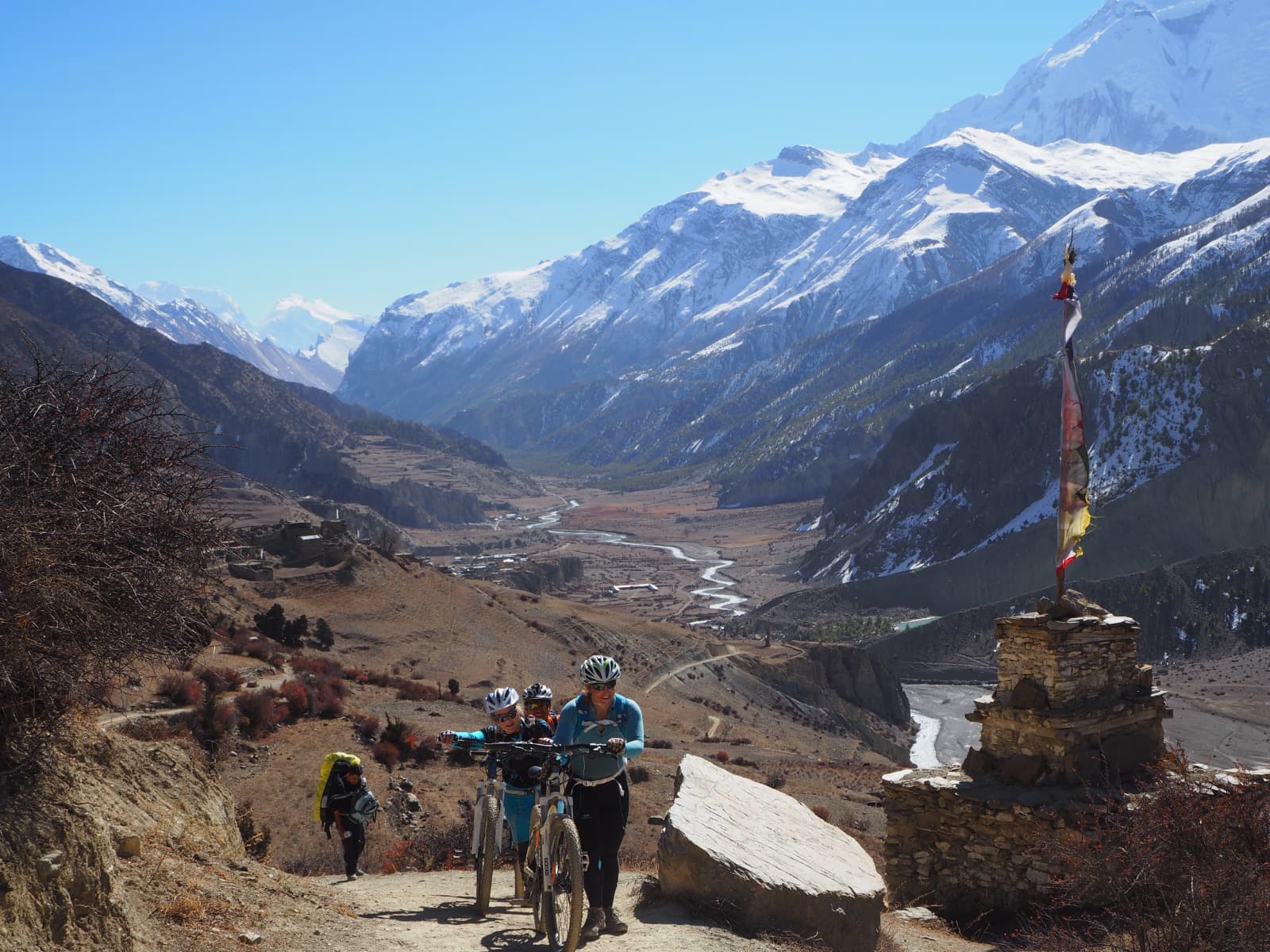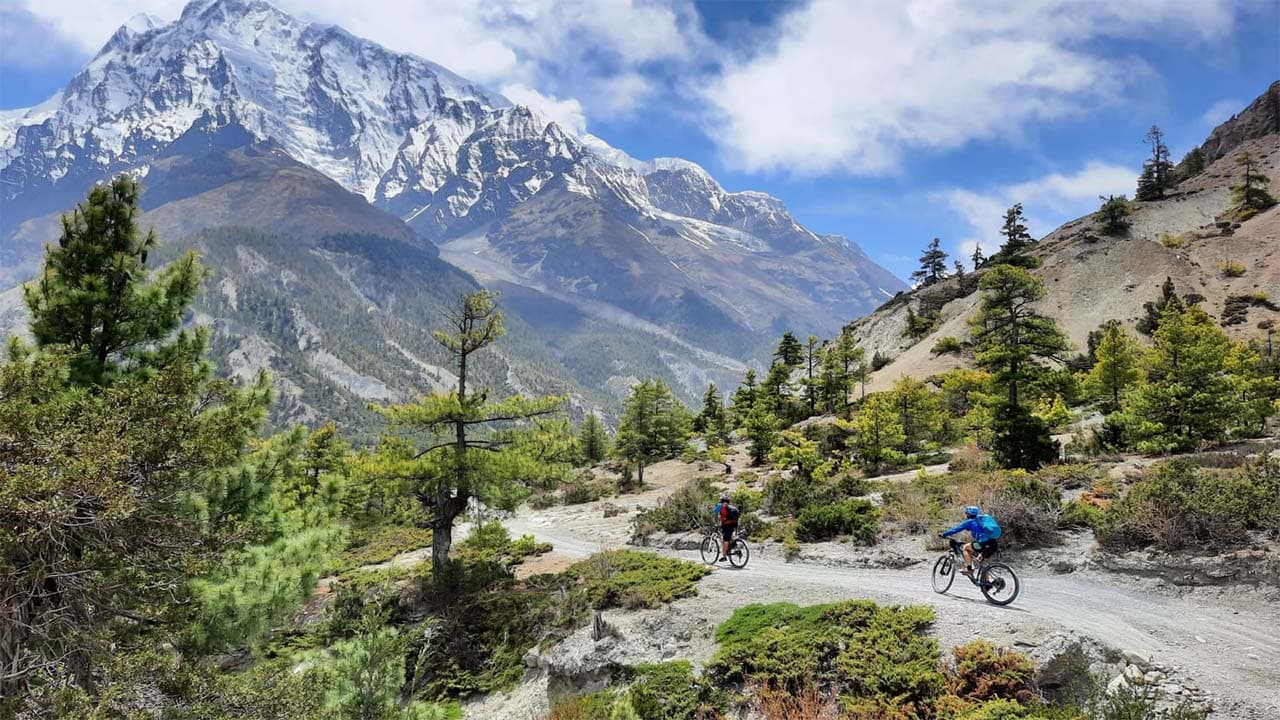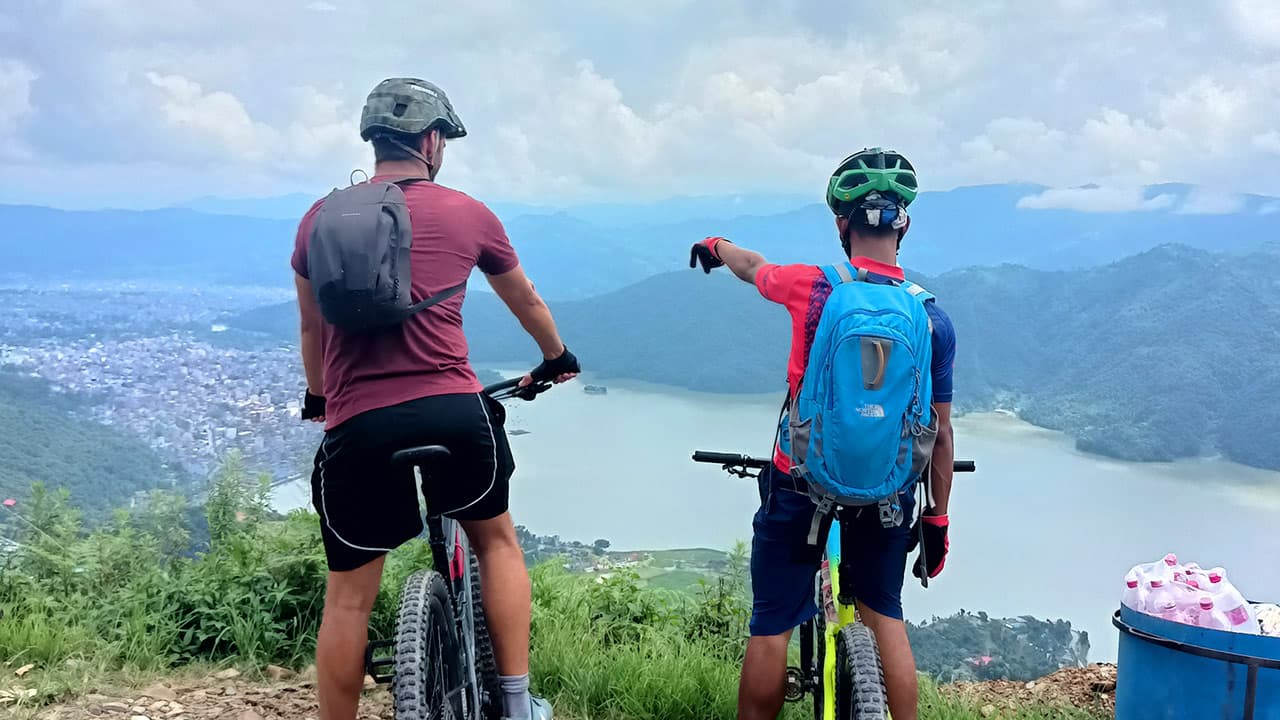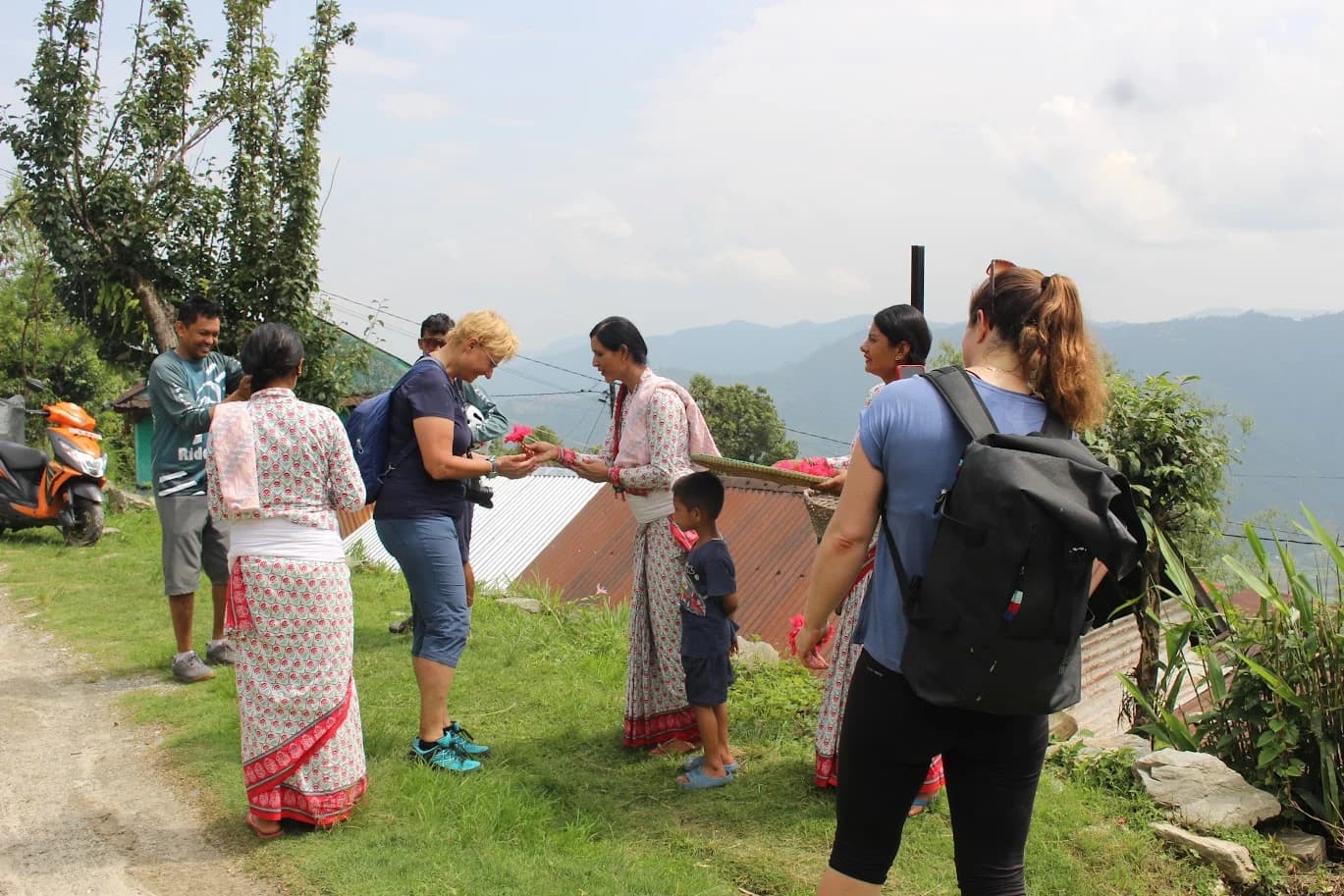


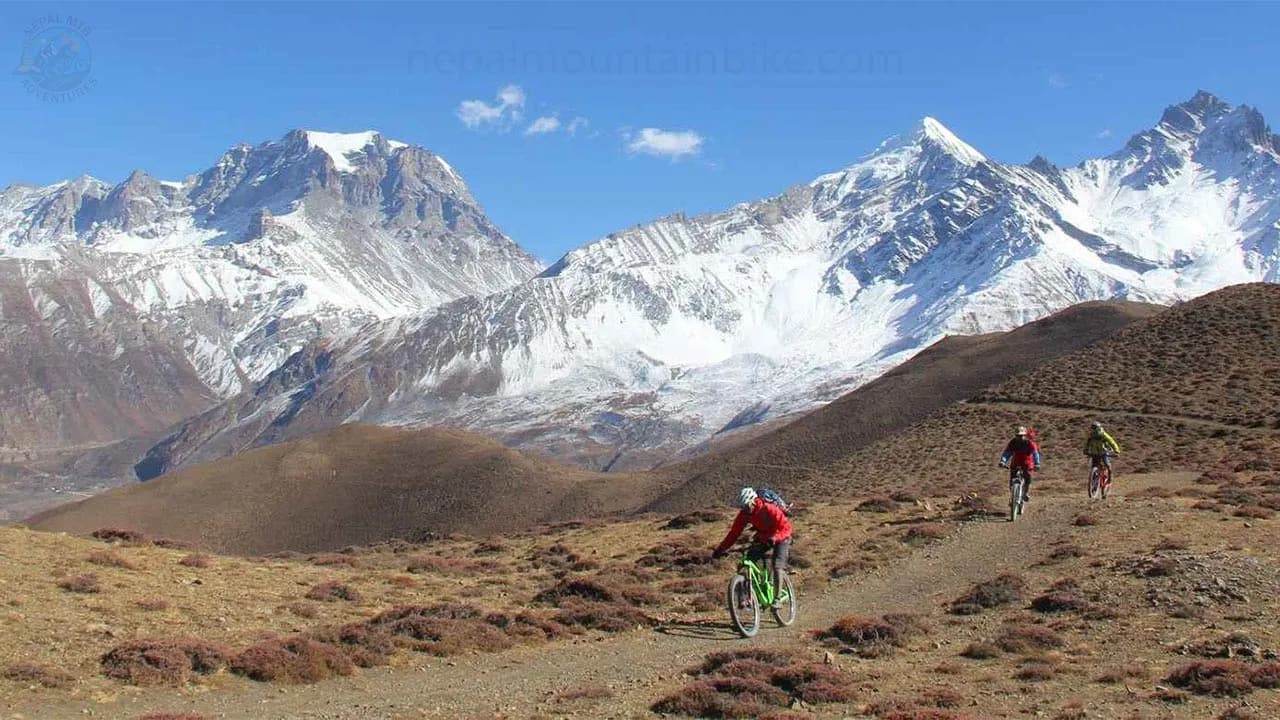
Nepal mountain biking is not like riding at home. The trails change from smooth village paths to technical high-altitude singletrack within the same day. Altitude affects your body in ways that flat-country riding never prepares you for. Teahouses replace bike shops on multi-day routes. What you pack, check, and carry before leaving matters more here than it does on a controlled trail system with a car park at the end.
This checklist is built from years of guiding riders through Nepal's trail network, from Pokhara day rides to 14-day Upper Mustang expeditions. It covers every item in categories that follow the order in which you need to use them: bike preparation first, then documents, protection, clothing, tools, navigation, food, and water. Each section explains why the item matters in Nepal specifically, not just what to pack.
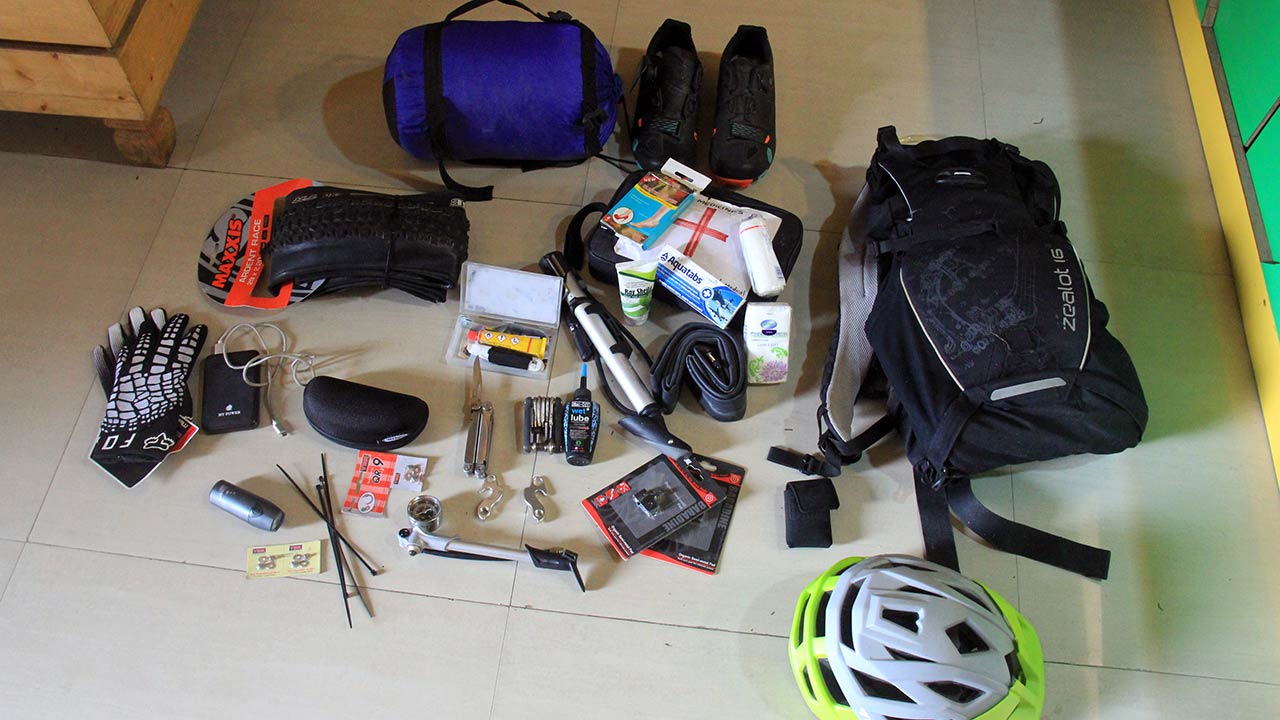
The checklist is organised for riders bringing their own bikes and for those renting from Nepal MTB Adventures. Where a section applies only to riders bringing their own bikes, it is clearly marked.
Bike Preparation Checklist
Before You Leave Home (Own Bike Riders)
A bike that fails at home can be fixed. A bike that fails in the Kali Gandaki valley takes a significantly different solution. The checks below should happen at least one week before departure so that any issues found can be serviced before travel.
Fork and Rear Shock
Check fork air pressure. It should match your weight-based setting and not have dropped more than a few PSI since the last ride.
Test fork lockout (if fitted). Confirm it engages and releases cleanly.
Push down hard on the handlebars. The fork should compress and return smoothly with no binding, grinding, or unusual noise.
Check for oil leaks around fork seals. Any dark staining around the lower legs means the seals need service.
Check the rear shock air pressure (full-suspension bikes). Confirm the correct sag for your weight.
Compress the rear suspension by pushing down on the saddle. It should move through full travel without binding.
Check all pivot bolts on the rear suspension linkage. Lift the bike by the saddle and feel for any play or wobble at the rear triangle. Any movement indicates loose pivot bolts.
Check that the dropper post (if fitted) drops and returns fully when the lever is pressed. Internal routing often traps air after long periods of non-use.
Headset and Steering
Turn the handlebars through a full left-to-right rotation. The movement should be smooth with no gritty feeling.
Grip the fork with one hand and try to push and pull it toward and away from the bike. No movement should exist. Any play means the headset needs tightening or servicing.
Wheels and Tyres
Spin each wheel and watch the rim run past the brake calliper. Lateral wobble greater than 2mm requires truing.
Squeeze pairs of spokes on each wheel. They should feel roughly equal in tension. Soft or loose spokes need tensioning.
Check tyre pressure against the recommended range for your tyre width and riding type. See the Nepal-specific pressure guide below.
Inspect tyre sidewalls and tread for cuts, splits, or embedded objects. Small cuts can open up under the pressure of aggressive riding.
For tubeless setups: Remove the valve core and dip a cotton bud inside the valve. If it comes out dry or barely coated, the sealant needs refreshing. Sealant dries out every 3 to 6 months.
Check that the bead of each tubeless tyre is seated evenly around the full circumference of the rim.
Recommended Tyre Pressures for Nepal Trail Types
Trail Surface | Hardtail (Front / Rear) | Full Suspension (Front / Rear) |
Loose dirt, dry singletrack | 23 PSI / 25 PSI | 25 PSI / 27 PSI |
Rocky, technical terrain | 22–24 PSI / 24–26 PSI | 23–26 PSI / 25–28 PSI |
Wet monsoon conditions | 1–2 PSI below your normal pressure (front and rear) | 1–2 PSI below your normal pressure (front and rear) |
Brakes
Squeeze each brake lever firmly. It should feel solid and stop at least one finger width from the grip. A soft or spongy feel indicates air in the hydraulic line and requires bleeding.
Check brake pad thickness. On Shimano brakes, replace when less than 0.5mm of pad material remains. On SRAM brakes, replace when the backing plate and remaining pad combined measure 3mm or less.
Check rotor thickness. On Shimano, replace rotors below 1.5mm. On SRAM, replace 1.85mm rotors below 1.55mm and 2mm rotors below 1.7mm.
Inspect rotors for warping by spinning the wheel slowly and watching the rotor pass through the calliper gap. Any wobble causes brake rub.
Drivetrain
Check chain wear with a chain wear indicator tool. Replace at 0.5% stretch on 12-speed chains. A worn chain that is not replaced will destroy your cassette.
Run through all gears on the stand. Each click of the shifter should produce a clean, quiet shift. Hesitation or noise means cable tension needs adjustment.
Inspect cassette teeth for visible wear or shark-fin shaping. Worn teeth cause skipping under load.
Check that the derailleur hanger is straight by looking down from behind the bike. Any bend or twist must be corrected with a hanger alignment gauge. This is the most commonly broken part on Nepal's rocky trails. Carry a spare specific to your bike model.
Lube the chain with the appropriate lube for the season. Dry lube for the dry seasons (October to November and March to May). Wet lube for monsoon riding (June to August).
Axles and Bolts
Check front and rear axles are fully tightened and correctly secured.
Check stem and handlebar clamp bolts with a torque wrench if available. Stem steerer clamp bolts: 5.5 Nm. Handlebar clamp bolts: 5.5 Nm.
Check the seat post clamp bolt. The standard recommended torque is 4 to 5 Nm. Do not overtighten on carbon seat posts.
Confirm all brake calliper mounting bolts are tight.
Rental Bike Pre-Ride Check (Nepal MTB Adventures Fleet)
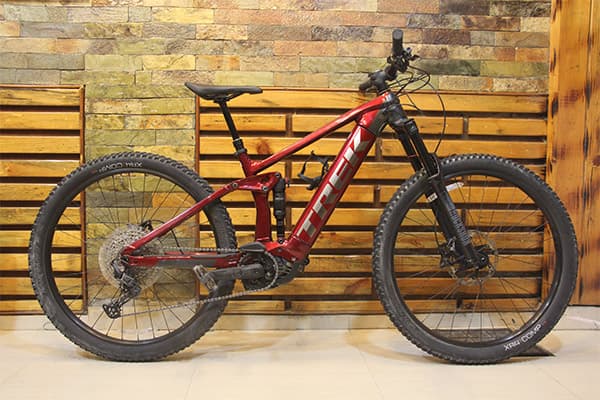
Nepal MTB Adventures services all Trek, Scott, and Bergamont rental bikes before handover. The following checks are still worth doing at pickup before leaving the shop.
Confirm tyre pressure is set for your weight and the planned trail type.
Test brake levers. Both should feel firm and stop with good clearance from the grip.
Run through all gears with the bike on a stand or while riding slowly. Shifting should be clean.
Confirm saddle height is set correctly. When seated, your leg should have a slight bend at the bottom of the pedal stroke.
Check that the helmet provided fits correctly. It should sit level on the head with the front edge two finger widths above the eyebrows and should not tilt when pressed from any direction.
Ask the team about the tubeless or tube setup on your rental bike before departure. Knowing what system the bike runs helps you fix a flat correctly on the trail.
Documents and Permits Checklist
Wrong permits turn you back at the checkpoint. The Kagbeni gate into Upper Mustang checks every rider's Restricted Area Permit before letting them through. Some permits take five to seven days to process. Arriving in Nepal without them sorted means losing riding days, not just filling out forms.
Document | Who Needs It | Cost (2026) | Where to Obtain |
Passport (original) | All international riders | N/A | Bring from your home country |
Passport copies (3 copies) | All riders | N/A | Make photocopies before departure |
ACAP Permit | Riders entering the Annapurna Conservation Area | NPR 3,000 (USD 30) | ACAP office in Pokhara or through your tour operator |
TIMS Card | Recommended for most riders (not compulsory as of 2026) | USD 16–20 | Nepal Tourism Board offices in Kathmandu or Pokhara |
Restricted Area Permit | Riders entering Upper Mustang (north of Kagbeni) | USD 50 per person per day | Department of Immigration (must be arranged through a licensed tour operator) |
Travel Insurance Documents | All riders | Varies | Purchase before traveling and carry a copy |
When you book a tour with Nepal MTB Adventures, all required permits are arranged and included in your package. There are no hidden permit fees or extra costs added at the trailhead. The team handles ACAP permits, Restricted Area Permits for Upper Mustang, and the full permit paperwork so you can focus on the riding.
Confirm your travel insurance policy covers mountain biking as an activity. Standard travel insurance policies frequently exclude adventure sports. If it does not cover mountain biking, purchase an upgrade or alternative policy before departure.
Confirm your policy includes helicopter evacuation coverage. Helicopter evacuation from Upper Mustang or the high Annapurna passes costs USD 3,000 to 8,000 per flight. Insurance that covers this is not optional on remote routes.
Keep permit originals in a waterproof document case in your bag.
Store all permit numbers and insurance policy numbers in your phone and on a separate written card.
Protective Gear Checklist
Protective gear is the most important packing decision that most riders underestimate for Nepal. Trails here involve loose rock, steep gradients, and technical descents that do not have safety nets. The right gear does not prevent falls. It changes what happens when you fall.
Helmet
What to bring: A properly fitting trail or full-face helmet certified to CPSC, CE EN1078, or equivalent standard.
Trail helmet (also called 3/4 or enduro helmet): Suitable for most Nepal riding, including Sarangkot, Kristi Village, Pumdi Bhumdi, and all multi-day routes. More coverage than a standard XC helmet and better rotational protection.
Full-face helmet: Required only for dedicated downhill sections. Not necessary for Pokhara day rides or the Annapurna multi-day routes unless you are specifically targeting the most technical descent lines.
MIPS (Multi-directional Impact Protection System): Look for the yellow MIPS sticker inside the helmet. MIPS adds a low-friction liner that absorbs rotational impact forces. Recommended for any riding in Nepal, given the rocky terrain.
Do not rent a helmet that you have not tested for fit. A helmet that moves on impact provides significantly reduced protection. Bring your own if you have one. Nepal MTB Adventures provides helmets with all rentals, and riders can request a size before arrival.
Knee Pads
Hard-shell knee pads: For technical descent days, including the World Peace Stupa descent on the Pumdi Bhumdi trail, the Queen's Forest singletrack on the Round Fewa Lake circuit, or any advanced descent session. Level 1 CE certification minimum. Level 2 for aggressive riding.
Soft-shell knee pads: For mixed terrain multi-day routes where you want protection without bulk on long climb sections. Suitable for the Annapurna multi-day and Royal Trek routes.
Optional: On XC-focused days with no significant descent sections, knee pads can be left at the teahouse.
Elbow Pads
Elbow pads with hard cap: For aggressive descent days at Sarangkot and Pumdi Bhumdi.
Soft elbow sleeves: For multi-day rides where light protection without overheating is preferred.
Optional on easy trail days and flat riding.
Gloves
Full-finger gloves: Recommended for all technical trail riding. Protect knuckles, back of hands, and fingers in falls. Essential for any descent section.
Half-finger gloves: Suitable for XC, climbing-focused days, and warm weather where grip and breathability take priority over protection.
Bring both: Nepal trail days often start with a climb where half-finger feels comfortable and end with a descent where full-finger is the sensible choice.
Eyewear
Goggles: Superior for dusty dry-season trails (October to November, March to May). Seal against the face and prevent the eye watering and vision loss that loose trail dust causes at speed. Also effective during monsoon to block rain spray on descents.
MTB sunglasses with a strap: Acceptable for forest and low-dust riding. Choose a rose, yellow, or amber-tinted lens for better contrast on root-filled forest trails where light changes rapidly between shadow and direct sun.
Lens recommendation: Avoid dark-tinted lenses for forest riding. Low-light tints make roots and rocks more visible under tree cover.
Riding Clothing Checklist by Season
What you wear at Pokhara does not work at 4,000 metres. A single multi-day Nepal route can swing temperatures by 20 degrees and shift trail conditions from dusty singletrack to frozen morning mud. Pack for where the route ends, not where it starts.
Spring (March to May)
Moisture-wicking cycling jerseys, long or short sleeve: 3 to 5, depending on the number of riding days
Padded cycling shorts or bib shorts: 2 to 5, depending on the number of riding days
Moisture-wicking cycling socks: 3 to 5 pairs
Full-finger gloves for technical descents; half-finger gloves for climbing and warm days
Mountain biking shoes with good tread and lateral stiffness
Arm warmers and knee warmers: for cool mornings below 3,000m and all-day riding above 3,000m
Buff or sun hat: protection from the sun and trail dust
Light windproof and water-resistant jacket: mornings are cool, and afternoon showers appear without warning in late April and May
Cycling bag with rain cover (15 to 20 litres for day rides)
MTB sunglasses or goggles with a strap
Chamois cream for multi-day rides
Spring notes: Mid-morning temperatures at Pokhara (900m) are comfortable in short-sleeve clothes. Above 2,500m, a mid-layer is needed until the sun is well established. Late spring brings pre-monsoon showers. Always pack a light shell.
Summer / Monsoon (June to August)
Light moisture-wicking jerseys, short or long sleeve: 3 to 5
Padded cycling shorts: 2 to 3
Breathable, quick-dry cycling socks: 4 to 5 pairs (wet socks are a blister factory; change frequently)
Full-finger gloves for wet grip; half-finger for warmer sections
Cycling bag 15 to 20 litres
Arm and leg warmers: 2 pairs for higher elevations above 2,500m
Buff for sun and dust protection
Quality waterproof jacket: minimum 20,000mm waterproofing rating for heavy monsoon rain. A standard shell jacket is inadequate.
Waterproof rain pants or overshorts for sustained riding in heavy rain
Cycling shoes with good drainage and airflow
Goggles preferred over sunglasses: rain spray on descents makes goggles significantly more effective
Leech socks or gaiters: leeches are active below 3,000m during the monsoon and seek warm skin. Tight gaiters over shoes prevent access.
Monsoon notes: Upper Mustang is the notable exception. The rain shadow effect keeps Upper Mustang dry during the monsoon. However, the approach through the lower Kali Gandaki valley and the return through the middle hills will involve heavy rain. Monsoon gear is required for those sections, even on an Upper Mustang trip.
Autumn (September to November)
Thermal or fleece-lined long-sleeve cycling jerseys: 3 to 5
Cycling shorts or padded shorts: 3 to 5
Windproof and water-resistant cycling jacket with fleece or thermal lining
Arm warmers and full-length leg warmers
Full-finger fleece or thermal-lined cycling gloves
Warm moisture-wicking cycling socks
Mountain biking shoes with good traction for firmer cold-morning trail surfaces
Beanie or thermal cycling cap for cold starts
Thermal or fleece-lined cycling tights: 3 to 5 pairs for higher elevation routes
Warm Buff or neck gaiter
Base layers (inner, mid, outer): 2 of each for multi-day routes above 2,500m
Cycling bag 15 to 20 litres
Autumn notes: October and November are the best months for Nepal mountain biking overall. Trails are dry and firm, mountain visibility is at its annual peak, and temperatures are comfortable through the riding day. Above 3,000m, mornings are cold, and layers are needed until 9 to 10 am. Pack a full thermal system for multi-day routes.
Winter (December to February)
Thermal or fleece-lined cycling jersey: 3 to 5
Thermal or fleece-lined cycling tights or leggings
Thermal-lined windproof and waterproof cycling jacket
Thermal or fleece-lined full-finger cycling gloves
Thermal or woolen cycling socks (multiple pairs)
Cycling shoes with insulation or insulated shoe covers
Fleece-based neck gaiter for face and neck
Insulated shoe covers or toe warmers
Ear warmers or a cycling cap with ear coverage
Fleece or thermal-lined base layers (inner, mid, outer): 2 of each
UV-protection sunglasses with a strap (winter sun at altitude is intense)
Beanie cap
Winter notes: Pokhara day rides are fully manageable in winter with the correct layering. Above 3,000m, temperatures drop below freezing at night and stay close to zero until midday. The five passes above 3,800m in the Upper Mustang route are not suitable for most riders in winter conditions. Day rides from Pokhara remain an excellent winter option.
Off-Bike Clothing Checklist
The teahouse hours matter as much as the trail hours. Arrive sweaty at a cold guesthouse at 3,500 metres with the wrong clothing, and recovery becomes a miserable night instead of a restful one. Off-bike gear is what you sleep in, wear at dinner, and pull on at 5 am before the day's first climb.
Spring (March to May)
Lightweight t-shirts or tops (cotton or linen)
Comfortable trousers, jeans, or shorts
Light jacket for evenings
Comfortable walking shoes or light trail runners below 3,000m
Sunglasses and a sun hat
Buff, scarf, or light neck cover
Sleeping bag rated to -5°C for teahouse accommodation above 3,000m
Summer / Monsoon (June to August)
Loose-fitting, lightweight shirts or t-shirts (breathable fabric)
Shorts or lightweight trousers
Quick-dry fabrics throughout: cotton takes days to dry in 90% humidity
Rain jacket or packable poncho
Waterproof sandals or shoes for teahouse evenings
Waterproof boots with insulation for elevations above 3,000m
Sun hat and sunglasses
Sleeping bag rated to -5°C for accommodation above 3,000m
Autumn (September to November)
Quick-dry clothing in polyester or nylon
T-shirts and tops that dry overnight
Light rain jacket or waterproof poncho
Fleece or thermal-lined trousers and jacket for cold evenings above 2,500m
Thermal or fleece base layers for multi-day routes above 2,500m
Waterproof or water-resistant shoes
Sleeping bag rated to -10°C for accommodation above 3,000m
Winter (December to February)
Long-sleeved fleece or thermal sweaters
Warm thermal tops and leggings for layering
Woolen or fleece-lined jacket (rated to -15°C for elevations above 4,000m)
Thicker fabric trousers or insulated pants
Closed-toe boots with good traction and insulation
Thick woolen or thermal socks
Fleece beanie and Buff for face and neck coverage
Scarves and insulated gloves (rated to -15°C for elevations above 4,000m)
Sleeping bag rated to -15 to -20°C for accommodation above 3,000m in winter
Bike Tools Checklist
A broken bike with no tools is just dead weight on a Nepal trail. Nepal MTB Adventures carries a full kit on all guided tours, so rental riders are covered. If you are bringing your own bike or riding independently, the tools below are your responsibility to carry.
Note for guided tour riders: The following tool sections apply to riders on their own bikes. If you are on a Nepal MTB Adventures guided tour, the guide and support team carry and manage all tools for the group.
Day Ride Tool Kit
Multi-tool with Allen keys: 3mm, 4mm, 5mm, and 6mm sizes cover the vast majority of bolts on Trek, Scott, and Bergamont bikes
Chain breaker: Integrated into a quality multi-tool (Crank Brothers M19 includes a chain breaker and spoke wrench built in)
Portable pump: Frame pump (always works, slower) or CO2 inflator (fast, single-use cartridges). For day rides, CO2 is acceptable. Carry 4 to 5 cartridges.
Tyre levers: Minimum 2, plastic only (Pedro's or Park Tool). Metal levers damage rims and tubeless beads.
Tubeless plug kit: Dynaplug Racer or similar. Carries 3 to 4 plugs. Fixes 95% of trail punctures in tubeless setups in under two minutes.
Suspension pump: If running an air fork or rear shock. Regular pumps cannot reach the pressures required.
Zip ties: 5 to 10 mixed sizes. Secure loose cables, temporarily fix a dragging derailleur cage, and hold a failed calliper mount in place until you can stop.
Duct tape: Wrap a small amount around your pump or frame. Emergency sidewall patch, cable wrap, rim tape repair.
Multi-Day Trail Kit (Add These for Overnight or Expedition Routes)
Spare frame pump (in addition to CO2): For Upper Mustang and remote routes, a pump that can never run out is essential
Spoke key: Carry a key that fits your wheel's spoke nipple size (typically #13 to #15)
Spare brake cable and gear cable: For SRAM or Shimano systems (verify which your bike uses before packing)
Small bottle of brake bleed fluid: Shimano mineral oil or SRAM DOT fluid (not interchangeable)
Cable cutter/wire snips
Shock pump
Spare Parts Checklist
The right spare parts turn a trail-ending mechanical into a five-minute fix. Nepal's rocky terrain is harder on components than most riders expect, and on multi-day routes, the nearest bike shop may be a full day's ride behind you. Pack spares for the parts that actually fail on trail, not every possible component.
Essential Spares (All Riders on Own Bikes)
Derailleur hanger (2 units): The most commonly broken component on Nepal's rocky trails. A bent or broken hanger makes shifting impossible. Hangers are model-specific. Bring the correct hanger for your exact Trek, Scott, or Bergamont model. Confirm the part number before departure.
Spare inner tubes (size-matched): Even tubeless riders should carry 1 to 2 tubes as backup for unrepairable punctures. Match the tube size to your specific tyre before departure.
Chain quick links: 2 units, matched to your chain speed (11-speed or 12-speed). Required for field chain repairs.
Brake pads (1 set per calliper): Nepal's aggressive descents wear pads significantly faster than flat-country riding.
Tubeless sealant (top-up bottle): 60ml for topping up on route. Plug-repaired tyres lose some sealant during the repair.
Multi-Day and Expedition Spares (Add for Overnight Routes)
Spare spokes (6 to 8): Matched to your wheel build. Rear drive-side spokes are most commonly broken.
Gear cable (1 spare)
Brake cable (1 spare)
Spare rotor bolts
Specific bolts for your derailleur and calliper mounts
Chain Lube
Dry lube (October to November, March to May): Cleaner on the chain, less grit accumulation, better for dusty dry trails. Washes off in heavy rain.
Wet lube (June to August monsoon): Water-resistant and thick, stays on in heavy rain. Attracts more dirt in dry conditions.
For multi-season or uncertain weather: A polymer-based hybrid lube handles both conditions adequately without swapping products.
Hydration and Nutrition Checklist
You will not feel thirsty at altitude until you are already behind. At 3,500 metres, the body loses water faster and sends weaker signals. Dehydration and low fuel drop your climbing power and your decision-making before you notice either has gone. This section fixes that before it becomes a problem on the trail.
Water Carrying Capacity
Pokhara day rides (Sarangkot, Sweet Pame Valley, Pumdi Bhumdi): 1.5 to 2 litres is sufficient. Teahouses and village shops along most routes allow refills.
Annapurna multi-day routes: 2 to 3 litres daily carrying capacity. Teahouses provide water at most stops. Drink 3 to 4 litres per day at altitude to prevent dehydration.
Upper Mustang multi-day: 3 to 4 litres per day minimum. Water sources are spaced further apart on the high plateau. UV intensity at altitude dehydrates faster than expected.
Hydration pack (2 to 3 litre capacity): Hands-free drinking through a tube is more practical on technical terrain than stopping to reach a frame-mounted bottle. Distributes weight across the shoulders rather than adding frame weight.
Water bottles (2 x 500ml to 750ml): Useful as a supplement to a hydration pack. Also practical for day rides with frequent teahouse stops.
Water Purification
Teahouses in Nepal provide water. Quality varies, and at high altitude, the risk of waterborne illness is a significant disruption to a multi-day ride. Purify all water sourced from streams, rivers, or unknown sources.
Water filter (Sawyer Squeeze or LifeStraw Flex): Removes bacteria and protozoa. Reusable. Fast flow rate. Does not remove viruses.
Chlorine dioxide tablets (backup): Kills bacteria, viruses, and protozoa, including Giardia. 30-minute wait required before drinking. Lightweight and cheap as a backup to a filter.
Carry both on multi-day remote routes: Filter fails from freezing at altitude in winter; tablets work in all temperatures.
Nutrition
Day rides (Pokhara area):
Energy bars or trail snacks: 2 to 3 per rider for a 4 to 5 hour ride
Electrolyte tablets or powder: 1 sachet per hour in warm weather. Salt, potassium, and magnesium replacement are critical in Nepal's heat, particularly during the climb sections.
Energy gels: Optional but effective for sustained climbing segments
Multi-day and expedition routes:
Energy bars and dried fruit for snacking between teahouse meals
Electrolyte tablets: 4 to 6 per day at an altitude where dehydration risk is higher
Glucose biscuits: Widely available at teahouses along all routes. Affordable, familiar to the gut, and provides steady carbohydrates.
Snickers bars: Stocked in most teahouses at all elevations. A fat and carbohydrate combination is useful at altitude, where appetite drops.
Chamois cream: Prevents saddle sores on consecutive riding days. Apply fresh each morning before long days.
Local teahouse meals: Dal bhat (lentils with rice), noodle soup, and flatbread are the core teahouse meals on all Nepal routes. Dal bhat is an exceptionally good riding fuel: high carbohydrate, moderate protein, and available at almost every teahouse stop. Order it confidently.
Navigation and Safety Checklist
Nepal's mountain trail network is not consistently signed or mapped. On multi-day routes above 2,500 metres, cellular coverage becomes unreliable and offline navigation is essential. Route-finding errors in remote terrain add hours to the day and carry real risk in poor weather or fading light.
Maps and Navigation Apps
OsmAnd (recommended primary): OpenStreetMap-based topographic navigation. Excellent offline mode. Nepal routes are well-covered. Download maps for your entire route before departure.
Gaia GPS (recommended backup): User-friendly topographic maps, strong trail data. Works fully offline with pre-downloaded maps.
Komoot: Good for route planning and discovering trail sections. Offline maps available. Less widely used in Nepal, but works well.
Download all map data while on Wi-Fi in Kathmandu or Pokhara before heading into the mountains. Do not rely on the teahouse Wi-Fi for map downloads.
Dedicated GPS device (Garmin): Recommended for Upper Mustang and all remote multi-day routes. Battery lasts days versus hours on a phone. Reliable in extreme cold.
Communication and Emergency Devices
Phone (fully charged, in waterproof case): Primary navigation and emergency communication for Pokhara-area rides
Garmin inReach or equivalent satellite communicator: Mandatory for Upper Mustang and any route where no cellular coverage exists. Enables two-way messaging, SOS, and weather updates via satellite. No cellular network required. Register the device and ensure the subscription is active before departure.
Emergency whistle: Carries further than voice in mountain terrain. Attach to hydration pack.
Personal locator beacon (PLB): For riders doing remote high-altitude routes without a satellite communicator. One-way SOS signal only.
Lights
Helmet-mounted light (500 lumens minimum): For unexpected late finishes. Sunset in Nepal is approximately 5:30 pm year-round. Forest trails become dark significantly earlier than open trails.
Backup pocket torch or headlamp: If the helmet light fails or is needed at the teahouse.
USB-rechargeable preferred: Most teahouses have power sockets. Non-rechargeable batteries are harder to replace in remote areas.
First Aid Checklist
Crashes happen on technical trails. The nearest clinic on the Upper Mustang route is hours away in Jomsom, and getting there requires either a helicopter or a very long ride back. Nepal MTB Adventures guides carry a full first aid kit on every group ride. Independent riders carry their own.
Standard MTB Wound Care
Antiseptic wipes (individually wrapped): 10 to 15 per multi-day trip
Sterile gauze pads (non-adhesive): For larger abrasions and wounds
Adhesive bandages: Multiple sizes
Medical tape: 2 small rolls
Compeed hydrocolloid blister patches: Carry 6 to 8 packs for multi-day rides. Compeed sticks for days, cushions the wound, and allows continued riding. Standard plasters fall off within an hour of riding.
Altitude Medication
Diamox (Acetazolamide): Prescription medication that accelerates acclimatisation by increasing breathing rate. Relevant for any route above 3,500m (Upper Mustang, high Annapurna passes). Consult a doctor before departure and do a trial dose at home to check for side effects. Side effects include tingling in the hands and feet and increased urination.
Start taking Diamox the day before reaching high altitude and continue until you are below 3,000m.
General Medications
Ibuprofen: Anti-inflammatory and pain relief. Preferred over paracetamol for crash injuries (sprains, bruising, muscle damage) because it reduces swelling. Standard dose: 400mg every 6 to 8 hours with food.
Paracetamol: Pain relief without anti-inflammatory effect. Useful as an alternative if ibuprofen upsets the stomach.
Immodium (Loperamide): Travel in Nepal frequently causes digestive issues. Diarrhoea at altitude accelerates dehydration. Carry 6 to 10 tablets.
Oral rehydration salts (ORS): 6 to 10 sachets. Replace electrolytes lost through diarrhoea or heavy sweating at altitude.
Injury-Specific Items
KT tape or athletic strapping tape: For knee and ankle support on riders with previous injuries. Apply before long descents or climbing sections that aggravate old injuries.
Sunscreen (SPF 50+): UV intensity increases approximately 10% for every 1,000m of elevation gain. At 4,000m, UV exposure is 40% higher than at sea level. Apply to face, neck, and hands. Water-resistant formula only. Reapply every 2 hours in direct sun.
Lip balm with SPF: Lips burn at altitude. Apply before departure and reapply regularly.
A Note from Nepal MTB Adventures
This checklist has been built and refined over more than 20 years of guiding mountain bikers through Nepal, from first-time riders on Pokhara day trails to experienced enduro riders on 17-day Upper Mustang expeditions. Every item here has been tested on actual Nepal terrain, in all four seasons, at altitudes from 900 metres to over 4,200 metres. The goal is not to have the most gear, but to have the right gear for the conditions you will actually face. Nepal MTB Adventures has guided riders from over 40 countries through this terrain since 2004, and this checklist reflects what that experience has taught us about what matters and what does not. If you have questions about any specific item or want advice tailored to your exact route and season, the team is available on WhatsApp at +977-9804134788.
Frequently Asked Questions
Do I need to bring my own bike to Nepal, or can I rent one?
Renting is the better choice for most visitors. Nepal MTB Adventures maintains a fleet of Trek and Scott full-suspension and hardtail bikes at its Pokhara shop, all regularly serviced and matched to riders' sizes. Renting avoids airline bike transport fees (typically USD 100 to 300 each way) and the stress of travelling with a large bike bag. Riders with specific bike fits or highly personal equipment preferences should bring their own bike, but for the majority of visitors, rental is simpler and more cost-effective.
What size inner tube should I carry for my rental bike?
The Nepal MTB Adventures fleet uses 29-inch wheels on most Trek Marlin, Fuel EX, and Remedy models, and 27.5-inch wheels on some Scott and Bergamont models. When you pick up your rental, ask the team which tyre size your specific bike uses before purchasing spare tubes in Pokhara. Confirm the correct size before departure.
Is a full-face helmet necessary for Nepal mountain biking?
Not for the majority of riders on Nepal MTB Adventures-organised trails. A quality trail or enduro helmet with MIPS is appropriate for Pokhara day rides and all multi-day routes. A full-face helmet would only be necessary if you are specifically targeting dedicated downhill runs. Trail helmets provide better ventilation for climbing-heavy days and enough protection for the technical sections most riders encounter on guided tours.
What chain lube should I use for Nepal trails?
Use dry lube for October to November and March to May riding. Use wet lube for June to August monsoon riding. If you are on a trip that crosses the monsoon boundary or you are unsure of conditions, a polymer-based hybrid lube (such as Squirt or Muc-Off C3 Ceramic) handles both conditions without swapping products. Apply lube the evening before your ride and wipe off the excess in the morning before setting out.
Do I need altitude medication for Pokhara day rides?
No. Pokhara sits at approximately 900 metres, and the trails around Pokhara reach a maximum of around 1,600m on Sarangkot. Altitude sickness does not become a relevant risk until approximately 3,000m. For multi-day routes in the Annapurna region above 3,500m or for Upper Mustang (3,840m at Lo Manthang), speak to your doctor before departure about Diamox. Never self-prescribe altitude medication without medical consultation.
What documents do I need to ride in Upper Mustang?
Three permits are required: the Restricted Area Permit at USD 50 per person per day (2026 rate), the Annapurna Conservation Area Permit at NPR 3,000, and a TIMS card. The Restricted Area Permit cannot be obtained at the trailhead and must be arranged through a licensed Nepal tour operator. Nepal MTB Adventures handles all permit processing for riders on Upper Mustang tours, with no extra fees added at the trailhead.
How much water should I carry on a Pokhara day ride?
1.5 to 2 litres is sufficient for most Pokhara day rides. Teahouses along the Sarangkot, Kristi Village, and Sweet Pame Valley routes provide refill opportunities. On the Pumdi Bhumdi route, refill at Lakeside before departure as the early climb section has fewer teahouses. Always carry more in the dry season when sweating starts within the first 20 minutes of climbing.
Can I buy bike spare parts in Pokhara?
Yes, but with limitations. Chain lube, basic brake pads, and common inner tubes are available at bike shops in the Lakeside area of Pokhara. Model-specific items such as derailleur hangers, proprietary suspension parts, and drivetrain components for specific Trek, Scott, or Bergamont models may not be available. Always bring spare derailleur hangers and chain quick links from home. Do not rely on Pokhara having your specific spare in stock.
What travel insurance do I need for Nepal mountain biking?
Your policy must explicitly cover mountain biking as an activity, and it must include helicopter evacuation coverage. Standard travel insurance policies typically exclude adventure sports. Helicopter evacuation from Upper Mustang or a remote Annapurna pass to Pokhara hospital costs USD 3,000 to 8,000 and is not covered by basic travel insurance. Confirm your specific policy covers the exact activities and altitude ranges on your planned itinerary before departure.
What is the best navigation app for Nepal MTB trails?
OsmAnd is the strongest offline navigation option for Nepal MTB. Its topographic maps, offline reliability, and OpenStreetMap base give it the best trail coverage in Nepal's mountain regions. Gaia GPS is an excellent backup with a more user-friendly interface. Download all maps for your planned route while on Wi-Fi in Kathmandu or Pokhara before heading into the hills. Cellular coverage above 2,500m is unreliable, and above 3,500m is essentially non-existent.
What should I do if I experience altitude sickness on a multi-day ride?
Stop ascending immediately. Do not continue to gain elevation while experiencing symptoms, including headache, nausea, fatigue, or confusion. Descend at least 300 to 500 metres until symptoms improve. Alert your guide or the Nepal MTB Adventures support team. On Nepal MTB Adventures-organised trips, the 4WD support vehicle can evacuate riders who cannot safely ride down. If symptoms are severe or worsening, helicopter evacuation may be required. This is why travel insurance with helicopter coverage is not optional on high-altitude routes.
How far in advance should I book a Nepal MTB Adventures guided ride?
For Pokhara day rides, 2 to 3 days in advance during peak season (October to November and March to May) is advisable. For multi-day routes including Upper Mustang and Annapurna expeditions, book at least 4 to 6 weeks in advance. Permit processing for Upper Mustang requires 5 to 7 business days at a minimum, and some date combinations book out weeks ahead during peak season.
Nepal MTB Adventures has been guiding mountain bikers through Pokhara and the Himalayas since 2004. All guided tours include bikes from the Trek, Scott, and Bergamont fleet, helmets, gloves, guide support, and a 4WD backup vehicle on multi-day routes. For questions about any specific checklist item or to confirm gear requirements for your planned route, contact the team on
WhatsApp at +977-9804134788 or visit nepalmountainbike.com.