


Mountain biking has grown fast in Nepal, and the choice of bikes has grown with it. This guide gives you current price ranges for every major brand sold here, from a NPR 20,000 budget cycle up to a carbon enduro bike, so you can work out what your money actually buys before you walk into a shop.
Prices are in Nepali rupees and are approximate. They move with the exchange rate, import duty, and the model year, so treat them as a guide and confirm with the shop before you buy.
A quick note on words, because it confuses. In Nepal, most people say cycle or bicycle, whereas riders elsewhere say bike, and gear cycle usually means any geared bicycle rather than a mountain bike specifically. A mountain bike, or MTB, is a bicycle built for off-road riding, with wide knobbly tyres, a strong frame, and usually front suspension. Everything on this page is a mountain bike, and the prices are for mountain bikes, not for city cycles.
Mountain Bike Prices in Nepal at a Glance
Budget band (NPR) | What you get | Typical bikes |
|---|---|---|
Under 20,000 | Basic geared cycle, steel or low-grade aluminium frame, 21-speed | GTA, Benz, Kross, local import models |
20,000–50,000 | Better budget MTB, aluminium frame, disc brakes | GTA and Benz mid models, Trinx entry range |
50,000–100,000 | Quality entry-brand hardtail, Shimano gears | Trek Marlin 5, Scott Aspect 940 and 950, Giant Talon 2 and 3 |
100,000–200,000 | Strong trail hardtail, better components | Trek Marlin 6 and 7, Scott Aspect 910 and 920, Giant Talon 0, Giant Fathom |
200,000–500,000 | Premium hardtail or entry full suspension | Trek X-Caliber, Scott Genius, Scott Spark 950, Giant Fathom top spec |
500,000 and above | Pro full suspension, enduro, carbon, e-MTB | Trek Slash and Remedy, Giant Trance X and Reign, Scott Ransom |
What Actually Decides the Price
Four things account for most of the difference between two bikes that look similar.
The frame. Steel at the bottom, then basic aluminium, then hydroformed and butted aluminium, then carbon. Frame quality is where the biggest price jumps happen, and it is the one part you cannot upgrade later.
The groupset. Shimano runs Tourney, Altus, Acera, Alivio, Deore, SLX, XT, XTR from cheapest to best. The jump that matters most to a rider is Altus to Deore, because that is usually where you move from a 2x8 or 3x7 setup to a 1x12: one shifter instead of two, and a much wider gear range.
The brakes. Rim brakes at the very bottom, then mechanical disc, then hydraulic disc. Hydraulic is not a luxury on Nepali terrain. On a long descent from Sarangkot or Nagarkot, cable brakes fade, and hydraulics do not.
The suspension. No suspension, then a basic coil fork, then an air fork you can set to your weight, then full suspension. An air fork is the single biggest comfort upgrade under NPR 150,000.
Trek Mountain Bikes
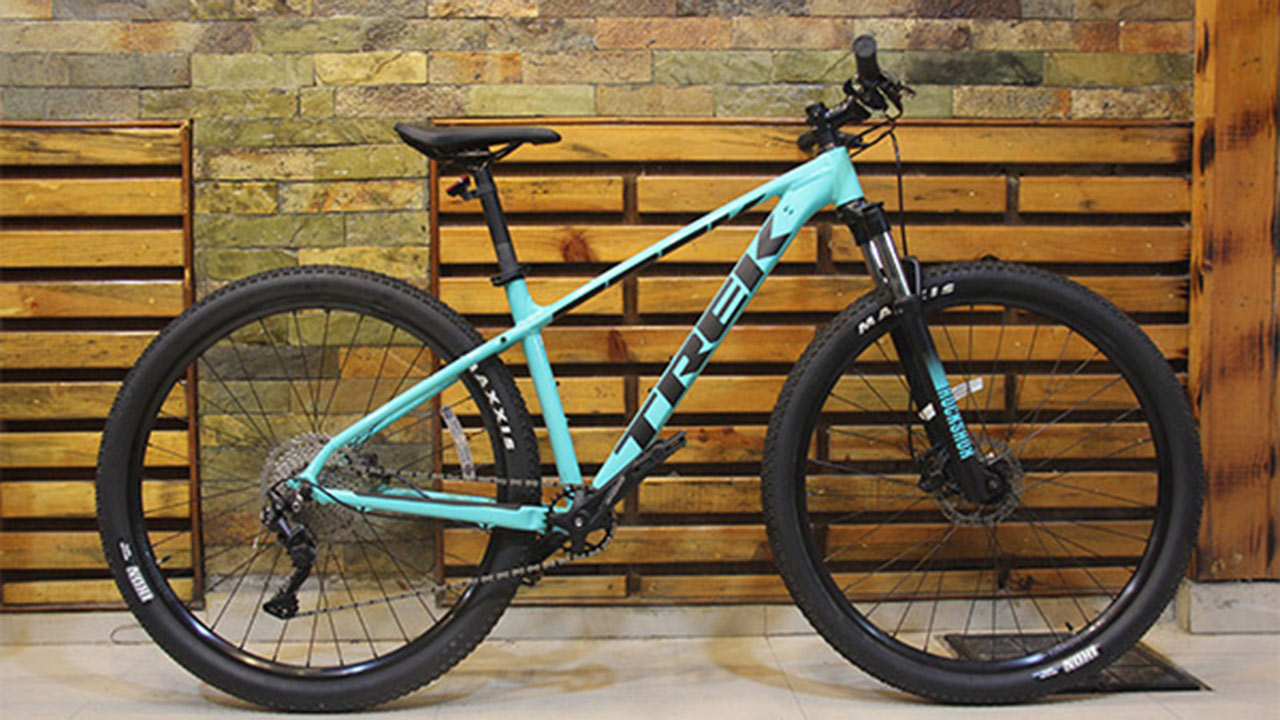
One of the most trusted and most searched mountain bike brands in Nepal: Trek Bikes. It is known for strong aluminium frames, reliable parts, and a clear model range that makes it easy to pick the right bike for your level. The Marlin series is where most riders start, and the range climbs all the way to serious enduro machines.
Trek Marlin Series
The Marlin is Trek's best-selling mountain bike, and the one most Nepali riders start on. It is an aluminium hardtail, meaning suspension at the front only, built for trails, commuting, and everything in between. Trek publishes the full current range and geometry on the official Trek Marlin page, and the prices below are what you should expect to pay in Nepal.
Gen 2 or Gen 3? Check this before you buy
This is the single most important thing to establish about any Marlin on sale in Nepal. Trek redesigned the Marlin in Generation 3, and it is not a cosmetic update. Stock in Nepal is a mix of both generations, and a Gen 2 bike at a Gen 3 price is a bad buy.
Feature | Gen 2 | Gen 3 |
|---|---|---|
Head tube angle | Steeper, more upright | 66.5°, slacker and more stable downhill |
Reach | Shorter | Longer |
Seat tube angle | Slacker | Steeper, providing a better climbing position |
Cockpit | Longer stem, narrower bar | Shorter stem, wider bar |
Dropper post | No internal routing | Internal dropper routing; Marlin 6 and 7 come with a dropper fitted |
Brakes | Mechanical disc on lower models | Hydraulic disc across the whole range, including Marlin 4 |
Drivetrain | 2×8 and 3×7 Shimano Altus and Acera | 1× throughout, using Shimano CUES and SRAM |
The Gen 3 frame is genuinely more capable off-road. The slacker front end and longer reach make a real difference on a descent off Sarangkot or Nagarkot, and the dropper post on the Marlin 6 and 7 is the sort of thing that used to appear three price bands higher.
One frame limitation worth knowing: you cannot run both a front derailleur and an internally routed dropper post. The frame has one path. Since every Gen 3 build is 1x anyway, this only matters if you plan to convert an older bike.
Shimano CUES is also new, and you will see it on the spec sheets. It replaces the old Altus, Acera, and Alivio ladder with one unified system, and parts are cross-compatible across it, which is genuinely useful in Nepal where you take whatever the shop has in stock.
Marlin prices in Nepal
Trek Marlin 4: NPR 55,000 to 70,000. The entry point. Alpha Silver aluminium frame with Gen 3 geometry, a coil suspension fork and a 1x8 drivetrain. The important upgrade over older entry bikes is hydraulic disc brakes as standard. It is the only Marlin still offered with a 26-inch wheel for the smallest frames, alongside 27.5 and 29. A sensible first mountain bike for a student or commuter.
Trek Marlin 5: NPR 75,000 to 90,000. Adds a fork with a lockout, so you can firm it up for road sections, and a 1x9 Shimano CUES drivetrain. Wheels are 27.5 or 29 depending on frame size. This is the cheapest Marlin most riders should consider if they actually intend to ride trails. Available in our shop.
Trek Marlin 6: NPR 115,000 to 125,000. The value pick of the range and the point where it stops being an entry bike. Lighter RockShox fork, a 1x10 Shimano CUES drivetrain, tubeless-ready wheels, and a dropper post included. A dropper lets you drop the saddle out of the way for a descent without stopping, and once you have used one, you will not go back. Buy it from our shop at USD 849.99 or rent the Gen 3 at USD 30 a day, which is the cheapest bike in our fleet.
Trek Marlin 7: NPR 135,000 to 150,000. The one to buy if the budget allows. A higher-end RockShox air fork, which you can set to your body weight rather than being stuck with a fixed coil spring, a SRAM 1x12 drivetrain with a wide gear range for steep Nepali climbs, tubeless-ready Maxxis Rekon tyres, and a dropper post. Rent the Gen 3 at USD 35 a day, or the previous generation if you want to feel the difference.
Trek Marlin 8: NPR 185,000 to 220,000. The top of the range, with the best fork and drivetrain in the series and enough capability that it feels closer to a proper trail bike than to an entry hardtail. Rent it for USD 40 a day.
Which Marlin should you buy?
Riding to college and on the ring road: Marlin 4 or 5. You will not use anything more.
Weekend trails at Shivapuri, Nagarjun, or around Phewa: Marlin 6. The dropper post and tubeless wheels are worth the jump, and it is the best value in the range.
Real trail riding, and you want one bike for years: Marlin 7. The air fork and the 1x12 range are the two things you would otherwise upgrade later at greater cost.
You are between two models: buy the cheaper frame in the right size rather than the better frame in the wrong one. Fit beats spec every time.
You are not sure yet: rent one for a weekend first. A Marlin costs USD 30 to 40 a day to hire, and a wrong NPR 150,000 decision is expensive.
The full Marlin range, what we stock, and how it compares with the rest of the Trek line-up is in our guide to Trek bikes in Pokhara.
Trek Double Suspension Bikes
Full suspension bikes with shocks front and rear, built for technical trails and aggressive descents. They cost more and need more servicing, but they give far more comfort and control on rough ground.
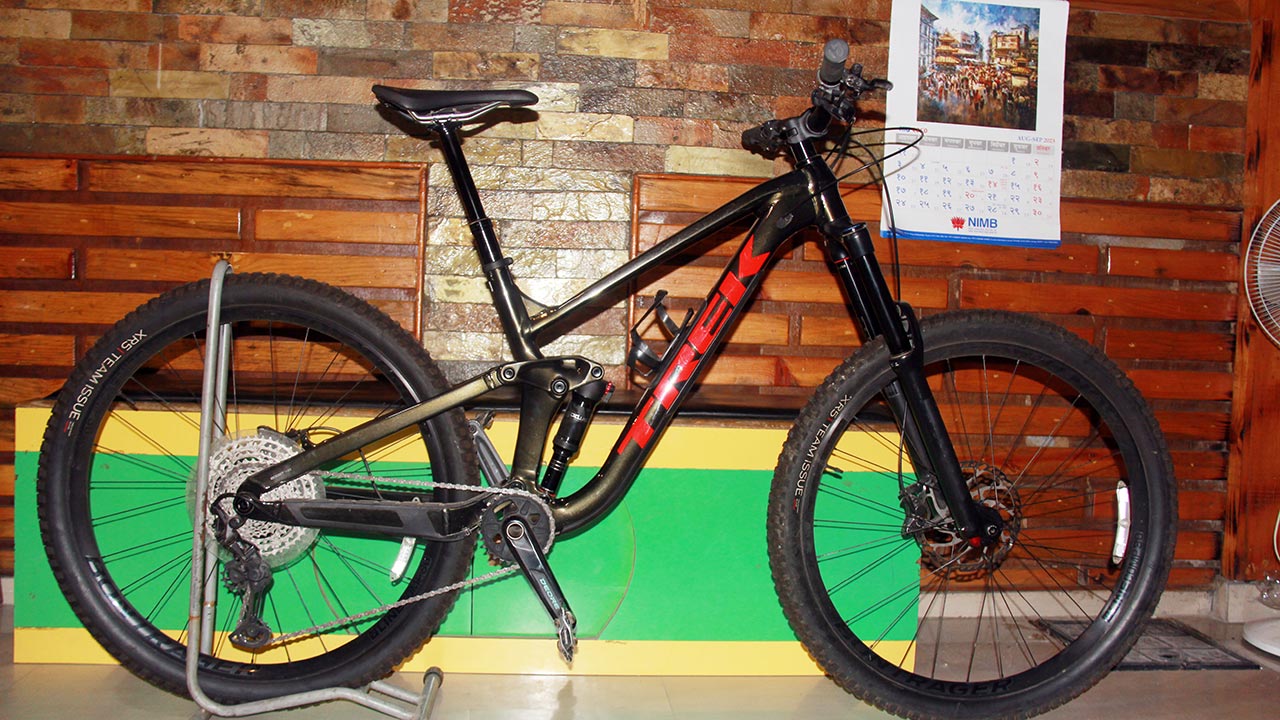
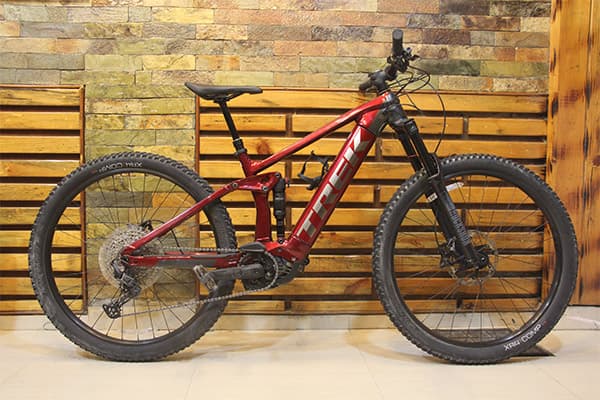
Trek Remedy 8: NPR 480,000 to 580,000. A trail and enduro full-suspension bike that is playful, confident, and forgiving. A strong all-rounder for one capable bike that handles flowing trails and rocky descents alike.
Trek Slash GX Gen 6: from NPR 655,000. Trek's enduro machine, made for steep, technical, fast descents while still climbing. The GX build is the value point in the enduro range.
Trek Slash XT Gen 6: from NPR 850,000. The same platform with a higher-level build. Lighter, sharper, and fitted with premium parts for riders pushing hard on demanding terrain.
We are an authorised Trek dealer in Pokhara. The full range, what each model is built for, and what we stock is in our guide to Trek bikes in Pokhara. Current stock is in the shop, and you can rent most of these models before you commit to buying one.
Scott Mountain Bikes
Scott is the other premium brand with real depth in Nepal, and it is known for light frames and clever engineering. The full current range is on the Scott Sports website. Below is what each model costs here and which ones we hold.
Read the numbers backwards. This catches everyone. With Scott, a lower model number means a higher specification. The Aspect 910 is the best, and the 950 is the entry one, which is the opposite of how Trek and Giant number their ranges. Our shop prices confirm it: the Aspect 910 sells for USD 1,249.99 and the Aspect 950 for USD 749.98.
Two Scott terms worth knowing. Syncros is Scott's in-house component brand, the equivalent of Trek's Bontrager, and it supplies the wheels, bars, stems and saddles across the range. TwinLoc is Scott's handlebar lever that adjusts the suspension between three settings without stopping, which is genuinely useful here where a single ride mixes tarmac, jeep track and singletrack.
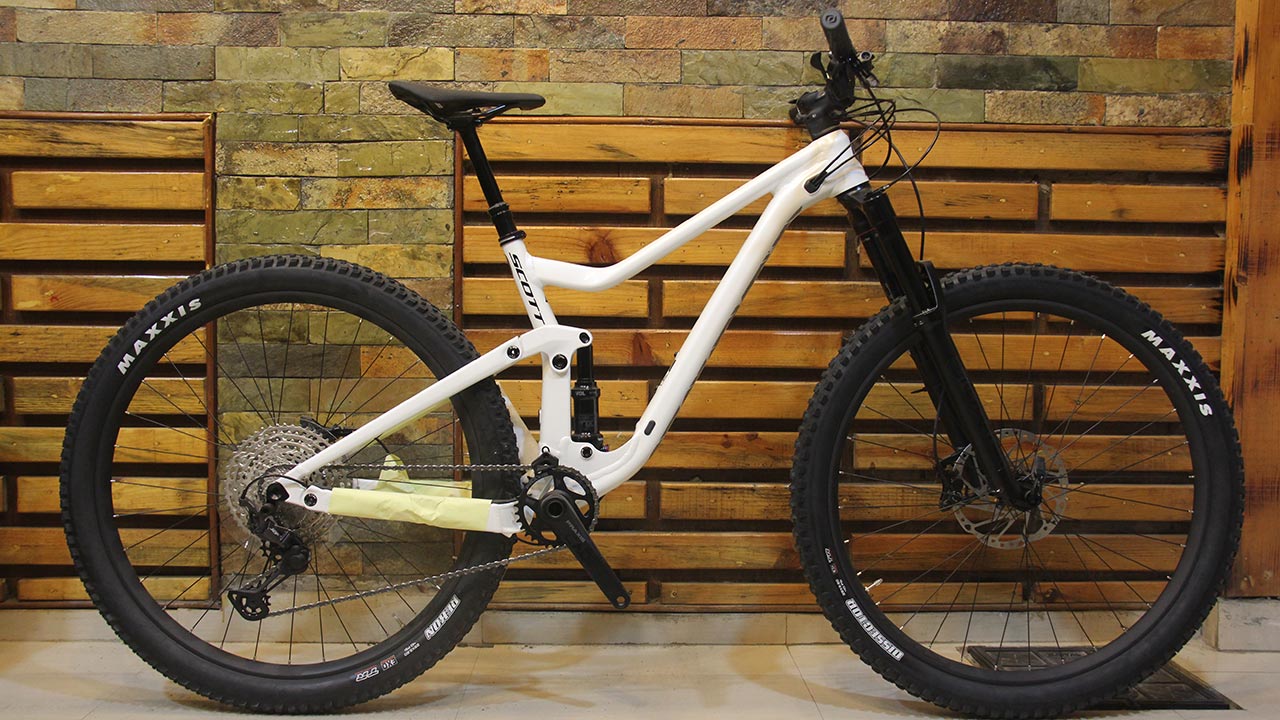
Scott Aspect Series
The Aspect is Scott's entry hardtail and the direct rival to the Trek Marlin. Light alloy frame, dependable parts, accessible price.
Scott Aspect 950: NPR 85,500 to 99,000. The most affordable Aspect and a solid first mountain bike. Light aluminium frame, front suspension fork, reliable gearing for city riding and light trails. In our shop at USD 749.98.
Scott Aspect 940: NPR 93,000 to 117,000. Better parts and smoother performance for a new rider who wants more capability on mixed riding. In our shop at USD 889.99.
Scott Aspect 920: NPR 120,500 to 151,500. A more capable hardtail with stronger components and a remote lockout on the fork. Buy at USD 1,144.99 or rent at USD 30 a day.
Scott Aspect 910: NPR 120,000 to 165,000. The top of the range, with a Shimano Deore 12-speed drivetrain and a RockShox Judy Silver air fork you can set to your body weight, which is the single biggest comfort upgrade at this price. Buy at USD 1,249.99 or rent at USD 35 a day.
Scott Scale Series: NPR 114,500 to 144,000. The Scale is Scott's cross-country hardtail, lighter and racier than the Aspect, built for speed, climbing, and long, efficient rides. The Scale 980 is in our shop at USD 1,384.99, though stock moves, so check before travelling.
Scott Dual Suspension Bikes
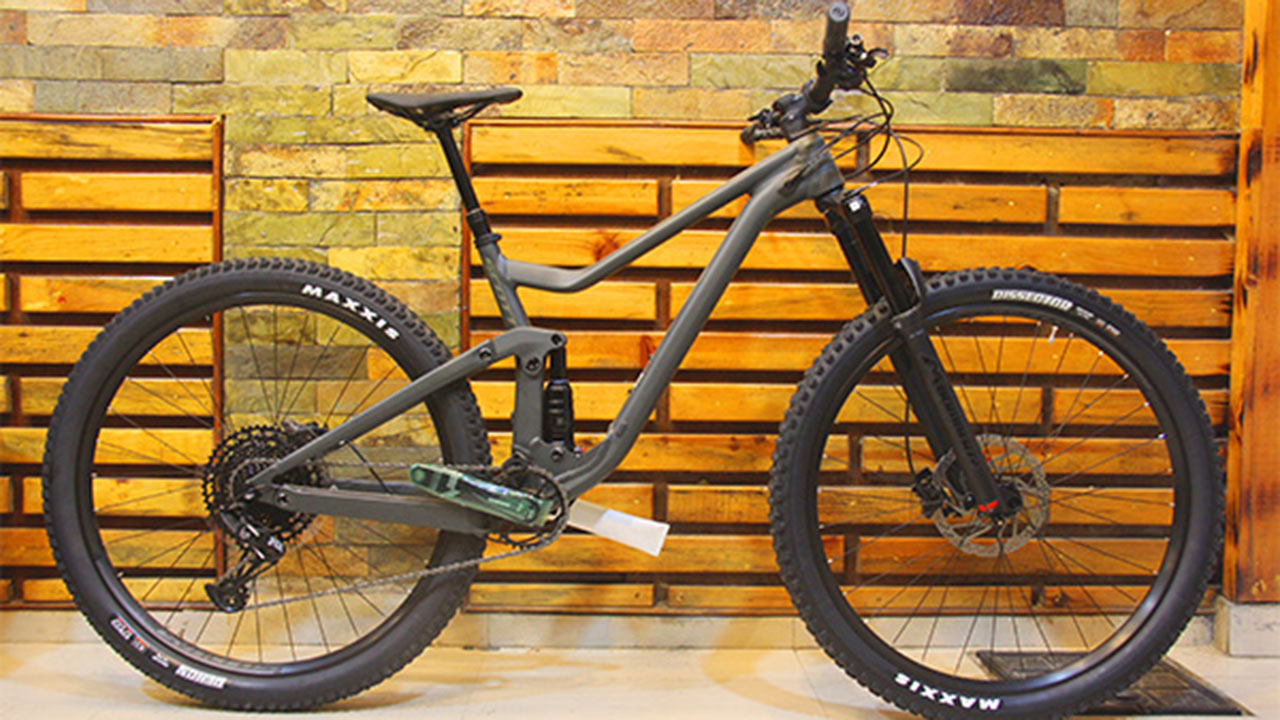
Scott Spark 950: NPR 180,000 to 220,000. A light, fast cross-country full suspension bike that blends rear-suspension comfort with XC speed. Good for long rides and racing on varied terrain. In our shop at USD 3,899.99.
Scott Genius 950: NPR 200,000 to 250,000. The entry Genius, a versatile trail bike that climbs well and descends with confidence. A strong choice for one bike that does all-day trail riding. Buy at USD 3,154.99 or rent at USD 70 a day.
Scott Genius 940: NPR 250,000 to 300,000. The higher Genius build, with better suspension and a finishing kit on the same platform. Buy at USD 3,459.99 or rent at USD 75 a day.
Scott Ransom 930: NPR 400,000 to 450,000. Scott's enduro bike, built for steep, rough, aggressive descents and maximum control on demanding trails. In our shop at USD 4,255.
More on the Scott range and what we hold in Pokhara: Scott mountain bikes in Pokhara.
Giant Mountain Bikes
Giant is the largest bike maker in the world and offers excellent value at every level. Its frames use ALUXX aluminium and are known for being strong and well made, and the range runs from budget hardtails to high-end carbon enduro bikes.
Giant Talon Series
The Talon is Giant's entry-level hardtail and a popular value choice. As with Scott, a lower number means a higher specification, so the Talon 0 is the top model.
Giant Talon 3: NPR 75,000 to 85,000. The most affordable Talon and a good starter mountain bike. Light alloy frame, front suspension, and simple, reliable gearing for city and light trail use.
Giant Talon 2: NPR 85,000 to 100,000. A small step up with improved parts, for beginners who want more capability on mixed riding.
Giant Talon 1: NPR 85,000 to 100,000. A more refined build with better components, for riders spending regular time on trails.
Giant Talon 0: NPR 125,000 to 150,000. The top Talon, with the best fork and drivetrain in the range and often a dropper-post-ready setup.
Giant Fathom Series: NPR 150,000 to 200,000. More aggressive than the Talon, with slacker, more confident geometry built for rougher descents. Hardtail simplicity with real trail attitude.
Giant Trance X Series, Full Suspension
Giant Trance X 2: from NPR 650,000. A capable trail full-suspension bike balancing climbing efficiency with descending confidence. A superb all-rounder for serious trail riders.
Giant Trance X 1: from NPR 750,000. The same platform with a higher build, lighter, and fitted with better parts.
Giant Reign Series, Enduro
Giant Reign 29 2: from NPR 850,000. Giant's enduro bike, designed for steep, fast, technical descents while still climbing capably.
Giant Reign Advanced Pro 29 0: NPR 1,196,000 to 1,368,000. The flagship, with a premium carbon frame and top-tier components. One of the most capable mountain bikes you can buy in Nepal.
Budget Brands: GTA, Benz, Trinx and Kross
Most bikes sold in Nepal are not Trek, Scott, or Giant. They are budget brands, and for a lot of buyers, they are the right answer.
Benz: NPR 18,000 to 45,000. One of the most searched bike brands in Nepal. Steel or basic aluminium frames, 21-speed gearing, and mechanical disc brakes on the higher models. Fine for city riding, college commuting, and gentle trails. Not built for a steep descent with a loaded rider.
GTA: NPR 15,000 to 50,000. Widely available and the usual first bike for many riders. The range runs from basic rigid models up to aluminium-framed disc-brake hardtails at the top end.
Trinx: NPR 25,000 to 70,000. A Chinese brand with better finishing than most at this price, aluminium frames throughout, and hydraulic brakes on the upper models. The step between a budget cycle and an entry Trek or Scott.
Kross: NPR 20,000 to 45,000. Similar territory to Benz and GTA, mostly city and light-trail use.
What you are giving up at this price. Frame weight, which you feel on every climb. Gear range, so steep hills mean walking. Brake fade on long descents. And parts availability, because a broken proprietary part on an unbranded bike can be hard to replace. If you are riding to college and around the ring road, none of that matters much. If you are riding Shivapuri or Sarangkot every weekend, it matters a lot.
Electric Mountain Bike Prices in Nepal
E-MTBs are the fastest-growing part of the market here, and prices sit well above conventional bikes because the motor, battery, and controller are most of the cost.
Expect NPR 400,000 to 700,000 for an entry- to mid-range full-suspension e-MTB, and NPR 900,000 upwards for a premium build on a Bosch Performance Line CX system with a 625 Wh to 750 Wh battery.
Two things worth knowing before you buy one. Servicing needs a mechanic trained on the specific motor system, and there are not many in Nepal, so buy a mainstream system that somebody can actually fix. And batteries cannot be flown, because lithium batteries above 160 Wh are prohibited in passenger baggage, which rules out bringing one in yourself.
If you want to try one before spending that much, we rent the Trek Rail 5 Gen 3 and the Bergamont E-Trailster at USD 100 a day. The honest case for and against is in our e-MTB guide for Nepal.
Kids' and Small-Frame Bikes
Giant STP: NPR 80,000 to 120,000. A tough, fun bike that suits younger riders and dirt-jump style riding, and a genuinely good-quality option for a child who is riding seriously.
For smaller riders generally, the thing to look for is wheel size matched to frame size. Trek's Marlin range drops to 27.5-inch wheels on the small frames rather than forcing 29-inch wheels on everyone, which makes a real difference to how a shorter rider handles the bike.
You do not have to buy. We rent Giant STP and Trek Marlin 6 and 7 in 24-inch wheels and XS frame sizes, from USD 15 to 37 per day, for short hires and longer periods. That is often the sensible answer for a child who will outgrow the frame in a year. See bike rentals or ask us what sizes are in.
Should You Buy, or Rent?
Buying makes sense if you ride weekly, you live here, and you will keep the bike for more than a season.
Renting makes sense more often than people think. A quality hardtail rents for USD 30 a day, full suspension for USD 70, and an e-MTB for USD 100, all with a helmet included. If you ride a few times a year, or you want to try a full-suspension bike before spending NPR 500,000 on one, renting is far cheaper than owning, and there is no servicing, no storage, and no depreciation.
It is also the only sensible way to find out whether you actually want a full-suspension bike. Rent a Fuel EX or a Genius for a weekend on real trails, and you will know.
Full fleet and daily rates: bike rentals.
Pokhara specifically: mountain bike rental in Pokhara.
Where to Buy in Pokhara and Kathmandu
We sell Trek and Scott from our own shop in Pokhara, and we are an authorised Trek dealer, listed on Trek's store finder.
Whoever you buy from, four things are worth checking before you pay.
Is the shop an authorised dealer for the brand? It decides whether a warranty claim goes anywhere.
Can they service it? A bike is only as good as the workshop behind it. Ask what happens in a year when the fork needs a service.
Are the spare parts available in Nepal? Shimano Deore and SLX, Bontrager, and standard RockShox kits are. Obscure components are not, and a broken proprietary part can retire a bike.
Does the frame fit you? Get the size right before you get the model right. A well-fitted cheaper bike beats a badly fitted expensive one every time.
Riding, Not Just Buying
Whatever you end up on, the reason to own a mountain bike in Nepal is the riding. The trails around Pokhara and the Kathmandu Valley are open all year and free.
If you want to try before you buy, rent one for a day. If you want somebody to show you where the good trails are, we run guided rides and multi-day tours on the same Trek and Scott bikes listed above. And if you already have a bike and it needs work, our workshop is in Pokhara.
Frequently Asked Questions
How much does a mountain bike cost in Nepal?
Anywhere from NPR 15,000 to over NPR 1,300,000. Budget brands like GTA, Benz, and Kross start around NPR 15,000 to 20,000. A quality entry hardtail from Trek, Scott, or Giant starts around NPR 75,000. Trail hardtails run NPR 100,000 to 200,000, entry full suspension NPR 200,000 to 500,000, and premium carbon enduro bikes go above NPR 850,000.
What are Trek Marlin prices in Nepal?
Marlin 5 is NPR 75,000 to 90,000, Marlin 6 is NPR 115,000 to 125,000, Marlin 7 is NPR 135,000 to 150,000, and Marlin 8 is NPR 185,000 to 220,000. Above the Marlin range, the X-Caliber runs NPR 225,000 to 250,000. Prices vary with the model year and any current promotion, so confirm with the shop.
What is the cheapest usable mountain bike in Nepal?
Around NPR 20,000 to 30,000 gets you a geared budget bike from GTA, Benz, or Kross that will handle city riding and gentle trails. Below that, you are into rigid, rim-braked bikes that are not suited to real off-road use. If you can stretch to NPR 40,000 to 50,000, you get an aluminium frame and disc brakes, which is a large jump in usability.
Which mountain bike brands are sold in Nepal?
Trek, Scott and Giant lead the quality end. Trinx sits in between. GTA, Benz and Kross cover the budget market. Bergamont is available on the e-MTB side. Merida, Specialized and Cube appear occasionally through individual importers, but availability and spare parts are far less reliable, which matters more here than the badge does.
What is a double suspension cycle and what does it cost in Nepal?
A double or full suspension bike has shocks at both the front and the rear, rather than the front only. It gives far more comfort and control on rough ground at the cost of weight, price, and servicing. In Nepal, entry-level full suspension starts around NPR 200,000 with the Scott Spark, mid-range trail bikes run NPR 480,000 to 750,000, and premium carbon enduro models go from NPR 850,000 to over NPR 1,300,000.
How much are Benz and GTA cycles in Nepal?
Benz runs roughly NPR 18,000 to 45,000 and GTA roughly NPR 15,000 to 50,000, depending on the model. At the lower end, you get a steel frame and basic gearing. At the top of both ranges, you get an aluminium frame and mechanical disc brakes, which is a much better bike for the money.
How much does an electric mountain bike cost in Nepal?
Around NPR 400,000 to 700,000 for an entry- to mid-level full-suspension e-MTB, and NPR 900,000 upwards for a premium build. Before you buy, check that the motor system can be serviced in Nepal, because that is the part that strands people. You can rent an e-MTB for USD 100 a day if you want to try one first.
Are children's mountain bikes available in Nepal?
Yes. The Giant STP runs NPR 80,000 to 120,000 and is a good quality option for a child riding seriously. For a growing child, renting often makes more sense than buying: we hire Giant STP and Trek Marlin 6 and 7 in 24-inch and XS sizes from USD 15 to 37 a day.
Should I buy a bike or rent one?
Buy if you ride weekly and will keep it for more than a season. Rent if you ride occasionally, or if you want to test a full-suspension bike before committing NPR 500,000 to one. Hire runs from USD 30 a day for a hardtail up to USD 100 for an e-MTB, helmet included, with no servicing, storage, or depreciation to worry about.
What should I look for when buying a mountain bike in Nepal?
In order of importance: frame size that fits you, frame material, brake type, groupset, and suspension. Get the fit right first. Then prioritise hydraulic disc brakes over almost anything else, because Nepali descents are long and cable brakes fade. After that, a Shimano Deore or better drivetrain, and an air fork rather than a coil one if the budget reaches.
What is the difference between a cycle, a bicycle and a mountain bike?
In everyday Nepali usage, they overlap. Cycle and bicycle mean any pedal bike, and gear cycle normally means a geared bicycle of any kind. A mountain bike, or MTB, is a specific type: wide knobbly tyres, a strong frame, a wide gear range, and usually front suspension, built to be ridden off-road. A city cycle at NPR 15,000 and a mountain bike at NPR 15,000 are not the same object, and the second one is usually a mountain bike in appearance only. If you plan to ride trails rather than roads, that distinction is what you are paying for.
Can I buy a mountain bike online in Nepal?
You can, through marketplaces and brand sites, but test-riding matters more than the savings. Frame size is the single most common mistake, and it is not something you can judge from a photograph. Buy from a shop that will fit the bike to you and service it afterwards.
Can I find second-hand mountain bikes in Nepal?
Yes, through online marketplaces, bike shops, and local riding groups. Check the frame carefully for cracks and dents around the head tube and bottom bracket, check the drivetrain for wear, and factor in a full service, because most used bikes here need one. On a full-suspension bike, also check the rear shock and pivot bearings, which are expensive to replace.