Blog / The Ultimate Decision: Traditional Mountain Biking or E-MTB in Nepal?
The Ultimate Decision: Traditional Mountain Biking or E-MTB in Nepal?
There's No Wrong Choice
Jagan Biswakarma
Published on:
03 Apr 2026
So you've decided to experience Nepal's legendary trails, but now you're faced with a crucial question: Should you go with a traditional mountain bike (MTB) or an electric mountain bike (E-MTB)?
Both options offer incredible ways to explore Nepal's breathtaking landscapes, from the Annapurna Circuit to the mystical trails of Upper Mustang. But they provide vastly different experiences.
In this comprehensive guide, we'll break down everything you need to know to make the right choice for your Nepal adventure, covering fitness requirements, costs, terrain accessibility, and the unique advantages of each option.
Quick Comparison: MTB vs E-MTB at a Glance
Traditional Mountain Biking (MTB) in Nepal
What is Traditional MTB?
Traditional mountain biking means relying entirely on your own power to propel the bike. It's you, the trail, and Nepal's stunning terrain—a pure, unassisted adventure that connects you directly with the landscape.
The MTB Experience in Nepal
When you choose traditional MTB in Nepal, you're signing up for an authentic challenge. Every climb is earned through sweat and determination. Every descent feels like a reward for your effort.
Popular MTB Tours:
- Annapurna Circuit Mountain Biking - The legendary 15-20 day circuit
- Upper Mustang Mountain Biking - Remote, high-altitude desert terrain
- Lower Mustang Mountain Biking - Cultural immersion with challenging trails
Advantages of Traditional MTB
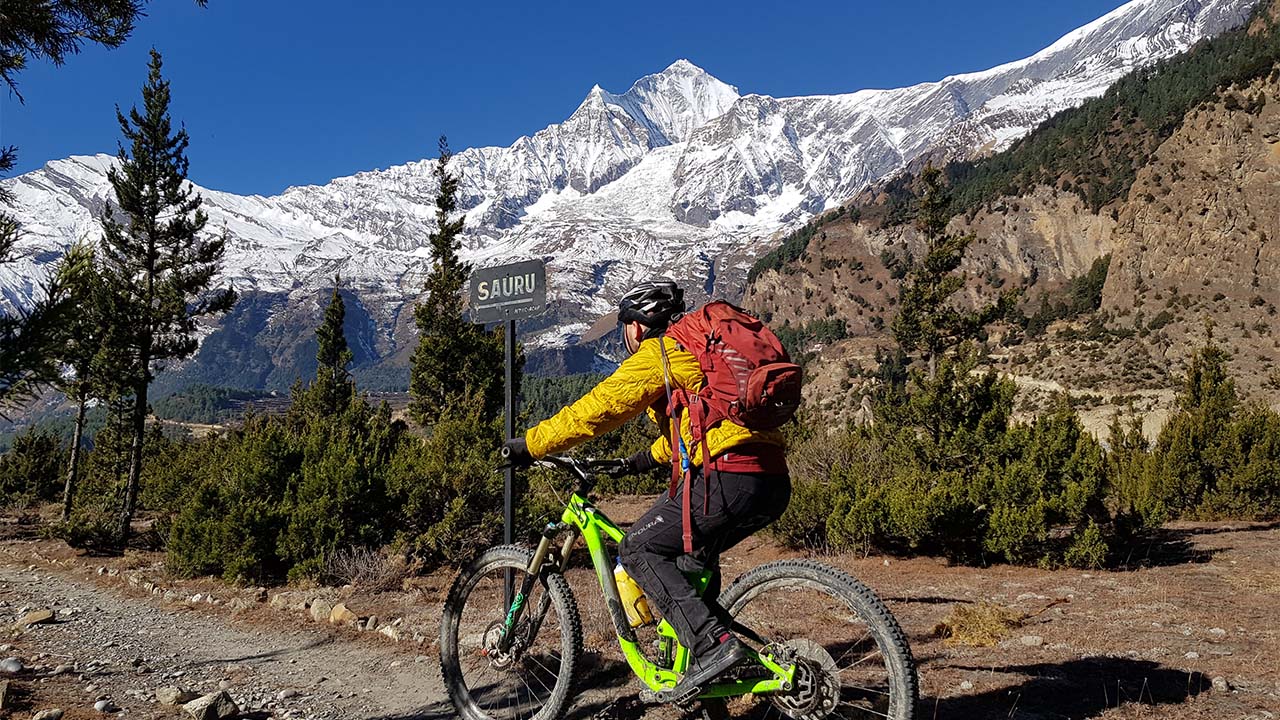
→ Pure, Authentic Adventure:
There's something deeply satisfying about conquering Nepal's trails using only your own power. The sense of achievement when you reach Thorong-La Pass (5,416m) on the Annapurna Circuit is unmatched.
→ Better Bike Handling Skills
Without motor assistance, you develop stronger technical skills:
- Better balance and control
- Improved climbing technique
- Enhanced downhill confidence
- Greater overall bike mastery
→ Lighter Weight (10-13 kg)
Traditional bikes are significantly lighter, making them:
- Easier to maneuver on technical sections
- Better for carrying over obstacles
- More responsive on tight single tracks
- Easier to transport in vehicles/helicopters
→ Lower Rental Cost
Expect to pay $80-150 USD per day for quality MTB rentals in Nepal, including:
- Scott Genius 950
- Trek Fuel EX 5
- Trek Remedy 8
Explore our MTB rental options →
→ No Battery Anxiety
You don't need to worry about:
- Battery range limitations
- Charging availability in remote villages
- Power outages
- Carrying spare batteries
→ Greater Physical Achievement
For many riders, the physical challenge IS the attraction:
- Test your fitness at altitude
- Build mental resilience
- Experience true adventure
- Return home transformed
Challenges of Traditional MTB:
→ High Physical Demand
Nepal's terrain is unforgiving:
- Steep, sustained climbs at altitude
- Long days (6-8 hours in the saddle)
- Multiple days of consecutive riding
- Altitude affects performance (30-50% reduction in capacity above 4,000m)
→ Fitness Requirements:
- Strong cardiovascular base
- Good leg strength
- Core stability
- Ability to ride 4-6 hours daily
- Experience with technical terrain
→ Limited Distance Coverage
You'll typically cover 30-60 km per day, depending on:
- Elevation gain
- Trail difficulty
- Your fitness level
- Altitude acclimatization
→Altitude Sickness Risk
Physical exertion at high altitude increases the risk of:
- Acute Mountain Sickness (AMS)
- Faster fatigue
- Slower recovery
- Need for more acclimatization days
→Longer Tour Duration
To cover the same ground, MTB tours need more days:
- Annapurna Circuit: 15-20 days (MTB) vs 10-12 days (E-MTB)
- Mustang Region: 12-15 days (MTB) vs 8-10 days (E-MTB)
Read our Mountain Biking in Pokhara guide for trail difficulty →
What is E-MTB?
Electric mountain bikes feature integrated electric motors that provide pedal assistance. You still pedal, but the motor amplifies your effort, making climbs easier and allowing you to cover more ground with less fatigue.
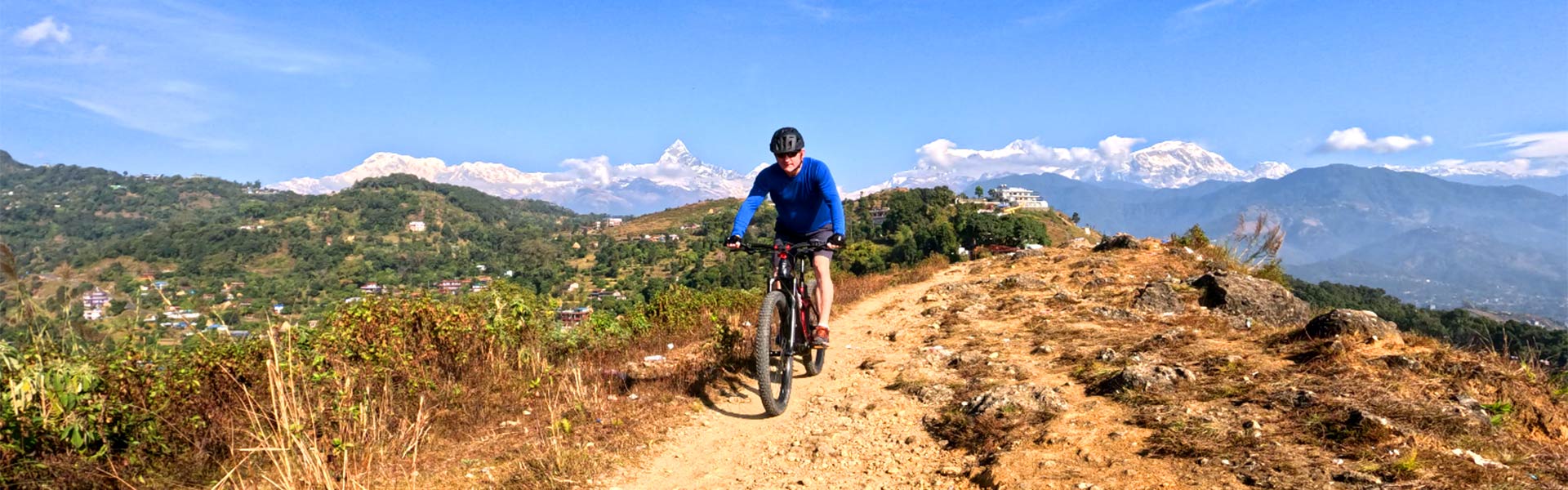
The E-MTB Experience in Nepal
E-MTBs have revolutionized mountain biking in Nepal, opening up world-class trails to riders of varying fitness levels while allowing experienced riders to cover more ground in less time.
Popular E-MTB Tours:
- E-MTB Tour in Pokhara - Scenic day rides with stunning views
- E-MTB Upper Mustang - Remote adventure made accessible
- E-MTB Pokhara: Sarangkot & Stupa - Sunrise rides and cultural site
Accessibility for All Fitness Levels
E-MTBs democratize Nepal's trails:
- Riders with moderate fitness can tackle advanced terrain
- Older adventurers can still experience epic journeys
- Less fit riders can join fitter friends
- Recovery from injuries doesn't mean missing out
“Our E-MTB Tours in Nepal offer awe-inspiring views of the Himalayan panoramas, thrilling trails, and authentic cultural experiences. Pedal through Nepal's unique landscapes and explore hidden treasures with ease on our electric motor-assisted bikes.”
Cover More Ground
With motor assistance, you can:
- Ride 50-80+ km per day
- Explore multiple valleys in one day
- Reach remote monasteries and villages
- See more of Nepal in less time
Reduced Altitude Impact
The motor compensates for altitude's effects:
- Less physical strain means better oxygen efficiency
- Reduced fatigue at high elevations
- Lower risk of altitude sickness
- Faster recovery between riding day
Focus on Scenery, Not Suffering
E-MTB shifts the experience:
- Enjoy the views while climbing
- Take photos without being out of breath
- Arrive at viewpoints fresh and energized
- Spend more time exploring, less time recovering
Tackle Steeper Terrain
Nepal's steepest climbs become rideable:
- No need to push/carry bikes up sections
- Maintain momentum on technical climbs
- Clean difficult sections you'd normally walk
- Access trails previously unreachable for your skill level
Multi-Day Tours More Manageable
Consecutive riding days are easier:
- Less cumulative fatigue
- Faster daily recovery
- Consistent energy levels throughout the tour
- Enjoy rest days instead of needing them for recovery
Better for Photography & Sightseeing
Arrive at destinations ready to explore:
- Energy for cultural activities after riding
- Fresh appearance for photos
- Mental clarity to appreciate surroundings
- Ability to socialize with locals in the evenings
Challenges of E-MTB
Higher Cost
E-MTB rentals cost more due to:
- Expensive technology (motors, batteries)
- Higher maintenance requirements
- Limited availability in Nepal
- Specialized mechanics needed
Battery Range Limitations
You must manage battery life:
- Typical range: 40-80 km depending on terrain and usage
- Need to plan charging stops on multi-day tours
- Cold temperatures reduce battery performance
- Steep climbs drain batteries faster
Battery Management Tips:
- Use Eco mode on flat sections
- Save Boost/Turbo for steep climbs
- Carry a charger for lunch stops
- Plan overnight charging in teahouses
Heavier Weight (18-24 kg)
E-MTBs are significantly heavier:
- More difficult to maneuver on technical sections
- Harder to lift over obstacles
- Less agile on tight switchbacks
- More challenging to transport
Charging Infrastructure
In remote Nepal:
- Electricity is not always available
- Power outages are common
- Some villages have limited hours of electricity
- Solar charging is slow
We handle this: Our guided E-MTB tours include charging logistics and backup plans.
Less "Pure" Adventure Feeling
Some riders feel E-MTB:
- Removes the challenge
- Diminishes sense of achievement
- Isn't "real" mountain biking
- Feels less authentic
Counterpoint: Many riders find they can experience MORE of Nepal's beauty and culture with E-MTB, creating a different but equally meaningful adventure.
Technical Dependency
More can go wrong:
- Motor failures (rare but possible)
- Battery issues in extreme cold
- Display/electronics problems
- Require specialized mechanics
Decision Framework: Which is Right for YOU?
Factor | Traditional MTB | E-MTB |
Still Can't Decide, or Need Help Deciding? Contact our expert team at Nepal Mountain Bike:
We'll help you choose based on:
- Your fitness level
- Time availability
- Budget considerations
- Personal goals
- Group dynamics
Email: [email protected]
WhatsApp: +977 980‑4134788
There's No Wrong Choice
Here's the truth: Both MTB and E-MTB offer incredible ways to experience Nepal.
- Traditional MTB provides the pure, challenging adventure that mountain biking was founded on
- E-MTB opens Nepal's trails to more people and allows you to see more in less time
The "right" choice depends entirely on your goals, fitness, time, and what you want from your Nepal adventure.
Some riders will prefer earning every meter of elevation. Others will prefer covering 80km days and exploring remote villages. Both are valid. Both are amazing. Both will give you stories to tell for a lifetime.
The most important thing? Get out there and ride. Nepal's trails are waiting, and whether you're powered by legs or lithium-ion batteries, the Himalayas will take your breath away.
You may also like
View All
Best Time to Mountain Bike in Nepal
09 Apr 2026
Jagan Biswakarma
E-MTB Rentals in Nepal (2026): Prices, Best Bikes, Tours & Booking Guide
03 Apr 2026
Jagan Biswakarma
E-MTB Tours Nepal: The Ultimate Himalayan Electric Mountain Bike Adventure Guide
28 Mar 2026
Jagan Biswakarma
The ultimate Guide to Mountain Biking Tours in Nepal
11 Mar 2026
Nepal MTB Adventures Expert Team
Best Trek Mountain Bike Rentals in Nepal : Complete Guide to Premium Bikes, Prices & Guided Tours
24 Dec 2025
Jagan Biswakarma