Blog / Best Time to Mountain Bike in Nepal
Best Time to Mountain Bike in Nepal
A Month-by-Month Guide
Jagan Biswakarma
Published on:
09 Apr 2026
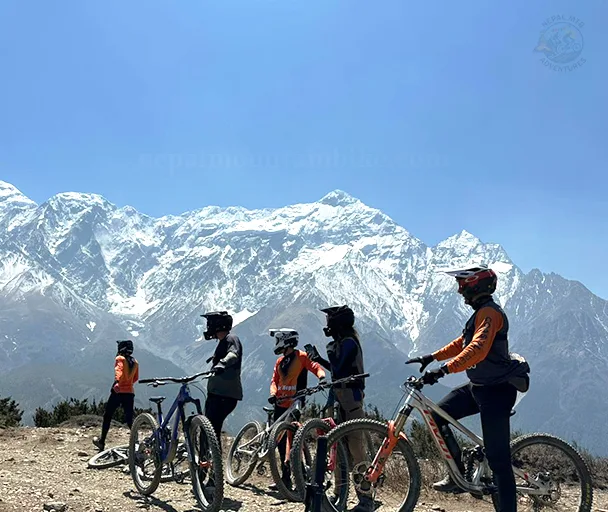
Most riders think Nepal has two mountain biking seasons. It actually has four - and each one opens a completely different riding experience, price bracket, and set of destinations. The best time to mountain bike in Nepal depends on where you want to ride, what you want to spend, and how much adventure you can handle.
Nepal receives over 80 percent of its annual rainfall in a 105-day monsoon window. That shuts down most trails from June to September. But Upper Mustang, sitting in the rain-shadow of the Annapurna range, stays dry and rideable while the rest of the country might be prone to floods & landslides. Meanwhile, peak season in October brings crystal-clear Himalayan views.
This guide breaks down every month, every region, and every budget angle so you can plan the ride that fits you.
Nepal Mountain Biking Seasons at a Glance
Before diving into the month-by-month detail, here is the big picture. Nepal's four riding seasons each have a distinct character.
Season Comparison Table
The Verdict - When Should You Go?
October is the best month to mountain bike in Nepal. Temperatures sit between 22 and 25 degrees Celsius across the main riding regions, skies are crystal clear with peak Himalayan visibility, and every trail from Pokhara to Thorong La is open and dry. It is the month when everything aligns.
But October is also the most crowded and expensive. If budget matters more than perfection, March and April offer shoulder-season pricing with dry trails and rhododendron forests in full bloom. If you want empty trails and the low prices of the year, ride Upper Mustang in July - the rain-shadow keeps it dry while the rest of Nepal is soaked. And if you prefer mild weather without altitude challenges, December through February in Pokhara is underrated and uncrowded.
There is no single wrong time to visit Nepal on a mountain bike. There is only the right match between your priorities and the calendar.
Month-by-Month Mountain Biking Guide
January - Cold and Quiet
Weather: Pokhara sits between 7 and 23 degrees Celsius with dry skies. Kathmandu Valley is cool with nights dropping to 0 to 5 degrees. Chitwan is pleasant at 10 to 25 degrees.
Trail conditions: Low-elevation trails around Pokhara and Kathmandu are dry and firm. High passes on the Annapurna Circuit and Everest region are snowed in and impassable. Thorong La is closed.
Crowds and pricing: Very few international tourists. Accommodation and guide rates are moderate - well below peak season but without the deep monsoon discounts.
Best regions: Pokhara for its mild subtropical climate. Chitwan for warm, dry jungle trails and the chance to combine mountain biking with wildlife safaris. Kathmandu Valley for cultural day rides.
Recommended tours:
- Sarangkot Mountain Biking - short, scenic, perfect for crisp winter mornings with Annapurna panoramas
- Around the Fewa Lake Mountain Biking - flat to rolling lakeside loops at comfortable elevation
- Kathmandu Mountain Bike Day Tour - heritage and hills in the capital valley
Pro tip: January is ideal for pairing a Pokhara MTB day with a Chitwan jungle safari. The wildlife is most active in the dry winter months, and the Terai heat is manageable.
February - Warming Up
Weather: Pokhara warms to 10 to 24 degrees. Rhododendrons begin blooming below 2,500 metres. Kathmandu days are pleasant, nights still cold.
Trail conditions: Dry and stable at lower elevations. High passes remain closed. Dust can build on heavily trafficked trails around Pokhara.
Crowds and pricing: Still quiet. Shoulder pricing starts to appear as tour operators prepare for the spring season. Good availability everywhere.
Best regions: Pokhara for enduro and downhill riding. Kathmandu Valley for day trips on mixed terrain.
Recommended tours:
- Enduro/Downhill Trip in Pokhara - gravity riding through pine forest and terraced farmland
- Kakani Sky Trail - ridge-top singletrack with views of Langtang and Ganesh Himal
Pro tip: Maha Shivaratri falls around mid-February. If you are riding in Kathmandu, visiting Pashupatinath Temple during the festival is worth a half-day off the bike
March - Spring Opens
Weather: Pokhara reaches 22 to 25 degrees with clear skies. Rhododendrons hit peak bloom, painting the hillsides red, pink, and white. Humidity is low. Visibility is excellent.
Trail conditions: Dry and firm across all mid-elevation routes. High passes on the Annapurna Circuit begin opening - Thorong La becomes crossable by late March in good years, though snow can linger. River crossings are low.
Crowds and pricing: Moderate. Spring shoulder season means better rates than October without sacrificing trail quality. Guides and accommodation are readily available.
Best regions: Pokhara for the rhododendron backdrop. The Annapurna region is where the circuit opens, in lower Mustang, for a committed multi-day ride without extreme altitude.
Recommended tours:
- Lower Mustang Mountain Biking - rugged Himalayan landscapes and ancient villages along the Kali Gandaki
- Annapurna Circuit Mountain Biking - the classic high-altitude circuit begins its spring window
- Hike and Bike Annapurna Circuit - combine trekking to Muktinath with biking the descent
Pro tip: March is the best month for photography on Nepal's trails. The rhododendron forests at 2,500 to 3,500 metres are spectacular, and the air is clear enough for sharp mountain backdrops. Holi falls in early March - it is fun to witness in Pokhara, but it will not affect your riding outside the city.
April - Peak Spring
Weather: Temperatures reach 26 to 28 degrees in Pokhara and Kathmandu. Clear skies dominate. The last reliable pre-monsoon window across all regions. Chitwan starts getting hot.
Trail conditions: Excellent everywhere except Chitwan, where rising heat makes riding uncomfortable. Thorong La is solidly open. Upper Mustang trails are dry and fast. Kathmandu Valley trails are at their best.
Crowds and pricing: Moderate to busy. Spring peak pricing applies but remains below the October and November premium. Booking one to two weeks ahead is sufficient for most tours.
Best regions: All regions are open. This is the broadest riding window of the year. Upper Mustang is particularly good - dry, clear, and the new restricted area permit at USD 50 per day makes short trips more affordable than before.
Recommended tours:
- Upper Mustang Mountain Biking - the desert kingdom behind the Annapurnas, now with flexible per-day permitting
- Heli Mountain Biking in Mustang - helicopter shuttle to altitude, ride down through ancient landscapes
- Annapurna Circuit and Upper Mustang Combo - the ultimate two-in-one Nepal MTB experience
- Tilicho Lake Mountain Biking - ride to one of the world's highest lakes
Pro tip: Nepali New Year falls around April 14 to 18 with Bisket Jatra celebrations in Bhaktapur. Expect minor transport slowdowns in the Kathmandu Valley. Pokhara and Mustang are unaffected. This is also the last month before haze starts building in the Pokhara valley, so book views-focused rides now.
May - Pre-Monsoon Transition
Weather: Pokhara hits 28 to 30 degrees. Humidity starts climbing. Haze reduces visibility in the lower valleys. Occasional afternoon drizzle appears. Mustang remains dry - the rain-shadow effect is already active.
Trail conditions: Lower-elevation trails around Pokhara become dusty and warm. Mustang trails are still firm and fast. Annapurna Circuit is rideable, but the Thorong La conditions become less predictable.
Crowds and pricing: Low. This is the budget sweet spot - shoulder pricing is in effect, many tours are available on short notice, and Mustang conditions are still excellent.
Best regions: Upper Mustang is the standout. Pokhara is rideable but hot and hazy. Kathmandu and Annapurna are losing their spring clarity.
Recommended tours:
- Upper Mustang MTB Tour 15-Day Package - immerse yourself in the full Mustang experience before monsoon
- E-MTB Upper Mustang - electric assist makes the desert climbs accessible to more riders
Pro tip: May is a budget calculation month. The Upper Mustang restricted area permit changed in December 2025 from a flat USD 500 fee to USD 50 per day. A 10-day trip now costs USD 500 in permit fees alone, matching the old rate. But shorter trips - 3 to 5 days - are significantly cheaper than before. Factor this into your planning.
June - Monsoon Arrives
Weather: The monsoon arrives around June 10 on average, though it can come two weeks early. Daily rain hits Pokhara, Kathmandu, and Chitwan. Temperatures settle around 26 to 28 degrees with high humidity. The upper Mustang, shielded behind the Annapurna and Dhaulagiri ranges, stays dry.
Trail conditions: Pokhara and Kathmandu trails become muddy and slippery. Landslide risk begins. River crossings swell. The only viable mountain biking destination is Upper Mustang, where the rain-shadow keeps the trails rideable.
Crowds and pricing: Lowest of the year. Monsoon discounts of 30 to 40 percent are common on tours, accommodation, and guide fees. Very few international tourists.
Best regions: Upper Mustang only. Every other region is compromised by rain, mud, and landslide risk.
Recommended tours:
- Upper Mustang Mountain Biking - dry desert trails while the rest of Nepal is soaked
Pro tip: The journey to Upper Mustang during monsoon can be challenging - road conditions on the approach through Beni and along the Kali Gandaki can be rough due to rain. Once you reach the rain-shadow zone past Kagbeni, conditions improve dramatically. Plan an extra buffer day for travel disruptions.
July - Wettest Month
Weather: Nepal's wettest month. Pokhara receives heavy daily rainfall. Temperatures range from 25 to 27 degrees, but the humidity is intense. The country receives the bulk of its annual precipitation. Landslide risk is at its peak, with an average of two active monsoon depressions per month.
Trail conditions: All lower and mid-elevation trails are muddy, eroded, or blocked by landslides. River crossings are dangerous. Upper Mustang remains dry and rideable - its arid, desert-like landscape barely changes.
Crowds and pricing: Rock-bottom. The cheapest time to ride in Nepal. Walk-in bookings are possible. Guides and vehicles are readily available.
Best regions: Upper Mustang only.
Recommended tours:
- Upper Mustang Mountain Biking - empty trails, clear Mustang skies, lowest prices
- Heli Mountain Biking in Mustang - a helicopter bypasses the monsoon-affected approach road entirely
Pro tip: July offers the emptiest trails and lowest prices of the year in Mustang. The landscape is stark and beautiful. If you can handle the logistics of getting there during monsoon, this is one of Nepal's most unique riding experiences.
August - Deep Monsoon
Weather: Similar to July. Heavy rain continues across most of Nepal. Temperatures between 25 and 28 degrees. The monsoon typically begins its slow withdrawal in the final days of August, but conditions remain wet.
Trail conditions: No change from July for most regions. Upper Mustang stays dry. Landslide risk remains elevated.
Crowds and pricing: Still at the lowest. Some operators begin offering early-bird discounts for the upcoming autumn season.
Best regions: Upper Mustang only.
Recommended tours:
- Upper Mustang Mountain Biking - consistent monsoon-season option
Pro tip: August is when many operators offer the steepest discounts for autumn season tours. If you are planning an October or November ride, book now to lock in early-bird rates on popular routes like the Annapurna Circuit and Upper Mustang.
September - Clearing Skies
Weather: The monsoon withdraws around September 23 on average. The first two weeks can still be wet, but the final ten days bring a dramatic shift - clearing skies, dropping humidity, and the first crisp mountain views in months. Temperatures around 24 to 26 degrees.
Trail conditions: Early September trails are still damp, but by the third week, surfaces are drying fast. Rivers are dropping. Landslides risk decreasing. A transition month that rewards patience.
Crowds and pricing: Still shoulder season. The October rush has not started yet. Pricing is moderate. Availability is excellent.
Best regions: Pokhara shines in late September - cleared skies, empty trails, comfortable temperatures. Lower Mustang offers a quieter alternative to the October crowds. Kathmandu Valley day rides become viable again.
Recommended tours:
- Lower Mustang Mountain Biking - beat the October crowds on this classic route
- Sarangkot Mountain Biking - sunrise rides return with clearing autumn skies
- Sweet Pame Valley Mountain Biking - rolling valley trails through villages and farmland
Pro tip: The last two weeks of September are a hidden gem. You get October-quality clarity with shoulder-season pricing and empty trails. This is the window our guides ride for their own enjoyment.
October - The Golden Month
Weather: The best weather of the year. Temperatures between 22 and 25 degrees across all main riding regions. Crystal-clear Himalayan panoramas. Low humidity. No rain. This is when Nepal looks like the photographs.
Trail conditions: Perfect. Every trail is dry, firm, and fully open. Thorong La Pass at 5,416 metres is at its most accessible. River crossings are low. No landslide risk.
Crowds and pricing: Peak season. Expect 30 to 50 percent price markups on tours and accommodation. Popular routes sell out - the Annapurna Circuit and Upper Mustang tours need booking two to four weeks in advance. Hotels in Pokhara and along trekking routes fill up. Dashain, Nepal's biggest festival, runs from October 3 to 16 in 2026 - government offices close, domestic transport surges, and many guides go home to their villages.
Best regions: All of them. Every region in Nepal is at its peak in October. This is the month to ride the routes that demand the best conditions - the Annapurna Circuit over Thorong La, the Everest region, and multi-day point-to-point rides.
Recommended tours:
- Annapurna Circuit Mountain Biking - the definitive Nepal MTB experience at its seasonal best
- Mountain Biking Tour in Pikey Peak - Everest views without the Everest Base Camp crowds
- Pokhara to Chitwan Mountain Biking - point-to-point from mountains to jungle
- Pokhara to Kathmandu Mountain Biking - cross-country route between Nepal's two main cities
- Lhasa to Kathmandu Mountain Biking - the ultimate high-altitude cross-border epic
Pro tip: Schedule around Dashain. The festival runs from October 3 to 16 in 2026. Riding during the first two days or after October 17 avoids the worst transport disruption. Book your guide before October 1 - many take leave to celebrate with family. If you do ride during Dashain, trails near Pokhara will be emptier than usual as locals are home celebrating.
November - Autumn's End
Weather: Temperatures drop to 20 to 23 degrees. Skies remain clear and dry. Visibility is still excellent for mountain views. Mornings get cold, especially above 2,000 metres.
Trail conditions: Excellent through early November. By late November, high passes begin accumulating snow. Thorong La becomes unpredictable after mid-November. Lower-elevation routes remain perfect.
Crowds and pricing: Still busy but easing off from October's peak. Tihar, Nepal's festival of lights, runs from November 6 to 11 - a shorter holiday than Dashain and more photogenic than disruptive. Villages decorated with oil lamps and marigolds make for a special riding backdrop.
Best regions: All regions are still open in early November. Lower Mustang, Pokhara, and Kathmandu remain excellent all month. High-altitude routes like the Annapurna Circuit should be completed before mid-November.
Recommended tours:
- Lhasa to Kathmandu Mountain Biking - still within the autumn window for this Tibetan Plateau epic
- Royal Trek Mountain Biking - the overnight Pokhara classic with autumn light
- Australian Camp Mountain Biking - overnight ride with Annapurna sunrise views
- E-MTB Kathmandu to Pokhara - electric-assist cross-country through the midlands
Pro tip: Tihar is Nepal's festival of lights. Riding through decorated villages during Tihar is a highlight, not a hindrance. The evening celebrations are beautiful and your guide can arrange a village visit. Logistics continue normally with only minor slowdowns.
December - Winter Sets In
Weather: Pokhara cools to 18 to 20 degrees - still comfortable for riding. Kathmandu mornings are cold, around 5 to 10 degrees, but days are clear and sunny. Chitwan drops to its ideal range of 10 to 25 degrees.
Trail conditions: Low-elevation trails in Pokhara, Kathmandu, and Chitwan are dry and fast. High passes are closing or closed - Thorong La is impassable due to snow and extreme cold (night temperatures below minus 15 degrees). Upper Mustang is theoretically accessible but extremely harsh.
Crowds and pricing: Quiet. Moderate pricing. Accommodation and guides are readily available.
Best regions: Pokhara is the standout - mild, empty, with the sharpest Annapurna views of the year from Sarangkot. Chitwan is at its best for combining biking with jungle experiences. Kathmandu for cultural day rides.
Recommended tours:
- E-MTB Tour in Pokhara - electric assist for Pokhara's winter hills
- Pokhara E-MTB Tour: Sarangkot, Bhumdi, and Stupa - the classic viewpoint circuit with a boost
- Australian Camp Mountain Biking - an overnight trip with sharp winter mountain panoramas
- Kathmandu Mountain Bike Day Tour - heritage ride through the valley
Pro tip: December in Pokhara is underrated. The air is the clearest of the year, the tourist crowds have thinned, and temperatures are perfect for riding. Sarangkot sunrise views of the Annapurna range are at their absolute sharpest. Pair it with a Chitwan side trip for a winter adventure that avoids altitude altogether.
Best Regions for Mountain Biking by Month
Not every region in Nepal shares the same calendar. Altitude, geography, and the monsoon create six distinct riding zones, each with its own optimal window.
Region-by-Month Matrix
BEST = ideal conditions. OK = rideable with trade-offs. NO = not recommended. OK* = rain-shadow viable (monsoon period).
Region Highlights
Pokhara (800m) has the broadest riding window of any region in Nepal - nine months from September through May. At just 800 metres elevation, altitude sickness is never a concern. Sarangkot sunrise rides, Fewa Lake loops, enduro descents through pine forest, and valley village circuits make it the most versatile base in the country. It is also our home base at Nepal MTB Adventures. Explore our Sarangkot Mountain Biking journey or the Enduro/Downhill Trip.
Annapurna Circuit (3,500m and above) has two narrow windows - March to May and September to November. Thorong La Pass at 5,416 metres dictates the calendar. The pass is closed from June to August due to monsoon snow and avalanche risk, and from December to February due to extreme cold with nighttime temperatures dropping below minus 15 degrees. When the pass is open, this is among the world's greatest mountain bike rides. See our Annapurna Circuit Mountain Biking tour.
Upper Mustang (2,700m and above) is Nepal's ace card. The region sits in the rain-shadow of the Annapurna and Dhaulagiri ranges, creating desert-like conditions even during the monsoon. It is rideable from March through November - the widest high-altitude window anywhere in Nepal. The restricted area permit changed in December 2025 from a flat USD 500 to USD 50 per day, making shorter trips more affordable. Ride the Upper Mustang Mountain Biking tour or try the E-MTB Upper Mustang.
Lower Mustang is more accessible than Upper Mustang, with lower elevation and no restricted area permit. The Kali Gandaki corridor offers rugged Himalayan landscapes and charming villages. Best from March to May and September to November. Try the Lower Mustang Cross-Country Tour for an 11-day adventure.
Kathmandu Valley (1,400m) is rideable year-round for day trips, with the best conditions in October and November when skies are clearest. The Kakani Sky Trail is the signature route - ridge-top singletrack with views of Langtang and Ganesh Himal.
Chitwan (150m) runs on the opposite calendar to the mountains. This subtropical lowland is too hot in summer - temperatures exceed 40 degrees - but from November to February it is dry, mild, and ideal for combining mountain biking with jungle safaris. Our Pokhara to Chitwan tour connects the lake city to the jungle.
Everest and Pikey Peak region (2,800m and above) has the same two windows as Annapurna - March to May and September to November. Alpine conditions, remote trails, and committed riding. The Mountain Biking Tour in Pikey Peak offers Everest views without the Everest Base Camp crowds.
Practical Tips for Every Season
What to Pack by Season
Every season in Nepal demands a different kit. These are mountain-biking-specific additions beyond your normal riding gear.
All seasons: helmet, gloves, padded shorts, SPF50 sunscreen, electrolyte tablets, basic tool kit, spare inner tube, chain lube, first aid kit.
Spring and Autumn (March to May, September to November): arm warmers for morning descents, light rain shells (spring afternoons can surprise), clear and tinted lenses for varying light, sun-protective neck gaiter for high-altitude UV.
Monsoon - Upper Mustang only (June to August): waterproof panniers or dry bags, spare brake pads (wet grit on the approach roads eats them fast), extra chain lube, mudguard, quick-dry everything, waterproof phone case.
Winter (December to February): thermal base layer, insulated gloves for dawn starts, balaclava or face covering for cold mornings, toe warmers if riding above 2,000 metres, clear lenses for low winter sun angles.
Booking and Lead Times
Peak season (October to November): book two to four weeks ahead. Popular tours like the Annapurna Circuit and Upper Mustang sell out. Expect 30 to 50 percent markup on standard rates. Guide availability tightens around Dashain.
Shoulder season (March to April, September): one to two weeks of lead time is usually sufficient. Moderate pricing. Good guide availability.
Low season (June to August): walk-in bookings are possible. Only Upper Mustang routes are operating. Discounts of 30 to 40 percent are common on tours, accommodation, and guide fees.
Upper Mustang permit budgeting: the restricted area permit changed in December 2025 from a flat USD 500 to USD 50 per day. A 3-day trip now costs just USD 150 in permits. A 10-day trip costs USD 500. Budget this separately from tour costs, and remember you will also need the ACAP permit at approximately USD 25.
Fitness and Altitude Preparation
Sea-level riders planning any route above 3,000 metres should begin cardio preparation two to three months before departure. Cycling, running, and stair climbing all help. The fitter you arrive, the more you will enjoy the riding instead of fighting the altitude.
Acclimatization protocol: spend a minimum of two days in Kathmandu at 1,400 metres or Pokhara at 800 metres before ascending to higher elevations. Do not ride hard on your first day above 3,000 metres. Drink water constantly. Watch for headache, nausea, and dizziness - early signs of altitude sickness. Descend if symptoms worsen.
E-MTB option: if fitness or altitude are concerns, our E-MTB tours provide electric assist that reduces the physical demand of climbing. The motor helps with the pedalling but altitude affects your body the same way - acclimatization is still essential. Explore our E-MTB Tour Kathmandu to Pokhara or the Ultimate E-MTB Tour from Kathmandu to Mustang.
Festivals and Events That Affect Your Trip
Nepal's festival calendar directly impacts mountain biking logistics. Two major holidays fall right in peak riding season.
Dashain (October 3 to 16, 2026): Nepal's biggest festival. Fifteen days of celebration. Government offices close, domestic bus routes are packed with people traveling to home villages, and many guides and drivers take leave. Book your guide and vehicle before October 1. The upside - trails near Pokhara are emptier than usual as locals celebrate at home. Plan to arrive before the festival begins or after October 17 to avoid the worst transport disruption.
Tihar (November 6 to 11, 2026): The festival of lights. Five to six days of celebration with homes and villages decorated with oil lamps, marigolds, and coloured sand patterns. More photogenic than disruptive. Rides proceed normally with only minor evening logistics slowdowns. Riding through decorated villages during Tihar is a genuine highlight - ask your guide to arrange a village visit.
Holi (early March): The festival of colours. Urban areas get messy and joyful. Riding outside the cities is unaffected. If you are in Pokhara or Kathmandu, join in the morning celebrations and ride in the afternoon.
Nepali New Year and Bisket Jatra (April 14 to 18): Chariot festivals in Bhaktapur. Minor transport slowdowns in the Kathmandu Valley. Pokhara and all other riding regions are completely unaffected.
Note: Dashain and Tihar follow the lunar calendar, so dates shift by one to two weeks each year. Confirm the exact dates for your travel year before finalising your itinerary.
Frequently Asked Questions
What is the best month to mountain bike in Nepal?
October. Temperatures range from 22 to 25 degrees Celsius, skies are crystal clear with peak Himalayan visibility, and all regions, including high passes like Thorong La at 5,416 metres, are open and dry. October is the one month when every trail in Nepal is rideable. The trade-off is higher prices - expect 30 to 50 percent markups - and the need to book two to four weeks ahead for popular routes.
Can you mountain bike in Nepal during the monsoon season?
Yes, but only in Upper Mustang. This region sits in the rain-shadow of the Annapurna and Dhaulagiri ranges, receiving minimal rainfall while the rest of Nepal floods from June through September. Monsoon is also the cheapest time to ride, with 30 to 40 percent discounts on tours and accommodation. The challenge is getting there - road conditions on the approach can be rough during heavy rain.
Is Nepal too cold for mountain biking in winter?
No. Pokhara stays mild at 18 to 23 degrees in winter and is rideable throughout December to February. Kathmandu Valley offers clear-sky day rides with cold mornings but pleasant afternoons. Chitwan at 150 metres is at its best - warm and dry. However, high-altitude passes like Thorong La and routes above 3,500 metres are closed due to snow and extreme cold, with nighttime temperatures dropping below minus 15 degrees.
How much does a mountain biking tour in Nepal cost?
Costs vary dramatically by season. Peak season in October and November carries 30 to 50 percent markups. Shoulder season from March to April and September offers moderate pricing. Monsoon from June to August delivers 30 to 40 percent discounts, though only Upper Mustang routes operate. Additionally, the Upper Mustang restricted area permit costs USD 50 per day as of December 2025, and the Annapurna Conservation Area Permit costs approximately USD 25.
Do I need a permit for mountain biking in Nepal?
Yes, for conservation and restricted areas. The Annapurna Conservation Area Permit (ACAP) costs NPR 3,000, approximately USD 25. Upper Mustang requires a restricted area permit at USD 50 per day - this changed in December 2025 from a flat USD 500 fee - plus a mandatory guide and ACAP permit. Sagarmatha National Park covering the Everest region costs NPR 3,000 to 4,500. Permits are available year-round with no seasonal closures.
What is the best region for beginner mountain bikers in Nepal?
Pokhara. At just 800 metres elevation, altitude sickness is not a concern. The region offers varied terrain from flat lakeside loops around Fewa Lake to moderate hill climbs up Sarangkot, with strong support infrastructure including bike shops, medical facilities, and easy airport access. Pokhara is rideable nine months of the year from September through May.
How far in advance should I book a Nepal mountain biking tour?
It depends on the season. Peak season from October to November requires a minimum of two to four weeks - popular tours like the Annapurna Circuit and Upper Mustang fixed departures sell out. The shoulder season from March to April and September needs one to two weeks. Monsoon from June to August allows walk-in bookings since demand is low and only Mustang routes operate.
Can I rent a mountain bike in Nepal?
Yes. Mountain bikes are available for rent in Pokhara and Kathmandu. However, rental bike quality varies significantly across shops. All Nepal MTB Adventures guided tours include quality mountain bikes - hardtail or full-suspension, depending on the route - as part of the tour package, ensuring reliable components for Nepal's demanding terrain. We also offer dedicated E-MTB rentals with Bosch-powered Trek and Scott bikes.
Are e-mountain bikes available for tours in Nepal?
Yes. We operate five dedicated E-MTB tours covering Pokhara, Sarangkot, and Bhumdi, Upper Mustang, Kathmandu to Pokhara, and a comprehensive multi-region Nepal tour from Kathmandu through Chitwan to Mustang. E-MTBs reduce the fitness requirement for climbing, but altitude challenges remain identical on high-elevation routes. Browse our full E-MTB tour selection.
What altitude should I prepare for when mountain biking in Nepal?
Nepal mountain biking routes range from 150 metres in Chitwan to 5,416 metres at Thorong La Pass on the Annapurna Circuit. Most Pokhara rides stay below 1,500 metres. Mustang routes reach 3,800 metres. The Annapurna Circuit crosses above 5,000 metres. Plan two to three months of cardio preparation for any route above 3,000 metres and allow a minimum of two acclimatization days in Kathmandu or Pokhara before ascending.
Ready to Ride
October delivers the best riding conditions. March delivers the best value. Monsoon Mustang delivers the most unique mountain biking adventure in Nepal.
Our team has ridden every trail in this guide across every season for over 20 years. We know what works, when it works, and how to make it work for you.
Browse our full tour calendar or reach out to our team to plan your ride.
You may also like
View All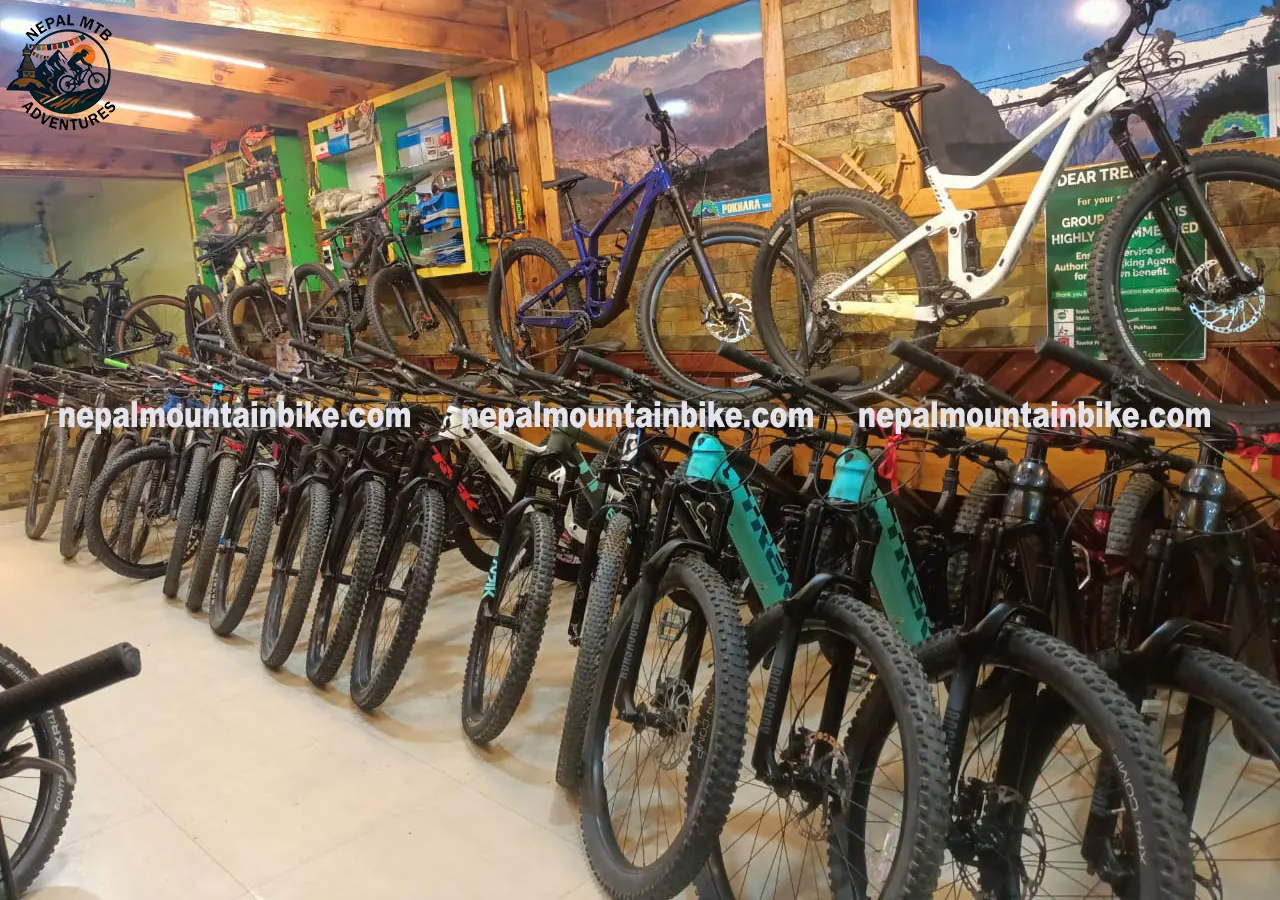
E-MTB Rentals in Nepal (2026): Prices, Best Bikes, Tours & Booking Guide
03 Apr 2026
Jagan Biswakarma
The Ultimate Decision: Traditional Mountain Biking or E-MTB in Nepal?
03 Apr 2026
Jagan Biswakarma
E-MTB Tours Nepal: The Ultimate Himalayan Electric Mountain Bike Adventure Guide
28 Mar 2026
Jagan Biswakarma
The ultimate Guide to Mountain Biking Tours in Nepal
11 Mar 2026
Nepal MTB Adventures Expert Team
Best Trek Mountain Bike Rentals in Nepal : Complete Guide to Premium Bikes, Prices & Guided Tours
24 Dec 2025
Jagan Biswakarma