

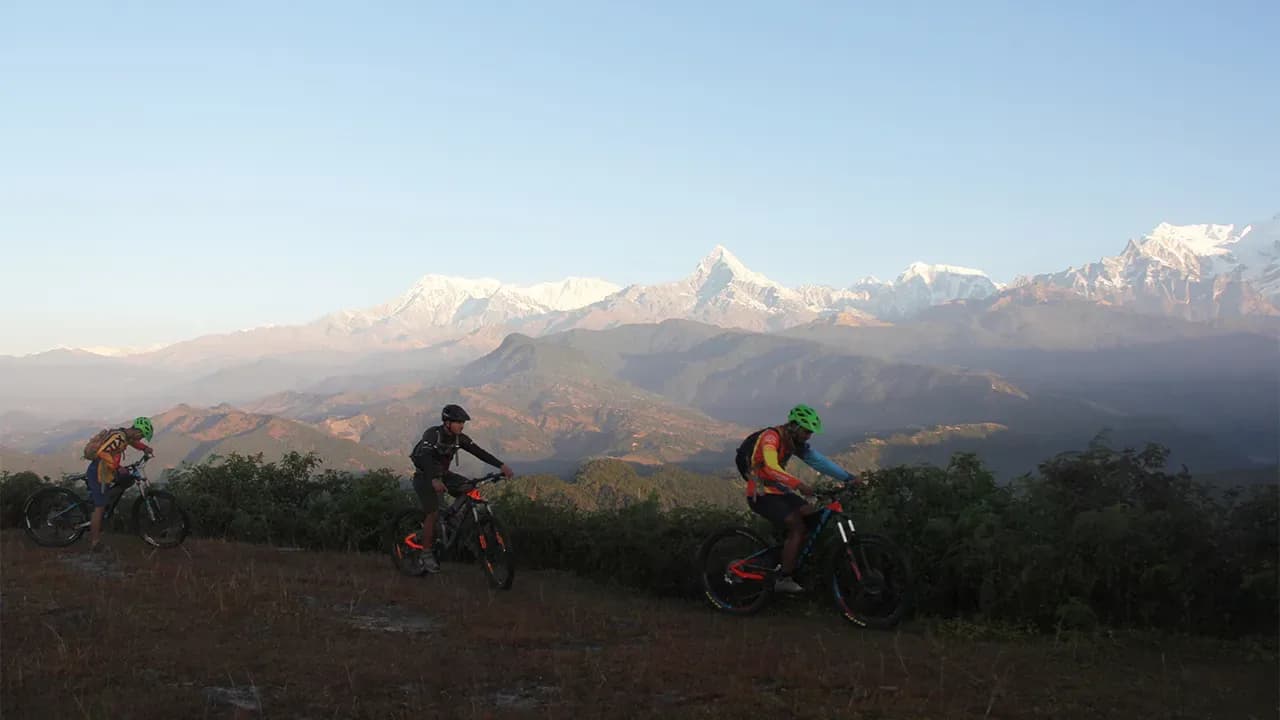
An overnight mountain bike trip means you ride out of Pokhara, sleep in a mountain village, and ride back the next day. We run five of them. Each one takes two or three days.
Why not just do a long day ride? Because the best trails are high up. Pokhara starts at 800 m, and the good ridges are above 2,000 m. You cannot climb that far, ride it properly, and get back before dark. Stay the night and you can. You also see the mountains at sunrise, which is the clearest they get all day.
Every trip includes a licensed guide, the bike, all your gear, every meal, your room on the trail, transport, and permits. You bring yourself.
This page covers all five trips, how many days you need, where you sleep, and how to choose between them. If you only have one day, see our guided day tours in Pokhara instead.
How Many Days Do You Need?
This is the question worth answering before you look at any trip, because the Pokhara valley climbs from an 800 m lakeshore to ridges above 2,000 m, and how high you get is decided almost entirely by how many nights you have.
One day. You can ride Sarangkot, the World Peace Pagoda loop, Pame, or Kristi village and be back for dinner. Good riding, and the right answer if Pokhara is a stop rather than a destination. We list what runs daily on the guided day tours page, and the trails themselves are described one by one in our top 5 trails around Pokhara.
Two days. The sweet spot, and where four of our five trips sit. Two days is the minimum to reach a ridge village, sleep up there, and ride down in the morning. It is also enough to spend a full day climbing and a full day descending, which is how the best trails here are meant to be ridden.
Three days. Enough to link separate trail networks rather than repeat one. The three-day trips cover the Sarangkot ridge, the Peace Pagoda side and the Begnas lakes, which are three different landscapes, or three consecutive days of shuttle-served descents on different terrain.
Four days or more. At that point you are better off leaving the valley altogether. Lower Mustang, the Annapurna Circuit and the mid-hills crossings start at around ten days and are a different kind of trip, and they are all in our full tour range. For how the whole country compares, the top 10 Himalayan trails in Nepal sets them out with days, altitude, and season.
Short on Time in Pokhara? This Is the Adventure That Uses It Best
Pokhara is Nepal's adventure capital, and almost everything on the menu is measured in minutes or a morning. You do the thing, you come back down, you are back in Lakeside for lunch with a good photograph and a story that takes thirty seconds to tell.
An overnight ride is the one that gives you a night in the mountains. That is the whole difference, and it is worth more than the extra day costs you.
You finish the first day somewhere a vehicle cannot easily reach, on a ridge above the valley, and you stay there. You eat what the family running the lodge cooks. You go outside before six because the light has started and there is nobody else awake. The peaks are out, the valley below you is under mist, and there is no queue, no jeep, no schedule. Then you ride down.
Where a Two or Three Day Ride Fits in Your Nepal Trip
Most people who ride these are not in Nepal solely to mountain bike, so here is where it slots in.
At the start, before you go high. Two days on the Pokhara ridges is honest preparation for anything bigger. You find out how your legs travel, how you handle a loaded day, and whether the bike fits, all within reach of the workshop. Riders heading to Mustang or the Annapurna Circuit afterwards often do exactly this.
At the end, after a trek. If you have just walked the Annapurna Circuit or Base Camp, your legs are conditioned, and your appetite for stone steps is gone. A couple of days riding is the opposite kind of movement and a good way to finish before you fly.
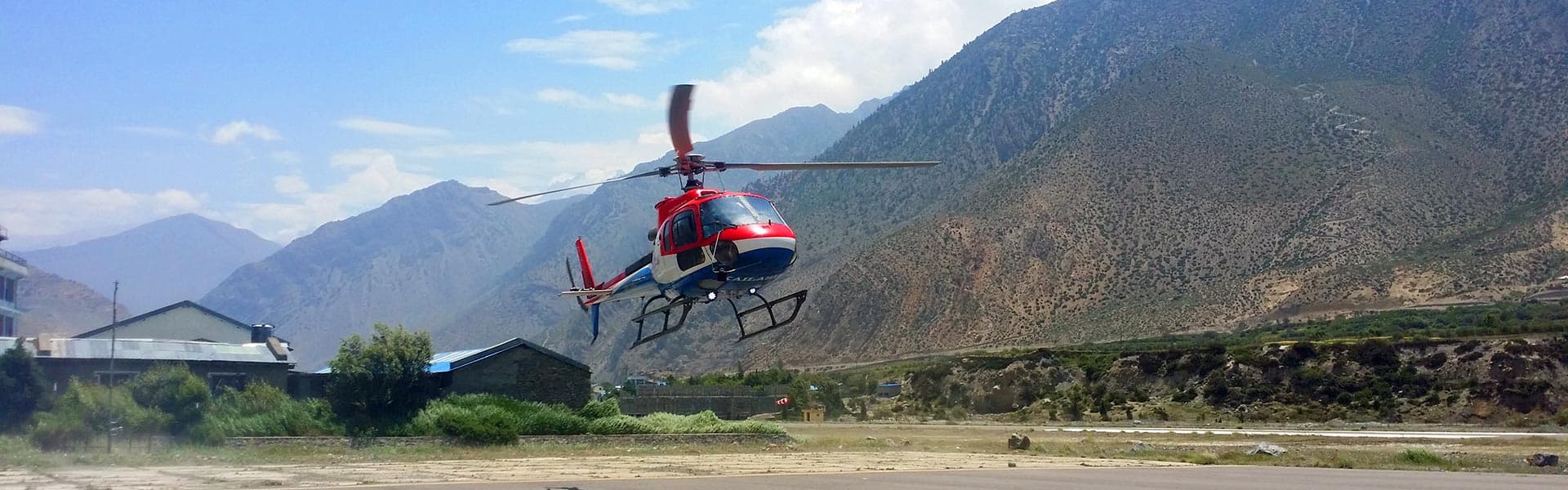
In the middle, when the weather closes in. The valley rides low enough to work when the high country does not. If a flight to Jomsom is cancelled or a pass is shut, two days here is a genuine replacement rather than a consolation.
As the trip itself. Plenty of riders fly in for ten days, spend three on a Pokhara multi-day, and fill the rest with the lake, paragliding and Kathmandu. That is a good holiday and there is no need to pretend otherwise.
Why Ride Overnight Rather Than Just a Long Day
Five things change the moment you sleep on the trail.
You reach the high ridges. Australian Camp sits at around 2,060 m, and the Kalikasthan ridge is not much lower. Climbing to either, riding it properly, and getting back to Lakeside in daylight is not a comfortable day. Overnight, it is a good one.
You bank the big descents. The best downhills here need a full day of climbing to set up. Ride overnight, and you climb on day one, sleep at the top, and take the descent on fresh legs and fresh brakes the next morning.
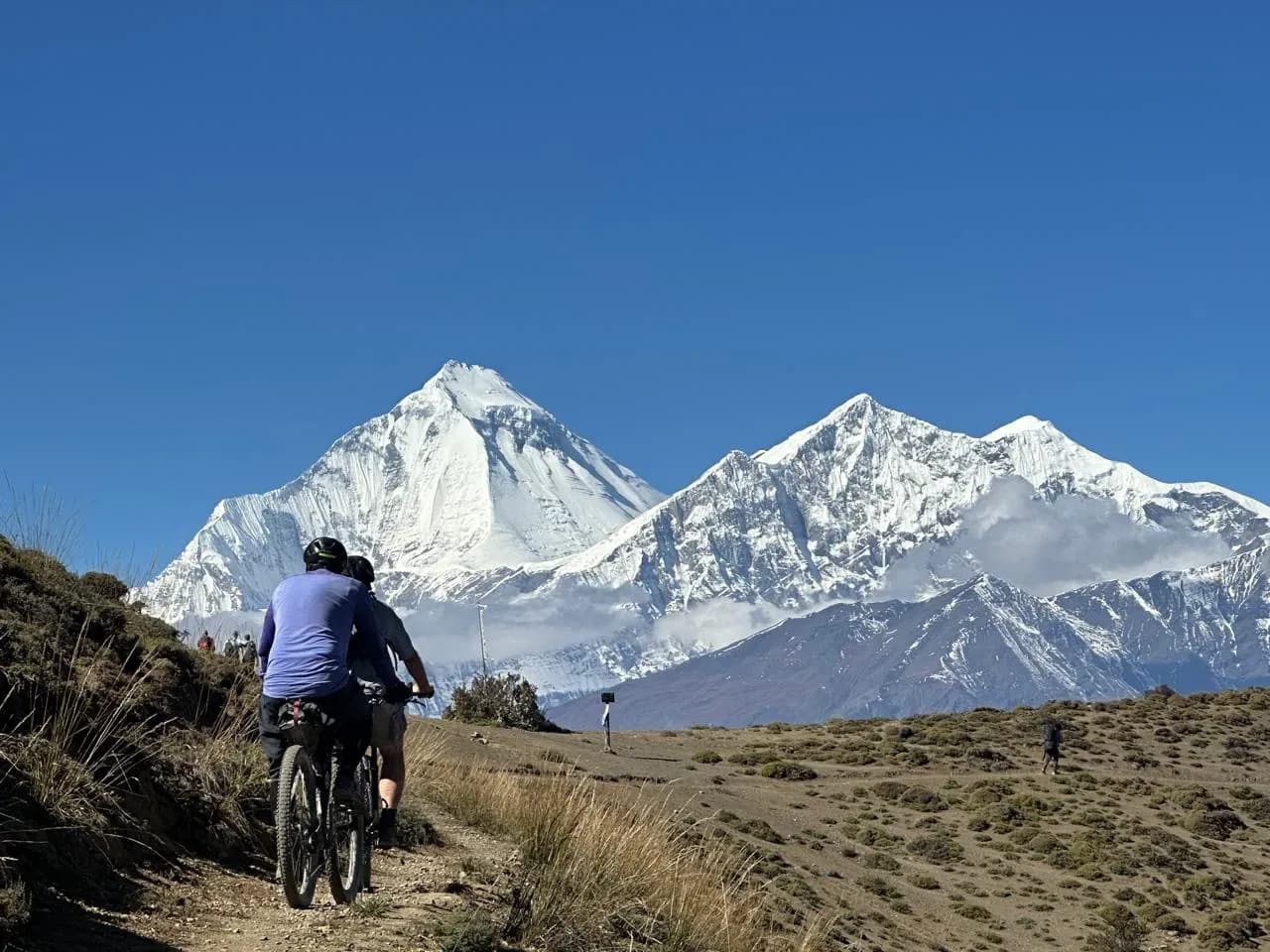
You get the sunrise. Waking on a ridge means Annapurna, Machhapuchhre, Dhaulagiri, and Manaslu lit at first light, an hour before the day-trip jeeps arrive from town.
You get into village life. You stay with Gurung and Magar families, eat what they cook, and see the part of Nepal a day ride passes through at speed.
You simply ride more. More trail, more descending, and no clock counting down to dark.
The Five Trips: Overnight MTB Tours
Australian Camp Mountain Biking
Our flagship overnight and the most demanding of the five. You climb out of the valley through Kande and Pothana to the ridge village of Australian Camp, spend the night at a hilltop lodge, and wake to a sunrise over up to seven named peaks. Day two is a technical descent through Dhampus and its stone staircases, then Gurung villages and the Mardi river valley back down to Lakeside.
Detail | Information |
|---|---|
Duration | 2 days, 1 night |
Distance | Around 60 km, with a short push-and-carry to the ridge |
Difficulty | Advanced, roughly two years of riding experience |
Where you sleep | Mountain lodge at Australian Camp, around 2,060 m |
Bike | Full-suspension bike, provided |
Highlights | Annapurna and Dhaulagiri at sunrise, Dhampus and Lwang villages, Mardi River Valley, suspension bridges |
Who it suits: Beginner riders who want the best sunrise in the valley and are happy to earn it. Riders should be comfortable with steep, technical descents and willing to push a bike for a short section. Not recommended as a first overnight MTB tour.
The day-by-day breakdown, including exactly where the push section falls and what the lodge is like, sits on the Australian Camp overnight tour page.
Royal Trek Overnight Tour
The gentler of the two, and the one we send mixed groups on. You ride east into the foothills on wide trail and ridgeline through Gurung and Magar villages to Kalikasthan, stay in a guesthouse or family homestay with sunset views, and loop back past Begnas and Rupa lakes with a swim stop if the weather allows.
Detail | Information |
|---|---|
Duration | 2 days, 1 night |
Distance | Around 35 km, climbing from 800 m to about 1,350 m |
Difficulty | Moderate, roughly one year of riding experience |
Where you sleep | Guesthouse or family homestay at Kalikasthan |
Bike | Hardtail or full-suspension bike, provided |
Highlights | Three 8,000 m peaks on the skyline, three-lakes view, village homestay, Begnas Lake |
Who it suits: Riders who want the mountain night and village stay more than technical riding, couples, and mixed groups with varying fitness levels. Recommended most often as a first overnight MTB tour in Nepal.
Dates, pricing and the full two-day route are on the Royal Trek overnight tour page.
Overnight Enduro Tours
Pokhara Epic Enduro Overnight Ride
Two days of gravity. A dedicated 4x4 shuttles you to the top of the Sarangkot and World Peace Pagoda descents, so the energy goes into riding down rather than grinding up. You sleep in a village lodge and stack up serious descent across the two days.
Detail | Information |
|---|---|
Duration | 2 days, 1 night |
Riding | 45–65 km, with over 3,000 m of descent |
Difficulty | Intermediate to advanced |
Where you sleep | Village lodge |
Uplift | Dedicated 4x4 jeep |
Bike | Full-suspension enduro bike, available |
Highlights | Sarangkot flow trails, Chari enduro terrain, Peace Pagoda descent, technical valley singletrack |
Who it suits: Gravity riders who come to descend and would rather spend their climbing budget on a jeep. Fitness matters less than bike handling because the uplift does the work.
How the two shuttle days are split, and which descents fall on which, is set out on the Pokhara epic enduro overnight ride
Pokhara Enduro Downhill: 3 Days of Gravity
The full gravity tour, and the most descending available anywhere in the valley. Three days of shuttle-served stages using jeeps and the Annapurna cable car, riding a different trail network each day, from the Sarangkot ridge to the Peace Pagoda to the Arba village trails.
Detail | Information |
|---|---|
Duration | 3 days, 2 nights |
Riding | 60 km+ of stage-based descents |
Difficulty | Moderate overall, with individual stages up to expert |
Where you sleep | Village lodges along the trail |
Uplift | Jeep shuttles plus the Annapurna cable car on day one |
Bike | Full-suspension bike with protective gear, provided |
Highlights | Sarangkot “Rock and Roll,” Peace Pagoda and Pumdikot descents, and Arba village trails including Predator’s Path and Tiger’s Tail |
Who it suits: confident descenders with a long weekend who want three different trail networks rather than three laps of one. Individual stages get technical, so this is the wrong pick if you are still learning to read a rough line.
The stage list, the cable car day and the trail names for each of the three days are on the 3-day Pokhara gravity tour
Overnight E-MTB Tour
3-Day E-MTB Tour: Sarangkot, Bhumdi and the Begnas Lakes
The one for riders who want the ridges and the distance without needing the fitness. A full-suspension Trek Rail carries you up the climbs, so three days covers far more of the valley than legs alone would.
Detail | Information |
|---|---|
Duration | 3 days, 2 nights |
Distance | Around 140 km, with the high point on the Kalikasthan ridge |
Difficulty | Moderate, and beginner-friendly on an e-bike |
Where you sleep | Teahouse in Bhumdi, then a guesthouse at Begnas Lake |
Bike | Full-suspension Trek Rail e-MTB |
Highlights | Sarangkot, World Peace Pagoda, Queen's Forest singletrack, Devi's Fall, Kristi village, Begnas Lake and Rupa Lake |
Included | All meals, accommodation and luggage transport |
Who it suits: riders who want to see the most of Pokhara in the fewest days, anyone unsure their fitness is up to a loaded multi-day, and groups where one person would otherwise be left behind. Pedal assist quietly solves that.
The full three-day route and the bike it runs on are covered on the 3-day Pokhara e-MTB tour page, and if you are weighing electric against a normal bike, our guide to e-MTB riding in Nepal is the honest version.
Which Trip Is Right for You?
Trip | Style | Days | Level | Riding | Sleep | Best for |
|---|---|---|---|---|---|---|
Australian Camp | MTB | 2D/1N | Advanced | ~60 km | Ridge lodge, 2,060 m | Sunrise and a technical descent |
Royal Trek | MTB | 2D/1N | Moderate | ~35 km | Guesthouse or homestay | Views and village culture |
Epic Enduro Overnight | Enduro | 2D/1N | Intermediate to advanced | 45–65 km, 3,000 m down | Village lodge | Big descents and gravity riding |
Enduro Downhill 3-Day | Enduro | 3D/2N | Moderate, stages to expert | 60 km+ | Trail lodges | Maximum descending over a long weekend |
3-Day E-MTB | E-MTB | 3D/2N | Moderate, easier on an e-bike | ~140 km | Teahouse and guesthouse | Ridges without the fitness demand |
Riding as a Group: Friends, Families and Company Trips
Most of our overnight departures are private groups rather than strangers put together.
Friends. Any of the five works. Pick for your weakest rider, not your strongest, because that is who sets the pace.
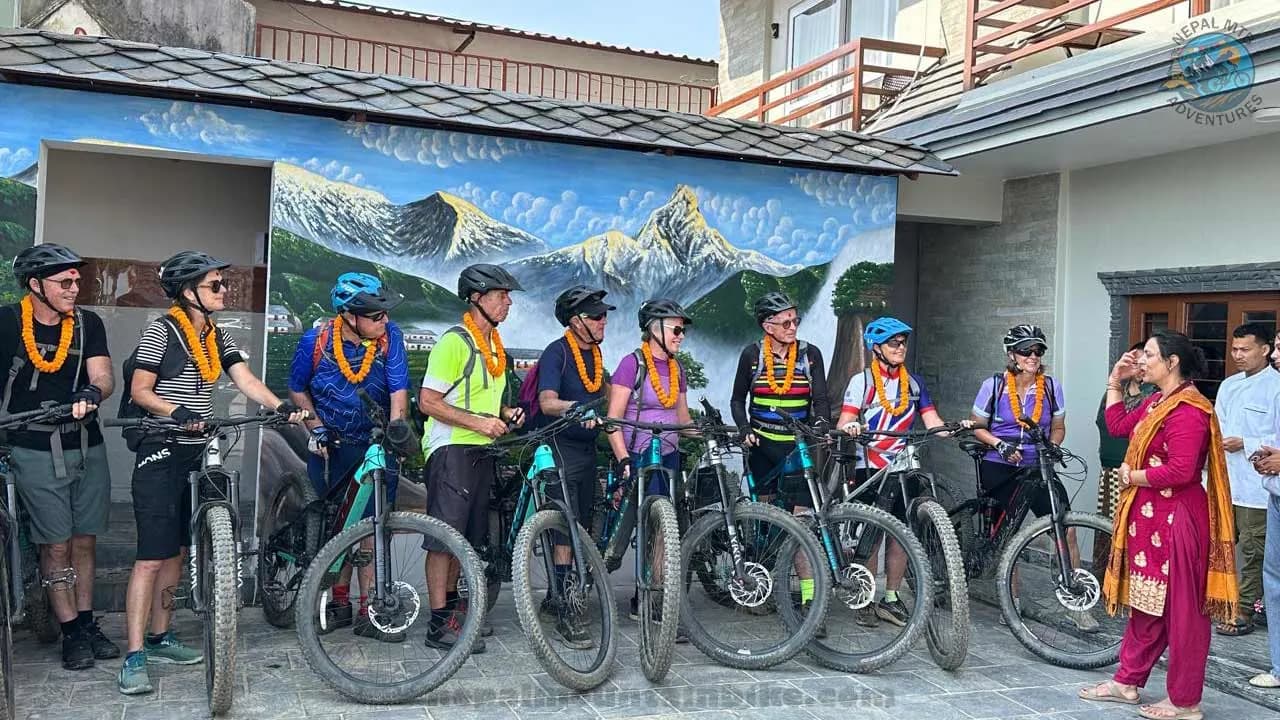
Families. The Royal Trek is the usual answer. It is the gentlest of the five, the climbing tops out at about 1,350 m, and the night is in a village guesthouse rather than a high lodge. Tell us ages and experience and we will say honestly whether it fits. Younger children are better on a day ride first.
Company groups. We run these privately, with your own guide and vehicle. Two days works for a team because the evening does the job, not the riding: a group that normally sees each other across a desk, in a village guesthouse, with no signal. We can add a support jeep, split the group into two paces, and non-riders can travel in the vehicle and meet everyone at the lodge.
Mixed fitness is the real issue, not age. Two fixes. Put the weaker riders on e-MTBs, which closes the gap without anyone being told they are the slow one. Or take a route where a support vehicle can leapfrog and pick people up.
Send us your numbers and dates and we will come back with the right trip and a group price.
What You Actually See From Up There
The reason to sleep on a ridge rather than ride back down it is the view at 06:00, so it is worth knowing what is actually in front of you.
From the Australian Camp ridge, and from Dhampus below it, the wall runs left to right: Annapurna South at 7,219 m, Hiunchuli at 6,440 m, Machhapuchhre at 6,993 m, and Lamjung Himal further east. Machhapuchhre is the one everybody photographs, and it is only about 25 km away, which is why it looks the size it does.
From the Kalikasthan ridge on the Royal Trek you get a wider, more distant sweep that takes in three peaks over 8,000 m: Dhaulagiri at 8,167 m, Annapurna I at 8,091 m and Manaslu at 8,163 m. Fewer close-up details, more scale.
From Sarangkot at 1,592 m, which every trip touches at some point, the whole Annapurna range sits above Phewa Lake 800 m below you, usually with mist on the water until about 08:00.
One rule across all of them: the mountains are out at dawn and gone by late morning. Cloud builds from around 11:00 in both riding seasons. That single fact is the strongest argument for sleeping up there.
Good to Know Before You Go
Where you sleep and what you eat
These are not camping trips. You sleep in tea houses, small mountain lodges or village homestays, the same places trekkers use. Rooms are simple and clean, usually with shared bathrooms, and the higher lodges like Australian Camp are known for the sunrise. Meals are home-cooked, with dal bhat as the staple and traditional Gurung food in the villages. Drinking water is included. Basic but comfortable on the trail, and proper hotels back in Pokhara.
Best time to go
You can ride around Pokhara in any month of the year. What changes is what you see. The trails stay open, but the valley looks like a different place depending on when you come. Sharp peaks and cold clear nights in winter. Red rhododendron through the forest in spring. Deep green terraces and moving cloud in the monsoon. And in autumn, the whole Annapurna wall with nothing in front of it.
So the question is not really when you can ride. It is which version of Pokhara you want.
Autumn, October to November, is the best window. Dry trails and the clearest mountain air of the year, because the monsoon has just scrubbed the sky. It is also the busiest, so book ahead.
Spring, March to May, is the second window. Warm days and rhododendron in flower through the forest sections, with haze building through April and May.
Winter, December to February, is dry with excellent visibility and very few people. The catch is specific to overnights: ridge nights are cold and lodge rooms are unheated, so bring warmer layers than the daytime temperature suggests.
Monsoon, June to August, brings mud, leeches and afternoon cloud, and is not the season for a ridge overnight. We ride the safer valley routes then, guided. Month by month across the whole country, including the one region that rides right through the monsoon, is in our best time to mountain bike in Nepal guide.
Bikes and gear
Every trip includes a bike matched to the route, plus helmet and gloves. The Royal Trek runs well on a hardtail. The Australian Camp descent and both enduro trips are better on full suspension with 130 to 160 mm of travel, which we provide. The e-MTB trip uses a full-suspension Trek Rail. Gravity trips add protective gear. Every bike is serviced in our own workshop, and the guides are trained mechanics carrying tools and spares.
If you would rather choose your own bike, the whole fleet and the daily rates are on our Pokhara rental page, and you are welcome to bring your own instead. It is also worth knowing how we grade these routes before you pick one, which we explain in mountain bike trail grading in Nepal
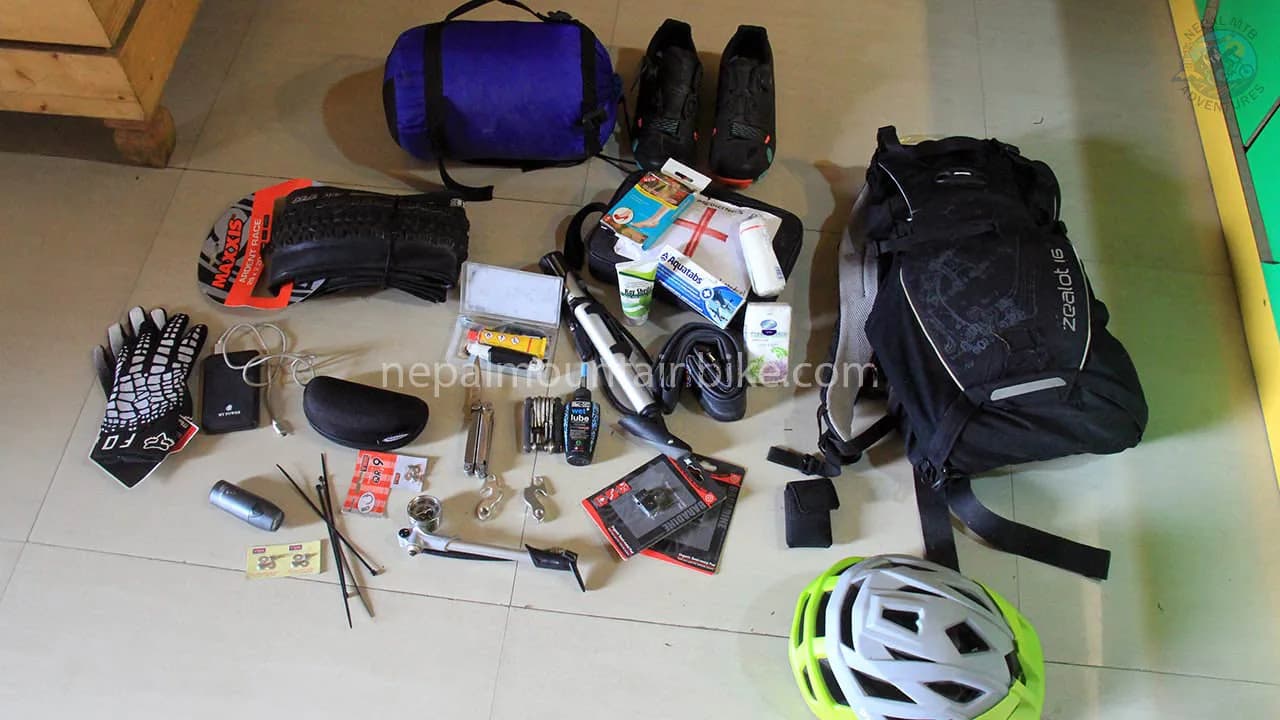
What to pack
You bring | We bring |
|---|---|
Warm layers for a cold ridge morning | Bike, helmet and gloves |
Riding kit | Tools, spares and a pump |
Sunglasses and sunscreen | First aid kit |
A light rain layer | Drinking water |
A small backpack | Your permits |
A headlamp | — |
A reusable water bottle | — |
Any personal medication | — |
The full seasonal packing list is in our mountain biking checklist for Nepal.
Fitting It Around the Rest of Pokhara
A two-day ride leaves plenty of room, and most people build the rest of the week around it.
Paragliding launches from the Sarangkot ridge you will have ridden, which is a strange and good way to see the same ground twice. Rafting on the Upper Seti works as a half day, and we run a combined Sarangkot sunrise ride and rafting day if you want both in one.
If you want the wider picture of riding here rather than just the overnights, our complete guide to mountain biking in Pokhara covers the valley end to end. On a rest day, the lake itself is the obvious answer: a boat to Tal Barahi temple on its island, then Devi's Fall and the Gupteshwor cave on the southern side. The World Peace Pagoda is walkable as well as rideable if your legs have had enough.
If your legs have not had enough, Panchase at around 2,500 m is the biggest climb reachable from the valley and we run it on request rather than on a fixed calendar. Ask us.
Ready to Ride
Two days gets you onto a ridge. Three gets you across the valley. Pick the trip that matches your legs and your calendar, and the rest is handled.
If you only have a day, start with our guided day tours in Pokhara. If you want a week or more, that is a different conversation and a different set of trips.
For anything custom, a private group or dates that do not fit the standard departures, talk to us.
Frequently Asked Questions
How many days do I need for a mountain bike trip from Pokhara?
Two days is the realistic minimum for anything beyond a day ride, because that is what it takes to reach a ridge village, sleep there and ride down in the morning. Three days lets you link separate trail networks rather than repeat one. Beyond three days you are better off leaving the valley entirely for Mustang, the Annapurna Circuit or a mid-hills crossing, all of which start at around ten days.
Are there multi-day mountain bike tours in Pokhara?
Yes, five of them. Two trail MTB trips of two days, two enduro trips of two and three days, and a three-day e-MTB trip. All start and finish in Lakeside, and all include the guide, bike, gear, meals, accommodation and shuttles.
Where do you sleep, and is it camping?
Not camping. You stay in tea houses, mountain lodges or village homestays with home-cooked meals included. Rooms are simple, usually with shared bathrooms. Basic but comfortable on the trail, and proper hotels back in Pokhara.
How fit do I need to be?
It depends which trip. The Royal Trek is moderate and suits about a year of riding. Australian Camp is advanced, with a technical descent and a short push-and-carry to the ridge. The enduro trips are shuttle-served, so the fitness demand is lower than the difficulty suggests, but the descending is genuinely technical. The e-MTB trip is the easiest on your legs, because the motor handles the climbs.
Can a beginner do a multi-day ride here?
Yes, on the right trip. The three-day e-MTB tour is the most beginner-friendly, because pedal assist takes the sting out of every climb. The Royal Trek works for a confident newer rider. Australian Camp and the enduro trips are better once you have real off-road experience.
Can I ride an overnight trip on an electric bike?
Yes. The three-day e-MTB tour is a full multi-day trip on a Trek Rail, covering Sarangkot, Bhumdi and the Begnas lakes with two nights on the trail. Pedal assist is also the usual fix for a group where fitness levels differ a lot.
Can I combine a ride with paragliding or rafting?
Easily, and most people do. Paragliding launches from the Sarangkot ridge you will already have ridden. Rafting on the Upper Seti fits into a half day, and we run a combined sunrise ride and rafting day if you want both together. Tell us your dates, and we will build the week around the ride.